Southern Shaolin Animals
Northern Wudang Sword
Fujian Power meets Daoist Blades
Discover a complete traditional Yang Family system including Forms, Push Hands, Internal Development, Martial Applications, Weapons Training, Neigong, and the underlying principles that transform individual exercises into a coherent path of internal development.
Passed through the lineage of Southern Fujian Grandmasters Hsieh, Chen, and Casey, Alsup, and Northern Internal Grandmaster Bai Wenxiang, and taught by Shifu Shawn Cartwright.
What Is Yang Taijiquan?
Yang Taijiquan (Yang Style Tai Chi) is the world's most widely practiced style of Tai Chi Chuan (Taijiquan), a Chinese internal martial art that combines slow, flowing movement, breath regulation, body alignment, internal development, martial applications, and traditional health cultivation practices.
The art was created by Grandmaster Yang Luchan based on his training with the Chen family and later adapted by generations of the Yang family to suit new students and environments while also retaining many of the deeper principles of the original system. Yang Taijiquan became the style that introduced Tai Chi to the wider world and influenced the development of modern Tai Chi practice across China and beyond.
But that simple description raises an interesting question...
How did Yang Taijiquan become the style that made Tai Chi famous?
The answer is simple... generations of practitioners discovered that Yang Taijiquan offers a practical and accessible path to relaxation, self-cultivation, health, and well-being while remaining deep enough to support a lifetime of study.
Its movements are accessible enough for beginners to learn, yet deep enough to reward decades of study.
But fewer people realize that traditional Yang Taijiquan is also a complete training system, one that supports not only health, personal development, and lifelong cultivation, but martial skill as well.
Because unlike many modern approaches that focus primarily on learning a form, traditional Yang Taijiquan includes a broad range of interconnected training methods, including:
- Health and longevity training
- Qigong and internal development
- Neigong and internal practices
- Solo forms practice
- Push Hands (Tui Shou)
- Martial applications
- Weapons training
- Internal power (Jin) development
These methods were never intended to exist as separate subjects.
In traditional Yang Taijiquan, the forms, Push Hands, martial applications, weapons, Qigong, and internal development methods are all expressions of the same underlying principles. Studied together, they form a coherent system. Studied separately, much of their deeper meaning can be lost. Each training method helps explain and reinforce the others.
For example, the same principles of relaxation, structure, alignment, rooting, balance, and whole-body connection that appear in the solo forms are also expressed through Push Hands, martial applications, weapons training, and internal power development.
As students progress, they begin to discover that the visible movements are only one layer of the art.
A beginner sees movements.
An intermediate student begins to feel balance, relaxation, coordination, and whole-body connection.
An advanced practitioner discovers that the movements serve as a vehicle for deeper principles that appear throughout every aspect of the system.
The deeper you study, the more you realize that the same principles are expressed through forms, Push Hands, martial applications, weapons training, Qigong, and internal development.
This is one reason practitioners can spend decades studying Yang Taijiquan without exhausting its depth.
The goal is not simply to memorize more movements.
The goal is to uncover increasing levels of understanding within the same principles.
For many students, Yang Taijiquan is not merely a martial art.
It is a complete system for cultivating health, internal development, practical skill, and lifelong personal growth.
For generations, these methods were preserved through direct teacher-to-student transmission, allowing practitioners to inherit not only the movements of the art, but also the principles, skills, and understanding that transform those movements into a living system of practice.
Why Practice Yang Taijiquan?
People come to Yang Taijiquan for many reasons.
Some are looking for better health, balance, mobility, relaxation, and vitality.
Others want to cultivate internal energy (Qi), improve body awareness, develop martial skill, or explore a lifelong path of personal growth and self-cultivation.
But many dedicated students eventually find themselves drawn to a deeper question...
Why has Yang Taijiquan remained the world's most widely practiced style of Tai Chi for generations?
The answer extends far beyond its slow, graceful movements.
Generations of practitioners discovered that Yang Taijiquan offers a rare combination of accessibility and depth. It is simple enough for beginners to approach, yet profound enough to reward a lifetime of study.
What often surprises students is that traditional Yang Taijiquan is far more than a collection of forms.
Beneath the movements lies a complete and interconnected training system built around internal development, Neigong, Push Hands, martial applications, weapons training, and self-cultivation. The same underlying principles appear throughout every aspect of the art.
Many practitioners spend years learning movements before realizing that the movements themselves are only the visible surface of the system. Hidden beneath the form are the body mechanics, internal methods, power-development practices, and training principles that give the movements purpose and meaning.
Students frequently discover that the benefits unfold in stages.
Beginning students often notice improvements in posture, balance, mobility, coordination, relaxation, and overall well-being.
Intermediate students begin developing greater body awareness, whole-body connection, rooting, structural integrity, and a deeper understanding of how efficient movement is generated through the entire body rather than through isolated muscular effort.
Advanced practitioners explore the deeper layers of the art, including Push Hands, martial applications, internal power development, weapons training, Neigong, and the principles that have made Yang Taijiquan one of the world's most respected internal arts.
Perhaps most importantly, Yang Taijiquan offers a rare opportunity to study the same traditional system that helped make Tai Chi one of the world's most widely practiced arts, preserved through generations of Yang lineage transmission.
The various parts of the system work together:
- The Forms teach the movements and provide the framework through which the principles are learned.
- Qigong and Neigong cultivate internal development, body awareness, and foundational skills.
- Push Hands develops sensitivity, timing, balance, and the practical application of core principles through partner training.
- Martial Applications reveal the functional purpose behind the movements and teach students how the principles are expressed in practice.
- Weapons Training extends those same principles through a variety of traditional training methods while deepening coordination, structure, and body mechanics.
Together, these methods form an integrated system in which each training method helps explain and reinforce the others.
Whether your goal is health, relaxation, martial skill, internal development, self-cultivation, or simply a deeper understanding of traditional Tai Chi, Yang Taijiquan offers a path that can be explored for a lifetime.
Students may choose to enroll in the Yang Tai Chi for Health Program or study the complete Yang Taijiquan Martial Lineage Training Program, including forms, Push Hands, martial applications, weapons training, internal development, and advanced training methods.
How is this Yang Taijiquan different?
Many schools teach Taijiquan.
Many teach Yang style Taijiquan.
Yet relatively few preserve the complete traditional Yang Taijiquan system in a way that integrates forms, Push Hands, martial applications, weapons training, internal development, and the deeper principles that connect them together.
So the real question is "What was actually transmitted?"
Was it merely the choreography of the form?
Or was it the complete system that made the form work?
Over the last century, Yang Taijiquan spread throughout China and eventually around the world. This widespread popularity helped millions of people benefit from Tai Chi practice... you can find groups of people practicing Yang Tai Chi for Health in many parks and recreation centers.
But this popularity had unintended consequences... many students learned only parts of the art.
Some focused primarily on forms. Others specialized in Push Hands, solo performances, or reciting Taiji theory. Fewer were exposed to the martial applications or deeper internal work. As a result, students often encounter fragments of the system without ever seeing how the pieces fit together.
Traditional Yang Taijiquan was never intended to be studied as isolated components.
It was designed as a complete training system which integrated Body Mechanics (Shen Fa), Forms, Push Hands, applications, internal energy work (Neigong), weapons, principles, and lineage specific training methods that were traditionally reserved for serious indoor students.
That integrated system approach, properly taught and practiced, creates something far greater than the sum of the individual parts.
Look, superficial information is abundant, but genuine transmission is rare.
In fact, many can copy a form... few understand the Neigong that supports it.
Many can imitate techniques... few can teach the precise origin of the power and how to develop it.
Some can demonstrate applications... few understand the Shen Fa (Body Method) and tactical principles to make them work as intended.
Many so called "instructors" can recite fortune cookie platitudes, but few can transmit the wisdom of the lineage.
And that is what makes this program different.
A System preserved through traditional transmission
The Yang Style was created by Grandmaster Yang Luchan based on his studies of the original Chen Taijiquan. The Yang family adapted the art to suit new students and environments while also retaining many of the deeper principles of the original system.
While many students recognize the slow, flowing movements of Yang Taijiquan, fewer are exposed to the complete training methodology that historically accompanied them.
Traditionally, Yang Taijiquan included far more than solo forms.
It included internal development practices, Push Hands, martial applications, weapons training, partner exercises, strategic principles, and a progressive training process designed to develop skill over time.
The goal was never merely to perform movements.
The goal was to cultivate the body, mind, and spirit while developing practical understanding of the principles embodied within the art.
Traditional Lineage Preservation
Our lineage comes through Grandmaster Bai Wenxiang, who studied with Grandmaster Fu Zhongwen, who was one of Grandmaster Yang Chengfu's most accomplished students.
Grandmaster Bai was known not only for his skill, but for preserving a comprehensive approach to Yang Taijiquan that integrated health cultivation, internal development, martial understanding, Push Hands, traditional weapons, and the deeper principles of the system.
This transmission included not only what to practice, but how to practice, why to practice, and how the various elements of the art relate to one another.
As a result, students inherit more than movements.
They inherit a complete principle-based method.
Shifu Shawn Cartwright studied traditional Yang Taijiquan with Grandmaster Bai Wenxiang.
The goal was not simply to transmit movements, but to pass on the principles, methods, corrections, training progression, and deeper understanding behind the art.
A complete transmission accords with the principles of the Liu He Ta (Six-Sided Tower), a traditional framework used to preserve a complete martial art. In addition, we use the P5LIM (PhD 5 Level Interpretation Method) developed by Dr. Yinong Chong to accurately translate and preserve the deeper principles, methods, and training concepts for modern Western students.
Documented for the Next Generation
Recognizing how rare the complete internal arts transmission had become, Shifu Shawn documented the art while teaching his own son, Drake Cartwright.
The result is a structured training program based on actual lineage instruction rather than reconstructed material, second-hand interpretation, or isolated techniques gathered from multiple sources.
In practical terms, this means students are not simply learning a Tai Chi form.
They are studying a traditional Yang Taijiquan system that includes:
- Forms and Exercises
- Internal Development (Neigong)
- Push Hands (Tui Shou)
- Martial Applications
- Jin Development (Refined Power)
- Traditional Weapons
- Strategic Principles
- Lineage Methods
The objective is to preserve and transmit the art as a complete system, ensuring that future generations inherit not only the movements of Yang Taijiquan, but also the principles, methods, and understanding that bring those movements to life.
Our Yang Taijiquan Lineage
Our Yang Taijiquan curriculum comes through Grandmaster Bai Wenxiang, who studied under Grandmaster Fu Zhongwen, the senior-most student of Grandmaster Yang Chengfu and one of the most important transmitters of traditional Yang Family Taijiquan in the modern era.
Shifu Shawn Cartwright studied traditional Yang Taijiquan directly with Grandmaster Bai Wenxiang and has spent decades studying, documenting, preserving, and transmitting the art.
The curriculum taught through TCCII includes the forms, internal development methods, Push Hands, martial applications, weapons, and traditional training principles passed through this lineage.
The goal is not merely to learn a sequence of movements.
The goal is to study Yang Taijiquan as a complete traditional system for health, vitality, self-cultivation, internal development, and martial skill.
Grandmaster Bai Wenxiang
Grandmaster Bai Wenxiang was known for preserving a comprehensive and traditional approach to Yang Taijiquan.
His teaching emphasized not only the external movements of the art, but also the internal methods, body mechanics, principles, and training progression that transform movements into skill.
Like many traditional teachers of his generation, Grandmaster Bai understood that forms alone were never the complete art.
Think of the forms as a framework for understanding the mechanics of the system.
The principles are what give the system life.
Grandmaster Bai's instruction integrated health cultivation, internal development, Push Hands, martial applications, traditional weapons, and the deeper understanding of the principles that connected these methods into a coherent system.
This approach helped preserve Yang Taijiquan as a living tradition rather than a collection of isolated exercises or empty forms
Shifu Shawn Cartwright
My students call me Shifu Shawn Cartwright. Shifu is a Chinese term that literally means "Father Teacher". Traditionally, it refers not only to someone who teaches techniques, but to someone entrusted with preserving and transmitting an art to the next generation.
I was fortunate to study traditional Yang Taijiquan directly with Grandmaster Bai Wenxiang.
Through years of study, correction, practice, and instruction, I came to appreciate that the true value of the lineage extended far beyond forms and techniques.
The real transmission consisted of the principle-based methods, training progressions, and understanding that allow the art to continue developing throughout a lifetime of practice.
I taught my son, Drake Cartwright, like... well... he's my own son.
Because the complete internal systems are becoming increasingly rare and difficult to find, I decided to document the entire system for posterity on film... many of the lessons come directly from private footage of me teaching Drake as part of our generational preservation mission.
Recall that "Shifu" is a Chinese term that literally translates as "Father-Teacher." The deeper meaning is that a real Shifu will teach his students like they were his own son.
Which is why we eventually decided to release these archival private teaching films for serious students.
And since I won't hold anything back from my son, Drake... this means you get exactly what he learned! (Just don't ask to borrow the car keys, okay?)
It’s the complete program delivered over dozens of filmed lessons. Each movement, technique, step, kick, application, principle, and even the weapons.
Together, they form a complete traditional Yang Taijiquan system designed to preserve not only the movements of the art, but also the principles, methods, and understanding that give those movements meaning.
The Origins of Yang Taijiquan
The origins of Taijiquan are surrounded by both history and legend.
According to traditional folklore, the art was created by the Daoist immortal Zhang Sanfeng, who observed a fight between a crane and a snake and realized that softness, timing, and yielding could overcome brute force. While this story remains an important part of Taijiquan culture, most modern historians agree that there is little historical evidence connecting Zhang Sanfeng directly to the creation of the art.
The earliest well-documented origins of Taijiquan instead trace back to General Chen Wangting (1600-1680), a retired military officer of Chen Family Village (Chenjiagou) in Henan Province, China.
After a lifetime of military service, General Chen combined existing Chen Family martial arts, military strategy, weapons training, traditional Chinese medicine, Daoist cultivation practices, and internal development methods into a unified system.
His innovation was not merely creating a new martial art.
It was integrating life-protecting skills with life-nourishing skills into one complete training system.
Over the centuries, this art became known as Chen Taijiquan, the oldest documented form of Tai Chi and the source from which the major later styles would eventually emerge.
Among those who became fascinated by the Chen Family art was a young man named Yang Luchan.
According to traditional accounts, Yang Luchan first encountered the remarkable skills of the Chen Family while working as a servant in the household of Grandmaster Chen Changxing. The Chen Family generally reserved their martial art for family members and a small number of trusted students, making outside instruction extremely rare.
Yet among the many people who would have encountered the Chen Family over the years, it was Yang Luchan who earned the unusual honor of becoming a student.
Impressed by his character, dedication, and perseverance, Chen Changxing accepted Yang Luchan as a student and eventually entrusted him with the family art.
After years of intensive training, Yang Luchan developed exceptional skill and later began teaching outside Chen Village.
As the art spread, Yang adapted the training to suit new students and environments while retaining many of the deeper principles of the original system.
The result became known as Yang Taijiquan.
Its slower tempo, accessible training methods, and emphasis on relaxation and internal development helped introduce Tai Chi to a much broader audience. Over time, Yang Taijiquan became the most widely practiced style of Tai Chi in the world and influenced the development of countless later branches and interpretations of the art.
Today, most forms of Tai Chi can trace at least part of their lineage back through Yang Luchan's transmission or ultimately to the original Chen Family art from which he learned.
Through the lineage of Yang Chengfu, Fu Zhongwen, and Bai Wenxiang, this traditional Yang Taijiquan method has been preserved and transmitted to the present day, allowing students to study not only the movements of the art, but also the deeper principles that made Yang Taijiquan one of the world's most enduring systems of self-cultivation and internal development.
Who Is The Yang Taijiquan Program For?
Yang Taijiquan can be practiced by people of many backgrounds and experience levels. You don't need any particular experience in Taijiquan or other martial arts.
That said, this program is not really defined by background or martial arts experience.
It is defined by the type of student you want to become.
This Program Is For You If...
- You want to study the complete, traditional Yang Taijiquan rather than the simplified or fragmented versions.
- You've practiced Tai Chi before and suspect there is more beneath the movements than you've been shown so far.
- You are interested in understanding how the forms, Push Hands, Neigong, applications, weapons, and principles all fit together as one integrated system.
- You want to understand not only what to practice, but why the methods work and how they were traditionally transmitted.
- You value traditional training methods and learning directly from authentic lineage transmission.
- You are willing to develop real skill through consistent practice rather than searching for shortcuts or quick fixes.
- You are interested in both the life-nourishing and life-protecting aspects of the art.
- You want a training system that can continue revealing deeper levels of understanding for years or even decades.
This Program May Be Especially Valuable If...
- You've learned forms but were never taught the body mechanics that power them.
- You've been told that Yang Taijiquan is only for relaxation and want to explore its deeper layers
- You've encountered Push Hands but were never shown how it connects to the forms.
- You've studied martial arts, Qigong, or Tai Chi and want to understand how the pieces fit together as a complete system.
- You've become frustrated with collecting information and are now seeking genuine understanding.
This Program May Not Be For You If...
- You're looking for instant results or effortless mastery.
- You want entertainment more than training.
- You are only interested in memorizing forms without understanding what they do.
- You prefer collecting techniques rather than developing skill.
- You are unwilling to be corrected or challenged.
- You want a simplified version of Tai Chi, fragmented and separated from its traditional roots.
- You have no interest in the deeper principles, methods, and training culture behind the art.
Ultimately...
The ideal student is not necessarily the strongest, the youngest, or the most experienced.
The ideal student is the one who looks at the art and asks...
"What am I missing beneath the movements?"
Or perhaps:
"How does it all fit together?"
If questions like these resonate with you, this program was designed for exactly that journey.
What Will You Learn First?
Many beginners assume the first step in learning Yang Taijiquan is simply memorizing a form.
Traditionally, that is not exactly how the art was taught.
While you will begin learning the movements of Yang Taijiquan from the very beginning, you will also start developing the principles, body mechanics, and internal training methods that give those movements meaning.
That's because before you can fully understand the form, you must first begin understanding how the body is intended to move.
For that reason, your training typically begins with:
- Foundational Principles of Yang Taijiquan
- Standing and Structural Development
- Basic Internal Training Methods (Neigong)
- Fundamental Yang Taijiquan Movements
- The Yang Taijiquan Form
- Push Hands Foundations
At first, these may appear to be separate practices.
They are not.
Each develops qualities needed to understand the next layer of training. In other words, each training method helps explain, reinforce, and refine the others.
The foundational principles introduce the concepts that guide the entire system.
Standing practice develops alignment, balance, relaxation, and body awareness.
Neigong begins cultivating the internal qualities that support long-term development.
Fundamental movements teach the body mechanics that later appear throughout the forms, Push Hands, applications, and weapons.
The form provides a structured framework through which these principles can be refined and integrated.
Push Hands begins teaching how those same principles function when another person becomes part of the equation.
Unlike many modern approaches where students simply memorize longer and longer sequences of movements, traditional Yang Taijiquan emphasizes understanding the principles that make the movements work.
As your training progresses, you do not simply accumulate techniques.
You learn to discover increasing depth within the same principles.
The same concepts learned in the foundational exercises eventually reappear in Push Hands, martial applications, internal development, weapons training, partner work, and advanced study.
New material is introduced over time, but it grows from the same root.
This means your training becomes deeper rather than merely broader.
Instead of collecting disconnected techniques, you develop an increasingly complete understanding of the principles that unite the entire system.
Curriculum and Training Path
Traditional Yang Taijiquan was designed to be learned progressively, building foundational skills before moving to more advanced methods and concepts.
Like a university curriculum, each stage builds upon the knowledge and skills developed in the previous stage.
This does not mean students abandon the earlier material as they progress. In fact, the opposite is true.
Standing Practice, foundational exercises, Forms, Neigong, and Push Hands remain important throughout the entire training process. As new methods are introduced, students continually return to the foundations and discover how those same principles appear throughout the rest of the system.
The goal is not simply to accumulate more techniques.
The goal is to progressively deepen your understanding of the principles that unite the entire system.
A beginner sees movements.
An intermediate student begins to recognize the principles behind those movements.
An advanced practitioner discovers how those same principles appear throughout forms, Push Hands, applications, internal development, weapons training, and self-cultivation.
Over time, students begin to realize that the art is far less about learning something new and far more about seeing something familiar at a deeper level.
For that reason, the curriculum is released in stages rather than all at once.
Each level introduces new material, but more importantly, each level reveals a deeper understanding of the material that came before it.
The result is a training path that becomes progressively deeper rather than merely broader, allowing students to develop a complete understanding of Yang Taijiquan as an integrated traditional system.
Stage 1: Yang Taijiquan Form & Applications (Year 1+)
The first stage of training introduces the core practices, principles, and methods of traditional Yang Taijiquan.
Students begin learning the complete Long Form while simultaneously developing the body mechanics, internal skills, partner-training methods, and foundational principles that support the entire system.
Traditional Yang Taijiquan Long Form
Learn the complete traditional Yang Family Long Form, also known in various lineages as the 85, 103, or 108 posture form.
More importantly, learn the principles, body mechanics, and training methods that give the movements meaning. This is the traditional Yang Taijiquan curriculum from which many later Yang-style variations originated.
Martial Applications
One of the most commonly overlooked aspects of modern Yang Taijiquan is its rich martial heritage.
Throughout the curriculum, students learn the practical applications hidden within the movements of the form, helping bridge the gap between choreography and function. Understanding the applications often provides deeper insight into body mechanics, structure, timing, intention, and the underlying principles that make the movements work as intended.
Rather than treating martial applications as a separate subject, they are studied as an integrated part of the system.
Fundamental Principles of Yang Taijiquan
Develop a practical understanding of the core principles that unite the entire system, including:
- Relaxation (Song)
- Whole-body connection
- Rooting and balance
- Cat Stepping
- Internal Harmonies
- External Harmonies
- Structure and alignment
- Flow and continuity
These principles become the foundation for everything that follows.
Traditional Neigong and Internal Development
Begin training the traditional internal methods that support the art, including:
- Internal warm-ups
- Breathing methods
- Joint mobility exercises
- Balance development
- Flexibility training
- Mindfulness and awareness practices
These methods help prepare the body and mind for deeper training.
Yang Taijiquan Push Hands Foundations
Learn the traditional yielding, listening, neutralizing, and countering skills of Push Hands (Tui Shou).
Students are introduced to a systematic progression that helps bridge the gap between solo practice and partner training while developing sensitivity, timing, balance, and practical understanding.
Internal Kung Fu Foundations
Develop the fundamental attributes traditionally associated with internal martial arts, including:
- Structure
- Coordination
- Rooting
- Connection
- Power generation
- Whole-body movement
These skills support every aspect of later training.
Traditional Weapons Training
Begin studying the principles and methods of traditional internal weapons training.
Weapons provide another avenue for understanding distance, coordination, body mechanics, power generation, and the deeper principles of Yang Taijiquan.
Advanced Studies (Optional)
For students interested in specialized traditional methods, additional studies may be available, including:
- OPTIONAL: Dian Si Xue... ultra-rare art of Vital Point Striking for self-defense taught in a systematic and detailed way
- OPTIONAL: Tie Zhang Gong... the secret, powerful Internal Iron Palm method that, properly trained, can give you brutal sledgehammer-like strikes
These are considered advanced supplemental studies and are not required for success in the core Yang Taijiquan curriculum.
Stage 2: Yang Taiji Weapons & Partner Work (Year 2+)
The material from Stage 1 does not disappear as you progress.
In fact, the opposite is true.
Students continue refining the forms, principles, Push Hands, Neigong, internal development methods, and foundational skills introduced during the first stage. As new material is added, students begin discovering how the same principles appear in increasingly sophisticated ways.
Stage 2 expands the curriculum into traditional weapons training, advanced partner work, and more practical expressions of the system.
Yang Taiji Sword (Jian)
Study the elegant and highly regarded traditional Yang Taiji Sword Form.
Far more than a collection of techniques, sword practice develops precision, coordination, body mechanics, timing, intention, and whole-body integration. The same principles found in the empty-hand forms must also appear in the weapon.
Traditional Saber (Dao) Foundations
Students are introduced to traditional saber training methods and the principles associated with this important weapon of Chinese martial arts.
Training includes foundational techniques, body mechanics, movement principles, and traditional methods to provide students with a strong foundation in the weapon.
Gong Shou Fa (Offensive & Defensive Training Methods)
Develop a deeper understanding of how principles, methods, techniques, and applications integrate and function in dynamic situations.
Students explore traditional offensive and defensive training methods while learning how structure, timing, distance, positioning, footwork, and strategy influence practical application.
Core concepts include:
- Footwork and positioning
- Timing and distance management
- Spatial awareness
- Non-telegraphic movement
- Yin-Yang tactical principles
- Integration of form, application, and partner work
The goal is not simply to learn techniques, but to understand how the underlying principles of the art function under pressure.
Advanced Push Hands (Optional)
For students wishing to explore Push Hands at a deeper level, additional material examines the principles of sensitivity, timing, structure, balance, neutralization, and partner interaction in greater detail. Emphasis is placed on how to connect Striking, Locking, Throwing, and Kicking learned in the forms and expressed in dynamic situations.
Students discover how the lessons learned through Push Hands connect to martial applications, strategy, and the broader principles of Yang Taijiquan.
Stage 3: Advanced Yang Taijiquan (Year 3+)
The material from Stages 1 and 2 continues throughout your training.
Students do not leave the foundations behind.
Instead, they continually return to them, discovering increasing levels of depth, precision, and understanding within the same principles.
The exact curriculum for Advanced Yang Taijiquan is reserved for students who successfully complete the previous stages of training.
This stage is intended for serious practitioners seeking deeper understanding, advanced skill development, and, for some, preparation as future skilled adepts, instructors, and future lineage inheritors entrusted with preserving and transmitting the art to the next generation.
While some aspects of the curriculum are traditionally reserved for committed students, we can offer a brief glimpse behind the curtain.
Advanced Yang Taijiquan Forms
Continue developing the deeper layers of the Yang Taijiquan system through advanced forms and training methods.
At this stage, students explore how the principles learned throughout the foundational curriculum manifest in increasingly refined body mechanics, internal development methods, power generation, and practical skill.
Advanced Internal Methods
Study traditional internal training methods designed to further refine structure, intention, awareness, internal development, and the integration of mind and body.
These methods build upon the Neigong, principles, and foundational practices developed throughout the earlier stages of training.
Advanced Weapons Training
Expand your study of traditional Yang Family weapons, including advanced methods associated with the Saber (Dao), Spear, and other specialized weapons within the lineage curriculum.
As with the empty-hand forms, weapons training serves as another vehicle for understanding the deeper principles of the system.
Advanced Specialized Training (Optional)
For students interested in advanced traditional methods, additional studies may include:
-
OPTIONAL: Internal Iron Shirt-Golden Bell... includes advanced training for internal power and conditioning. (Year 3+)
These studies are considered optional and are not required for success within the core Yang Taijiquan curriculum.
How to Begin the Yang Taijiquan Lineage Training Program
By now you've probably noticed a recurring theme throughout the traditional Yang Taijiquan method.
The forms are not the destination.
Push Hands is not simply a drill.
Neigong is not merely an exercise.
The weapons are not separate arts.
Martial applications are not isolated techniques.
Each method exists to help explain and reinforce the others.
That is what makes traditional Yang Taijiquan such a remarkable system.
And that is what this Lineage Training Program was designed to preserve.
This is much more than a collection of lessons.
It is part of an ongoing generational preservation mission.
The art was passed from Yang Luchan to successive generations of the Yang Family, through Yang Chengfu, Fu Zhongwen, and Bai Wenxiang, and ultimately into the curriculum you are studying today.
The goal was never merely to preserve movements.
The goal was to preserve the principles, methods, training progressions, and deeper understanding that transform movements into skill.
That is why much of this curriculum originates from actual lineage instruction and private teaching footage recorded while I was teaching my son, Drake Cartwright.
I didn't hold anything back from Drake.
And you get to learn the same curriculum he received.
It is a structured progression through a traditional Yang Taijiquan system that brings together Forms, Martial Applications, Push Hands, Neigong, Internal Development, Weapons Training, Strategic Principles, and Lineage Methods into one integrated whole.
As you progress through the curriculum, you will discover that Yang Taijiquan is not simply a series of movements to memorize.
It is a method for cultivating health, refining the body, developing internal skill, understanding martial principles, and uncovering deeper levels of understanding throughout a lifetime of study.
Opportunities to learn Tai Chi are everywhere.
Opportunities to study a complete traditional Yang Taijiquan system preserved through direct lineage transmission and documented as part of a generational preservation effort are far more rare.
Why This Opportunity Is Different
- Traditional Yang Family lineage transmission
- Lineage of Yang Chengfu, Fu Zhongwen, and Bai Wenxiang
- Direct instruction received from Grandmaster Bai Wenxiang
- Complete system approach integrating forms, applications, Push Hands, Neigong, weapons, and internal development
- Preservation guided by Liu He Ta (Six-Sided Tower) principles
- P5LIM methodology used to preserve deeper traditional meaning for modern students
- Structured progression from foundational training through advanced methods
- Curriculum documented and preserved as part of an ongoing generational preservation mission
- Study of principles, not merely movements
- Designed to preserve the complete system rather than isolated fragments
Ultimately, the decision comes down to a simple question:
Do you want to learn the movements... or do you want to understand the system?
If you're seeking a deeper understanding of traditional Yang Taijiquan, and you're willing to practice with patience, consistency, curiosity, and an open mind, I believe you'll find this journey worthwhile.
Sincerely,
Shifu Shawn Cartwright
Preserving the Traditional Yang Taijiquan Lineage Methods
Frequently Asked Questions
Answers to your questions about the Yang Taijiquan Lineage Training Program.
What Does "Taijiquan" Mean?
The Chinese term Taijiquan (太極拳) is often translated as "Grand Ultimate Boxing" or "Supreme Ultimate Fist."
But like many traditional Chinese terms, the literal translation only scratches the surface.
Tai Ji (太極) refers to the dynamic relationship between Yin and Yang. It is the idea that seemingly opposite forces are not truly separate, but continuously change and transform into one another.
Hard becomes soft.
Soft becomes hard.
Fast becomes slow.
Slow becomes fast.
Attack becomes defense.
Defense becomes attack.
The art is built upon understanding those changes and learning how to use them to your advantage.
Quan (拳) means "fist" or "boxing," indicating that Taijiquan is fundamentally a martial art rather than merely a health exercise or moving meditation.
The name itself reveals an important insight about the system.
Many martial arts rely on meeting force with force.
Taijiquan often seeks a different solution.
Rather than resisting pressure directly, students learn how to yield, redirect, absorb, neutralize, and ultimately return force in a more advantageous way.
This is why many practitioners eventually discover that Taijiquan is not really about learning techniques.
It is about understanding the principles that make those techniques work.
The individual movements are simply vehicles for expressing those principles.
The same Yin-Yang relationships appear throughout the art:
- Relaxation and power
- Softness and hardness
- Empty and full
- Stillness and movement
- Yielding and issuing
- External strength and internal Qi
- Health and martial skill
At first, students encounter these ideas through the movements.
With deeper study, they begin to recognize the same principles in Forms, Push Hands, Neigong, martial applications, weapons training, strategy, self-cultivation, and everyday life.
In that sense, the name Taijiquan is more than a label.
It is a description of the art itself.
The movements change the body.
The principles guide the art.
And the relationship between the two is what makes Taijiquan such a profound system of lifelong study.
How Is Yang Taijiquan Different From Other Tai Chi Styles?
All authentic Tai Chi styles share the same historical roots and many of the same underlying principles.
The question is not whether one style is "better" than another.
The more useful question is:
What aspects of the original system did each style choose to emphasize and preserve?
Yang Taijiquan traces its roots to Yang Luchan's study of the Chen Family art and became the style that introduced Tai Chi to a much broader audience.
Over time, the Yang Family adapted the art to suit new students and environments while retaining many of the deeper principles of the original system.
As a result, Yang Taijiquan became known for its unique combination of accessibility, depth, internal development, and lifelong practice.
Traditional Yang Taijiquan preserves a comprehensive training system that includes:
- Forms Training
- Push Hands (Tui Shou)
- Martial Applications
- Traditional Weapons
- Internal Development (Neigong)
- Strategic Principles
- Health Cultivation
- Self-Cultivation
These methods were never intended to exist as separate subjects. They were designed to function together as a complete training system.
Relaxation, Connection, And Internal Development
Yang Taijiquan places tremendous emphasis on relaxation (Song), structure, balance, coordination, and whole-body connection.
To an outside observer, the movements may appear simple.
In practice, students gradually learn how relaxation, alignment, intention, breathing, structure, and movement interact with one another.
Over time, these principles become the foundation for health, martial skill, internal development, and self-cultivation.
Martial Skill And Self-Cultivation
Many people first encounter Yang Taijiquan through health-oriented practice.
Health training is certainly an important part of the art.
However, traditional Yang Taijiquan was designed to develop both life-nourishing and life-protecting skills.
Health, vitality, internal development, martial applications, Push Hands, strategy, body mechanics, and self-cultivation were all intended to support one another.
For this reason, traditional Yang Taijiquan includes striking, locking, throwing, Push Hands, weapons training, and martial applications alongside its well-known health benefits.
One of the most common misconceptions is that Yang Taijiquan is only for relaxation.
In reality, relaxation is one of the methods used to develop efficiency, sensitivity, coordination, and skill.
A System Hidden Beneath The Movements
Perhaps the greatest difference is not any one technique or training method.
It is the depth of the system itself.
Many people encounter Yang Taijiquan only through the visible movements of the form.
Traditional Yang Taijiquan teaches the body mechanics, internal development methods, martial applications, partner-training methods, strategic principles, and training progressions that give those movements meaning.
A beginner sees movements.
An intermediate student begins to recognize the principles behind those movements.
An advanced practitioner discovers increasingly deeper layers hidden within the same training.
This is one reason practitioners can spend decades studying Yang Taijiquan without exhausting its depth.
The goal is not simply to learn more movements.
The goal is to uncover greater understanding within the same principles.
What Is The Difference Between Chen Tai Chi And Yang Tai Chi?
Both Chen Taijiquan and Yang Taijiquan are authentic expressions of Tai Chi and share the same fundamental principles, including relaxation, whole-body coordination, balance, efficient movement, and the dynamic relationship between Yin and Yang.
In fact, Yang Taijiquan developed directly from Chen Taijiquan. Both systems ultimately trace their roots back to the original art created by General Chen Wangting.
The difference is not one of legitimacy.
The difference is largely one of emphasis and training approach.
Chen Taijiquan
Chen Taijiquan tends to preserve more of the original martial training framework and makes many of its underlying training methods highly visible within the curriculum.
Students encounter:
- Silk Reeling (Chan Si Jin)
- Shen Fa (Body Method)
- Fajin (Power Projection)
- Push Hands
- Martial Applications
- Pao Chui (Cannon Fist) and other advanced training sets
- Weapons Training
- Internal Development (Neigong)
- Alternating slow and fast movement
Perhaps most importantly, Chen Taijiquan tends to place greater emphasis on the direct training of Silk Reeling and the development of Fajin as integral parts of the system. These elements are visible throughout the forms and are often trained through specialized exercises designed specifically for that purpose.
Unlike systems that maintain a relatively even pace throughout the form, Chen Taijiquan deliberately alternates between slow, fluid movement and sudden expressions of power. Students learn not only relaxation and continuity, but also timing, changes of speed, and the ability to rapidly express the power developed through Silk Reeling and Shen Fa.
For this reason, many students describe Chen Taijiquan as more obviously martial in both appearance and training methodology.
Yang Taijiquan
Yang Taijiquan developed from Chen Taijiquan and retains the same fundamental principles, including whole-body connection, internal development, martial applications, Push Hands, and the dynamic interplay of Yin and Yang.
However, many of these elements are organized and expressed differently.
As the art spread beyond Chen Village, the Yang Family adapted the training to suit new students and environments while preserving many of the deeper principles of the original system.
Yang Taijiquan became known for its smooth, continuous movements, relatively even pace, and strong emphasis on relaxation, structure, balance, body alignment, and efficient movement.
This approach helped make Tai Chi accessible to a much broader audience while still allowing practitioners to explore increasingly deep levels of skill and understanding.
While some training methods are more visibly emphasized in Chen Taijiquan, traditional Yang Taijiquan preserves a complete system that includes:
- Forms Training
- Push Hands
- Martial Applications
- Traditional Weapons
- Internal Development (Neigong)
- Strategic Principles
- Health Cultivation
- Self-Cultivation
Many students first encounter Yang Taijiquan through its health benefits, flowing movements, and reputation for relaxation.
What often surprises them is the depth hidden beneath the surface.
As practitioners progress, they begin to discover that the forms contain body mechanics, internal methods, martial principles, and training concepts that continue revealing new layers of understanding for decades.
For this reason, many students describe Yang Taijiquan as more accessible in appearance while concealing much of its depth beneath smooth, continuous movement.
Which Style Is Right For You?
If you're interested in studying the original source of Tai Chi, exploring explicit Silk Reeling training, developing visible Fajin, investigating the broader traditional curriculum, and understanding many of the martial methods from which the later styles emerged, Chen Taijiquan may be the better fit.
If you're interested in studying the traditional art that introduced Tai Chi to the world, combining relaxation, internal development, body alignment, martial understanding, self-cultivation, and lifelong practice into one integrated system, Yang Taijiquan may be the better fit.
Many practitioners eventually discover that studying both systems deepens their understanding of each.
The underlying principles are remarkably similar.
The difference lies largely in which aspects are emphasized, how they are expressed, and how they are taught.
Is Yang Taijiquan Good For Beginners?
Yes. Yang Taijiquan can be learned successfully by beginners when taught through a structured progression.
Students typically begin with foundational principles, body alignment, standing practice, internal development exercises, and the traditional Yang Taijiquan form before advancing to more specialized training such as Push Hands, martial applications, weapons training, and advanced internal methods.
While traditional Yang Taijiquan contains considerable depth, beginners are not expected to learn everything at once. The system is traditionally taught layer by layer, with each stage building upon the one before it.
One reason Yang Taijiquan became the world's most widely practiced style of Tai Chi is that it provides an accessible entry point while still offering enough depth to support a lifetime of study.
In fact, many of the principles introduced during a student's earliest lessons remain relevant throughout their entire training journey.
As practitioners progress, they continually return to the same foundational principles of relaxation, balance, whole-body connection, structure, and efficient movement, discovering deeper levels of understanding with each stage of development.
For this reason, beginners and advanced practitioners often study many of the same core concepts. The difference is not merely what they practice, but how deeply they understand it.
Is Yang Taijiquan A Martial Art?
Yes. Yang Taijiquan was developed from the original Chen Family art and has always been a martial art, even though many people first encounter it through its health, relaxation, and wellness benefits.
Traditional Yang Taijiquan includes striking, kicking, locking (Qinna), throwing (Shuai Jiao), Push Hands (Tui Shou), weapons training, martial strategy, internal development, and the practical application of Tai Chi principles in partner work.
One of the most common misconceptions is that Yang Taijiquan is only a gentle exercise or moving meditation.
While Yang Taijiquan is certainly valuable for health, balance, relaxation, longevity, and self-cultivation, these benefits were traditionally developed alongside martial skill rather than in place of it.
The solo forms are only one part of the art.
Traditional Yang Taijiquan also includes Push Hands, martial applications, weapons training, partner exercises, strategic principles, and methods for understanding how the movements of the form function in practical situations.
In fact, many practitioners discover that studying the martial applications helps them better understand the purpose of the movements themselves. What initially appears to be a simple movement often reveals deeper lessons about structure, timing, balance, leverage, power generation, and strategy.
Like the original Chen system from which it emerged, traditional Yang Taijiquan seeks to preserve both the life-nourishing and life-protecting aspects of the art.
Health, vitality, relaxation, internal development, self-cultivation, and martial skill were never intended to exist as separate subjects. They were designed to support and reinforce one another as parts of a single integrated system.
Does Yang Taijiquan Include Push Hands?
Yes. Push Hands (Tui Shou) is a traditional training method found within authentic Yang Taijiquan and has been practiced as an important part of the system for generations.
While many people associate Yang Taijiquan primarily with its forms and health benefits, traditional Yang training also includes Push Hands, martial applications, partner exercises, weapons training, and internal development methods.
Push Hands helps students develop skills that are difficult to acquire through solo practice alone, including:
- Sensitivity
- Timing
- Yielding
- Structure
- Balance
- Rooting
- Listening energy (Ting Jin)
- The ability to understand and redirect force
The Push Hands curriculum is typically taught progressively, helping students bridge the gap between solo forms, martial applications, and more dynamic partner training.
Many of the principles learned in the forms become much easier to understand once another person is involved.
For example, it is easy to believe your structure is stable when practicing alone.
It is much harder to maintain that structure when someone is actively trying to disrupt your balance.
Likewise, students often discover whether their relaxation, rooting, timing, and body alignment are genuine only when tested through partner practice.
In this sense, your training partner becomes a kind of mirror.
They help reveal strengths, weaknesses, habits, and opportunities for improvement that may be difficult to recognize during solo practice.
The most important thing to remember is that Push Hands is primarily a training method.
It is not merely a competition, nor was it originally intended to be a form of wrestling or sparring.
The purpose of Push Hands is to cultivate sensitivity, skill, awareness, and understanding of the principles that make Yang Taijiquan work.
When practiced correctly, Push Hands helps transform theoretical knowledge into practical understanding.
For this reason, many students discover that Push Hands accelerates their understanding of Yang Taijiquan by helping them feel the principles they have previously only seen in the forms.
Does Yang Taijiquan Include Weapons Training?
Yes. Traditional Yang Taijiquan includes weapons such as the Straight Sword (Jian), Saber (Dao), Spear, and Long Pole.
While many people first encounter Yang Taijiquan through its empty-hand forms, weapons training has long been part of the traditional Yang Family curriculum.
However, many students misunderstand the purpose of weapons training.
The weapons are not separate arts added onto the system.
They are extensions of the system.
In traditional Yang Taijiquan, the same principles that appear in the forms also appear in the weapons. The same body mechanics, footwork, timing, intention, power generation, and whole-body connection are expressed through a different training tool.
In fact, many experienced practitioners discover that weapons training helps reveal aspects of the art that are difficult to recognize through empty-hand practice alone.
A sword may expose problems with structure and precision.
A spear may reveal weaknesses in power generation and whole-body connection.
A long pole may quickly uncover gaps in alignment, rooting, and coordinated movement.
In this sense, the weapon becomes a magnifying glass that makes hidden strengths and weaknesses easier to see.
This is one reason traditional teachers often viewed weapons as more than combat tools.
They were training tools.
You might even say that weapons become a kind of teacher because they provide immediate feedback about the quality of your movement and body mechanics.
Many students are surprised to discover that improvements made during weapons practice often appear later in their forms, Push Hands, martial applications, and internal development training.
For this reason, weapons training has remained an important part of traditional Yang Taijiquan for generations.
The goal is not simply to learn how to use a sword, saber, spear, or pole.
The goal is to uncover deeper layers of the same principles that unite the entire system.
In many ways, weapons training helps students see what was already hidden within the empty-hand forms.
Isn't Yang Taijiquan Just A Health Exercise?
For a lot of people, the answer to that question is "Yes."
Unfortunately, this is one of the most common misconceptions about Yang Taijiquan.
Many people first encounter Yang Taijiquan through its health benefits, slow movements, and emphasis on relaxation. As a result, they sometimes assume the art was created primarily as a form of exercise or moving meditation.
Traditionally, however, the slowness serves a purpose.
Moving slowly allows students to develop balance, body alignment, relaxation, coordination, whole-body connection, and sensitivity to subtle errors that are often hidden during faster movement.
Think of it like this...
When you first learned how to drive a car, did your mom, dad, or instructor take you out on the interstate, give you the keys, and say, "Hammer down, baby."?
Or did they find the biggest, emptiest space they could, talk you slowly through the motions, threaten you with bodily harm if you pressed too hard on the gas pedal, had you gently move through the driving motions while they secretly prayed they survived the process?
That's the idea with the slow movement in Taijiquan.
But yes, just like with driving a car, there eventually comes a time where you speed things up.
This is one reason traditional Yang Taijiquan includes not only forms, but also Push Hands, martial applications, weapons training, Neigong, and partner exercises.
In other words, the health benefits are real.
But they were traditionally developed alongside martial skill, internal development, and self-cultivation as parts of one integrated system.
How Long Does It Take To Learn Yang Taijiquan?
That depends entirely on what you mean by "learn."
If your goal is simply to memorize the movements of the traditional Yang Taijiquan Long Form, most students can learn the general sequence within several months of consistent practice.
But Yang Taijiquan is not merely a sequence of movements.
The form was designed to teach principles, body mechanics, internal development, balance, coordination, efficient movement, martial understanding, and self-cultivation. Those deeper layers continue revealing themselves over time.
Many students initially believe that the goal is to learn the entire form.
Later, they discover that learning the movements was actually the easy part.
The real challenge is learning to express the principles hidden within those movements.
For example, a beginner may focus primarily on remembering the choreography.
An intermediate student begins refining relaxation, structure, balance, rooting, coordination, and whole-body connection.
An advanced practitioner explores the deeper layers of Neigong, Push Hands, martial applications, weapons training, internal development, and the principles that unite the entire system.
Eventually, students discover that the form is not the destination.
It is the vehicle through which the principles are transmitted.
This is one reason practitioners can study the same Yang Taijiquan form for decades without exhausting its depth.
The goal is not simply to memorize more movements.
The goal is to continually refine the quality of the movement, the body mechanics behind it, and the understanding that brings the art to life.
So how long does it take to learn Yang Taijiquan?
A few months to learn the movements.
A few years to develop meaningful skill.
A lifetime to explore the depth hidden within the art.
And for many practitioners, that is precisely what makes Yang Taijiquan so rewarding.
Can Yang Taijiquan Be Learned Online?
That is a fair question and one that more people should be asking in this online age.
In fact, I used to be skeptical myself.
Yang Taijiquan has traditionally been taught through direct teacher-to-student instruction, hands-on correction, and years of careful practice. Like many martial artists, I originally assumed that serious training had to take place in person.
After all, "hands on, bruises and blood" was how I was trained for decades.
Then something happened.
The pandemic forced many instructors, including me, to teach online.
To my surprise, I discovered that some students actually progressed faster than I expected.
The reason wasn't that online training was better than direct instruction.
It was that online training has advantages that traditional group classes do not.
Students can review lessons repeatedly, study movements from multiple angles, practice at their own pace, and revisit corrections they would normally hear only once.
Which is huge... I can't tell you how many times I wished I had film of some of my training sessions so I could go back through all the stuff I was taught rather than wait until the next lesson to ask for a review. And given that so many of my teachers have transitioned to the next world, there is no "next lesson."
That realization became one of the motivations behind our generational preservation mission.
Many of the lessons within this curriculum originated from actual lineage instruction and private teaching footage recorded while I was teaching my son, Drake Cartwright, with the goal of preserving the complete system for future generations.
Anyway...
I've found that students can successfully learn standing practice, Shen Fa, forms, Neigong methods, martial applications, weapons training, and the theoretical foundations of the art through high-quality video instruction and consistent practice.
Of course, some aspects of the art benefit greatly from direct interaction.
Push Hands, partner drills, sensitivity training, and advanced application work are naturally enhanced when practiced with another person.
However, that does not mean students must wait until they find a training partner before beginning.
In many cases, students can build an exceptionally strong foundation before ever stepping into a training hall.
In fact, I have found that students who arrive for in-person instruction after studying the material online often have a deeper intellectual understanding of the movements, principles, and training methods than they would otherwise.
This allows the in-person training to focus less on explanation and more on refinement. The student ends up getting far more value from the lesson because they already understand the basics and we can focus on the deeper layers of the art.
Look, no video can completely replace direct "hands on" teacher correction in the martial arts.
But a well-structured online training program can provide an excellent foundation in the forms, principles, Shen Fa (Body Method), internal development methods, and training progression of the authentic art.
The goal is not to replace traditional instruction.
The goal is to help students build a stronger foundation so that when direct instruction becomes available, they are prepared to get the maximum benefit from it.
Does This Course Include Internal Or Esoteric Training?
Yes. Taijiquan has always included internal training concepts that are part of the larger lineage system, including Neigong, Qi cultivation, Shen Fa (Body Method), whole-body power development, and traditional methods of self-cultivation.
These ideas are not presented as abstract philosophy. They are explored through posture, movement, breath, attention, body mechanics, and consistent practice.
Just as importantly, you are not required to hold any particular belief about every traditional explanation in order to benefit from the training.
Many students approach concepts such as Qi from different perspectives. Some view them through the lens of traditional Chinese culture. Others prefer to think in terms of body mechanics, physiology, breathing, coordination, and nervous-system development.
Both approaches are welcome.
What is not helpful is becoming distracted by the need to constantly debate, dismiss, or challenge ideas that are part of the traditional training culture.
You do not need to believe everything.
You do need to approach the material with respect.
If a concept makes sense to you, explore it.
If it doesn't, simply train the method and observe the results for yourself.
The goal is not to convince anyone of a particular worldview.
The goal is to provide an honest introduction to the traditional principles, methods, and language preserved within the lineage while allowing students to develop their own understanding through direct practice and experience.
Skepticism is welcome.
Disrespect is not.
This course is designed for students who are willing to keep an open mind, train sincerely, and allow the art to speak for itself.
Is This Course The Full Lineage System?
Yes.
The Yang Taijiquan Lineage Training Program was designed to preserve and transmit the complete traditional system as it was passed through our lineage.
However, "complete system" does not mean you will learn everything in a weekend, memorize a few forms, and be finished.
A traditional art is not learned all at once.
It is learned in layers.
The program begins with foundational practices that develop posture, structure, body mechanics, body awareness, movement quality, and the fundamental principles that support everything else.
As your understanding deepens, additional layers of the system are revealed, including:
- Traditional Forms
- Shen Fa (Body Method)
- Neigong
- Push Hands
- Martial Applications
- Weapons Training
- Qi Cultivation
- Internal Power Development (Jin)
- Strategic Principles
- Traditional Lineage Methods
The important thing to understand is that these are not separate subjects added onto the art.
They are parts of the same integrated system.
The same principles that appear in the forms also appear in Push Hands.
The same body mechanics developed through Neigong appear in martial applications and weapons training.
The same principles used in solo practice continue into partner work, internal development, and advanced training.
In other words, the goal is not simply to collect techniques.
The goal is to understand how the entire system works together.
Many students spend years moving from one course, teacher, style, or seminar to another collecting fragments.
Traditional Yang Taijiquan was designed as a complete path in which each method helps explain and reinforce the others.
This program provides a structured progression through that process, allowing students to progressively move from learning the movements, to understanding the principles, to developing the skill, and for some, eventually helping preserve and transmit the art to future generations.
For serious students, the journey can last a lifetime.
And that depth is precisely what makes the art worth studying.
How Much Material Is Included In The Program?
We strive to be both concise and thorough in our teaching approach.
Our goal is not to inflate course hours with unnecessary repetition, filler content, or lengthy lectures designed to make a program appear larger than it really is.
If a concept can be explained clearly in ten minutes, there is little value in turning it into a one-hour presentation.
In our experience, students benefit far more from reviewing lessons, reflecting on the principles, and actually practicing the methods than they do consuming endless hours of video.
Traditional Yang Taijiquan is ultimately a cultivation art.
The lessons provide the instruction.
The practice develops the skill.
The application of the principles produces the results.
For students who wish to understand the structure of the curriculum, the program currently includes approximately:
- 33+ training modules
- 215+ lessons
- Sequential curriculum progression
- Forms, Push Hands, Martial Applications, Neigong, Weapons Training, and Internal Development Methods
- Structured progression from foundational through advanced study
However, the more important consideration is not the number of lessons.
It is the depth of the material.
Unlike many programs that focus primarily on teaching movements, the Yang Taijiquan Lineage Training Program was designed to progressively guide students from learning the movements, to understanding the principles behind them, to developing the skill required to express those principles in practice.
The lessons are delivered over a period of months and years, depending on how far the student wishes to progress. This reflects both traditional training methods and modern educational best practices.
Most students complete the foundational curriculum within approximately one year, though individual progress varies based on practice frequency, prior experience, and personal goals.
The cultivation practices themselves, however, can continue providing value for decades.
Because the Lineage Training Programs are living and evolving, lessons, curriculum content, and program structure may occasionally be updated or expanded over time.
For students pursuing professional development, certification, continuing education, or training documentation requirements, TCCII can provide documentation of training completed, instructional hours, and instructional format upon request.
What If I Don't Have Much Time To Train?
Many people assume they need hours of free time each day to benefit from traditional Yang Taijiquan.
Fortunately, that isn't the case.
Most students can make meaningful progress by investing approximately 30-60 minutes per day, four to five days per week.
More serious practitioners may choose to train longer or more frequently, sometimes practicing every day. However, meaningful progress does not require marathon training sessions.
You also don't need to complete all of your practice at once.
For example, a student might:
- Watch 15-20 minutes of a lesson in the morning.
- Practice for 15-20 minutes later in the day.
- Spend another 10-20 minutes reviewing a form, standing practice, Push Hands drill, application, or internal method in the evening.
Traditional Yang Taijiquan was designed to fit into daily life.
Not everyone was meant to be a mountain hermit practicing sixteen hours a day.
In fact, Yang Taijiquan became so widely practiced in part because ordinary people could integrate it into their daily routine and continue benefiting from it for a lifetime.
Consistency is generally far more important than intensity.
A student who practices 20-30 minutes consistently over several years will often make more progress than someone who trains obsessively for a few weeks and then quits.
In many cases, students discover they are already spending that amount of time scrolling social media, watching television, or browsing the internet.
Perhaps more importantly, many students discover that a series of shorter, focused practice sessions is easier to maintain than trying to find one uninterrupted hour every day.
Remember...
The goal is not perfection.
The goal is not heroic effort.
The goal is steady progress over time.
A little practice performed consistently is often far more valuable than a great deal of practice performed rarely.
What If I Can't Follow The Program Perfectly?
Many students assume they must complete every lesson perfectly and maintain an ideal training schedule.
Traditional cultivation rarely works that way.
Life happens.
People get busy.
Work, family, travel, illness, and unexpected events all have a way of disrupting even the best intentions.
The goal is not perfection.
The goal is steady progress over time.
The program is self-paced specifically so students can adapt their training to real-world responsibilities while continuing to move forward.
Some students progress quickly.
Others take longer.
What matters most is not how fast you finish, but whether you continue cultivating and developing over time.
In fact, many experienced practitioners eventually discover that progress is rarely the result of perfect training schedules.
It is usually the result of returning to the practice again and again over months and years.
Miss a day?
Resume the next day.
Miss a week?
Resume the following week.
Get it?
Remember, traditional Yang Taijiquan is not a race.
It is a lifelong practice.
The students who ultimately develop the most skill are rarely the ones who train perfectly.
More often, they are the ones who simply keep showing up.
Will This Program Complement Other Taijiquan, Martial Arts, Qigong, Meditation, or Wellness Practices?
In many cases, yes.
The Traditional Yang Taijiquan Lineage Training Program was designed to teach fundamental principles and methods that can deepen understanding of many related practices.
Students often find that body mechanics, structure, whole-body movement, relaxation, rooting, balance, coordination, and force-development principles enhance their understanding of other martial arts, movement disciplines, meditation practices, and health-oriented systems.
Because the program emphasizes principles rather than isolated techniques, many students discover that the lessons learned through Yang Taijiquan naturally carry over into other aspects of their training and daily life.
We're not trying to create dependence on a single exercise, form, or training method.
What we want is to develop a deeper understanding of the principles that give those methods meaning and effectiveness.
At the same time, students should understand that every traditional system has its own methods, priorities, and training culture. Our objective is not to replace your existing practice, but to help you see it through a deeper understanding of the principles that unite many traditional cultivation arts.
What If I Can't Afford The Program Right Now?
Only you can decide whether this program is a worthwhile investment for your current situation.
Some students choose to enroll immediately because they view health, personal development, stress management, and self-cultivation as priorities that are worth investing in today.
Others decide to wait until their financial situation improves.
Both decisions are perfectly reasonable.
For those who prefer to spread the investment over time, tuition is accepted through most major credit cards. Some students choose to arrange payment terms directly through their card issuer.
However, the more important question is not:
"Can I finance it?"
The more important question is:
"Will I actually use it?"
A program collecting digital dust helps nobody.
On the other hand, even modest, consistent practice can create benefits that continue for years.
If now is not the right time financially, that's okay.
The program should support your life, not create stress within it.
What If I've Bought Training Programs Before But Never Finished Them?
You might be surprised how common that is.
Many people have books on their shelves, videos on their hard drives, courses in the cloud, and training programs they purchased with the very best intentions.
However, in my experience, the problem is rarely a lack of motivation.
More often, the problem is that students never found a complete system they truly believed in.
Many programs teach exercises but not principles...
... others teach fragments without showing how the pieces fit together.
... some are, sadly, incomplete.
And others are poorly translated, stripped of context, or disconnected from the traditional training methods that gave the practices their original meaning.
As a result, students often sense that something is missing, even if they can't quite put their finger on it.
The good news is that you've already overcome the hardest obstacle.
You've discovered an authentic lineage system that has been organized, preserved, translated, and taught as a complete, principle-based curriculum.
In many ways, that's the hardest part.
The next challenge is simply beginning.
And beginning does not require hours a day...
... It doesn't require perfect conditions.
... It doesn't require becoming a mountain hermit chanting sixteen hours a day.
None of that nonsense.
Look, some of the most sincere practitioners started with just five minutes.
Before they know it, five becomes ten.
They just looked at one lesson and did...
...one practice session.
When students begin experiencing the methods for themselves, something a little bit wild often happens.
Their practice stops feeling like another item on a checklist (Lord knows we don't need more of those!)
Instead, it starts becoming part of their daily routine.
Much like brushing your teeth... the thing we hated to do as kids, but now we do out of habit. Habit is something developed by simple, regular repetition and not ridiculous, heroic effort.
Remember...
... Traditional cultivation is not a race.
... The goal is not perfection.
... The goal is not to finish as quickly as possible.
What the highest performing students want is steady progress, deeper understanding, and consistent practice over time.
The lessons provide the instruction.
The practice develops the skill.
The application of the principles produces the results.
And when you're ready, simply begin...
Who are you?
I’m Shifu Shawn Cartwright.
I began my formal martial arts training in 1985, after first being exposed to military combative methods through a former Marine. Since then, I have spent decades studying traditional internal Kung Fu and Chinese martial arts with a specific purpose: to find, preserve, and pass on authentic lineage-based training.
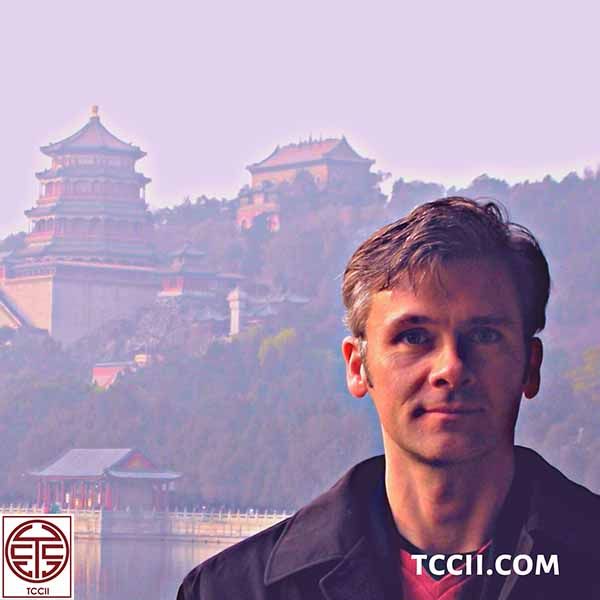
Shifu Shawn Cartwright
Over the years, that search has taken me through Taiwan, China, and the United States to study with highly respected teachers and Grandmasters, including Grandmaster Chen, Grandmaster Bai, Grandmaster Li, Grandmaster He, Shifu Lo, Shifu Alsup, and others.
But I was not simply looking for impressive demonstrations or famous names.
I was looking for complete traditional systems with real depth, clear method, and the ability to transmit skill from teacher to student.
In the old training model, a complete art was evaluated through the Liu He Ta, or Six-Sided Tower. This refers to the six essential components that make a traditional system whole. Without those pieces, a method may still be useful, but it is not the complete art.
I also learned that three things matter when choosing a teacher:
1. They must have the real lineage method.
Not just movements, but the principles, body method, applications, and internal training behind them.
2. They must be able to teach.
High-level skill is not enough. A teacher must be able to pass the art into the student’s body and understanding.
3. The transmission must be accurately understood.
When training crosses language and culture, interpretation matters. Important details can easily be lost if the interpreter does not understand the art, the language, and the training context.
That is why I have been careful about who I study with, how the material is preserved, and how it is taught.
Shifu Shawn Cartwright co-founded TCCII with Dr. Yinong Chong to help preserve rare Chinese martial and internal arts, and to make them understandable for serious Western students.
Dr. Chong uses her proprietary P5LIM, the PhD 5 Level Interpretation Method, to interpret classical Chinese martial and internal arts teachings into modern English while preserving their meaning, training context, and teacher-to-student details.
Her interpretation work has been sought out even by professional interpreters working at the highest levels, because this material requires more than language fluency. It requires deep cultural, historical, and training context.
We are dedicated to transmitting the complete, authentic systems to the next generation of practitioners.
The mission is simple: to build a clear bridge between the Ancient Arts of the East and the Modern Practitioners of the West.
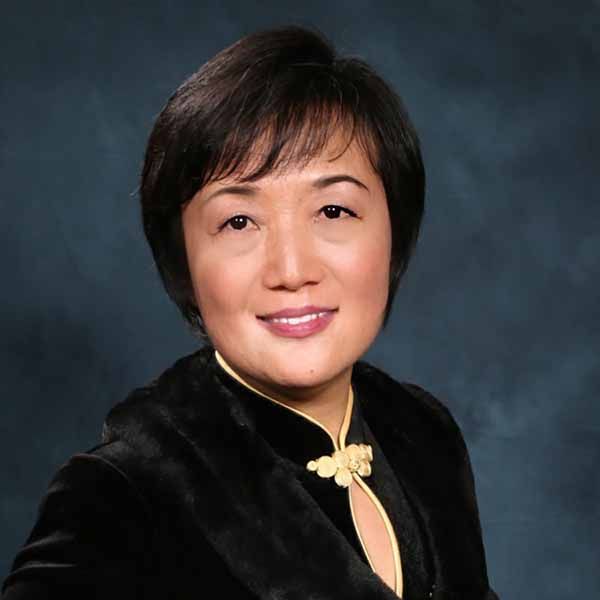
Dr. Yinong Chong
The Kē Lóng (珂龍) Internal Arts Tradition
This program is part of the broader Kē Lóng (珂龍) Internal Arts Tradition.
Within Ke Long, principle-based internal arts are not viewed as isolated disciplines.
They exist alongside Meditation, Qigong, Neigong, Internal Alchemy, Taijiquan, Internal Kung Fu, Yi Jing, Bazi, healing methods, and other traditional cultivation practices that share common principles and developmental goals.
A student may enter through Taijiquan.
Another through Kung Fu.
Another through Qigong.
Someone else through meditation or internal cultivation.
Yet over time, many discover that the same principles continue appearing throughout seemingly different disciplines.
This is one reason traditional teachers often viewed the arts as interconnected at the deepest levels.
Within the Ke Long tradition, our objective is not to produce students who simply collect disconnected methods.
Our mission is to preserve, document, and transmit the complete principle-based systems of these rare arts to the next generation of practitioners, instructors, and lineage inheritors.
Some students choose to specialize in a single art.
Others explore several branches of the tradition.
In the end, what matters most is not how many methods you study, but how deeply you understand the principles that bring those methods to life.
What is your Yang Taijiquan Lineage?
Our Yang Taijiquan comes from Grandmaster Bai Wenxiang, direct student of Grandmaster Fu Zhongwen, who studied under the famous Yang Chengfu, who was the son of Yang Jianhu, and grandson of Yang Luchan.
Yang Luchan originally learned Chen Taijiquan from Great Grandmaster Chen Changxing (14th generation Chen Family). Over time, the Yang Family adapted the art to suit new students and environments while retaining many of the deeper principles of the original system. The most visible changes included higher stances, less emphasis on overt Fajin (explosive power), reduced jumping and stomping, and other adaptations that made the art more accessible to a broader range of practitioners.
As a result, Yang Taijiquan and its derivatives are the most popular form of Taijiquan in the world.
However, the Yang style did retain the combative and self-defense applications of the original Taijiquan. These were taught to serious martial artists and passed down in the traditional manner.
Grandmaster Fu Zhongwen was one of Yang Chengfu's most accomplished students and was later entrusted with teaching Yang Chengfu's son after Yang Chengfu's passing. Grandmaster Fu also taught my teacher, Grandmaster Bai Wenxiang.
Grandmaster Bai Wenxiang was known not only for his competitive and coaching achievements, but for preserving a comprehensive approach to Yang Taijiquan that integrated forms, Push Hands, martial applications, internal development, traditional weapons, and principle-based training.
Grandmaster Bai Wenxiang (白文祥大师) was born in Henan Province, China in 1947. He began his full time Kung Fu training at the age of nine, and became a professional martial artist in the 1970s, winning the second place in Men's Cudgel Play, the third place in Men's Long Fist Form and Straight Sword Play in the National Martial Arts Competition in 1974 and 1975. After graduating from Beijing Physical Education University with a Bachelor of Science Degree in Wu Shu (Chinese Martial Arts), Master Bai became the coach of National Wushu Team of China in late 1980's. From 2002 – 2006, Master Bai was the head coach of Shaanxi Provincial Wushu Team. Currently he is the Vice President of the Shaanxi Provincial Wushu Association.
Grandmaster Bai has studied traditional Wushu and internal martial arts with several prominent world-class martial arts exponents in China. He was trained by grandmaster MA Xianda, the most famous Chinese Wushu theorist, and Grandmaster of Tongbei (通背拳). He also studied Xingyi (形意拳) with Grandmaster ZHANG Tong. He learned Bagua Zhang (八卦掌) and Six Harmony Boxing with Grandmaster LIU Chuntang, and Seven Star Praying Mantis (七星螳螂拳) with Yu Tiantang (于天堂), AKA Yu Hai (于海). He also studied Yang Taijiquan with Fu Zhongwen as well as Chen, Zhaobao and Sun style Tai Chi Chuan.
Following his successful career as a professional athlete, Grandmaster Bai became a nationally distinguished Wushu coach. As the senior professional Wushu coach for almost 40 years, Master Bai trained many National Wushu Champions, including the “Wushu Prince” ZHAO Changjun, who won the National All-Around Wushu Championship for ten consecutive years in China.
Grandmaster Bai Wenxiang also taught Shifu Shawn Cartwright (TCCII Executive Director and Co-Founder) traditional Yang Taijiquan. Shifu Shawn also learned another line of Yang Taijiquan from Dr. Tao Pingxiang, who studied with Zeng Manqing (Cheng Manching), another one of GM Yang Chengfu's students.
Recognizing how increasingly rare complete traditional transmissions had become, Shifu Shawn documented the curriculum while teaching his son, Drake Cartwright, as part of an ongoing generational preservation mission.
In addition, Drake had the opportunity to train with Grandmaster Bai Wenxiang.
The recordings from those lessons became the foundation of this Lineage Training Program.
This gives students a rare opportunity to study a traditional Yang Taijiquan system preserved through direct lineage transmission and documented during the actual teacher-to-student process through which the art is passed from one generation to the next.
What makes this program different?
Many Tai Chi and Kung Fu programs teach movements. Fewer preserve the full method behind the movements.
What makes TCCII different is the way we protect three things at the same time:
- The completeness of the art
- The accuracy of the interpretation
- The ability to teach the material clearly to Western students
1. The art must be complete
In traditional Chinese martial arts, a complete system is not just a form. It includes structure, body method, applications, internal training, weapons, partner work, teaching progression, and the principles that connect them.
We evaluate the completeness of a system through the Liu He Ta, or Six-Sided Tower. This framework helps preserve the essential parts of a traditional art so students are not left with only choreography or isolated techniques.
This matters because many students only receive part of a system. Sometimes the teacher did not have the full curriculum. Sometimes the teacher had it but did not pass it on. Sometimes the material was hidden behind the old Veil of Secrecy, where important details were reserved, withheld, or never clearly explained.
We respect the old ways, but we do not believe serious students should be left guessing.
2. The teaching must cross the East-West communication gap
Even when a teacher has the complete art, the material can still be difficult to transmit across language and culture.
Traditional Chinese martial arts contain ideas that do not translate cleanly into modern English. Terms related to Qi, Jin, Fajin, Neigong, body method, intention, and internal training often carry layers of meaning. If those layers are not interpreted properly, students may receive the words but miss the method.
This is why Dr. Yinong Chong uses P5LIM, the PhD 5 Level Interpretation Method, to help carry the meaning from classical Chinese martial culture into clear modern English.
The purpose is not just translation. It is preservation of meaning, training context, and teacher-to-student detail.
3. The material must be teachable
High-level skill does not automatically make someone a clear teacher.
A teacher must know how to organize the material, explain the progression, correct common errors, and help students understand what to practice next. That is why TCCII places so much attention on teaching method, lesson structure, and progressive training.
The result is a program that gives students more than movements to copy. It gives them a structured way to approach the art with lineage, interpretation, and method working together.
That is what we mean when we say this program is different.
What is the Liu He Ta and why is it important?
Liu He Ta, often translated as the Six-Sided Tower, refers to six key components of a complete traditional art.
It gives us a way to understand whether a system contains more than movements and techniques. A complete art should also include the philosophy, principles, methods, tools, and teacher-to-student details that make the training work.
The six parts are:
-
Dao, the Way
The larger philosophy and direction of the art. Dao helps you understand why the system exists, what it is trying to develop, and how the parts fit together. -
Li, the Principles
The rules and truths that guide the art. Li helps you understand what to do when things are uncertain, especially under pressure. -
Fa, the Methods
The training methods that develop the art over time. Fa shows you how to practice, how to progress, and how the skill is built. -
Shu, the Techniques
The specific movements and applications of the art. Shu helps you understand what to use, when to use it, and how the method becomes practical. -
Bing, the Tools
The training devices and support methods used to develop skill. Bing may include special exercises, equipment, drills, or training aids that help the body understand the method. -
Mi Jue, the Oral Secrets
The teacher-to-student details that are rarely written down and often reserved for serious students or lineage inheritors. Mi Jue helps preserve the subtle instructions, corrections, and training cues that make the art come alive.
This matters because a traditional system can become incomplete when one or more of these parts is missing. Students may receive movements without principles, techniques without method, or exercises without the deeper teaching that connects them.
That is why TCCII places so much emphasis on preserving the complete lineage method and documenting the teaching carefully for future generations.
What does P5LIM mean?
P5LIM stands for PhD 5 Level Interpretation Method.
It is Dr. Yinong Chong’s proprietary method for interpreting classical Chinese martial and internal arts teachings into modern English while preserving the original meaning, training context, and teacher-to-student details behind the words.
This matters because traditional arts like Taijiquan, Kung Fu, Qigong, and Neidan are not easy to translate word-for-word. Many important terms carry rich layers of cultural, historical, philosophical, esoteric, and practical meaning.
Dr. Chong speaks English like a native and has rare fluency in Classical Chinese, which allows her to work directly with older source material and verify meaning at a level most ordinary translation cannot reach.
Her interpretation work has been sought out even by professional interpreters working at the highest levels, because this material requires more than language fluency. It requires deep cultural, historical, and lineage training context.
The purpose of P5LIM is to keep the teaching from being flattened into a generic translation. It helps preserve the internal principles, training methods, and traditional lineage secrets so Western students can understand what is actually being taught.
How does the program work?
Once you complete your registration, you receive immediate access to the online TCCII training portal.
Inside the portal, you’ll find your course organized into clear lessons, structured in a logical progression to optimize your training. Select a lesson, press play, and follow the course at your own pace.
Some lessons and bonuses are intentionally locked until the right point in the course. As you progress, more material unlocks so you can follow the training in the intended order.
You can return to earlier lessons for review according to the access included with your purchase. This is especially useful for revisiting posture, movements, forms, and the deeper principles introduced in the course.
Because the program is online, you can study wherever you have internet access and train at the times that work for your life. You do not have to travel across town, rearrange your schedule around a local class, or depend on whether a qualified instructor in this method happens to live nearby.
The course gives you a structured way to begin this method with clear guidance, lineage context, and practice support inside one training portal.
Can I really learn from an online program?
That’s a fair question. Let me ask you this... have you ever learned anything meaningful online?
Most people have. Martial arts are different, of course, but the real question is not whether online learning can work. The real question is what can be taught well online, what needs hands-on correction, and how is the training structured?
Every training format has strengths and limitations: books, live classes, private lessons, demonstrations, and online study all teach in different ways.
I used to doubt whether serious internal martial arts could be taught online. Then the pandemic forced us to teach remotely, and I saw something surprising... some students actually improved faster.
There were two main reasons.
First, video made it possible to present private teaching material with clear structure, multiple angles, and careful explanation. In a live group class, students often miss details because of where they are standing, who is in front of them, or how quickly the class moves.
Second, students could rewatch the lessons. That matters. In a private lesson, you may receive a correction once and then have to remember it. In an online course, you can return to the same teaching again and again, compare angles, slow down your study, and review the details between practice sessions.
That changed the way I thought about online training.
This program is designed to give you many of the benefits of private instruction while using the strengths of modern video learning:
-
Structured progression
Lessons are organized so you know what to study next and what to review. -
Multiple viewing angles
Forms, applications, and demonstrations can be studied from more than one perspective. -
Repeatable instruction
You can rewatch lessons as often as your access allows, which helps you catch details you missed the first time. -
Lineage training without travel
Study from home without airfare, hotels, meals, lost work time, commuting, or navigating the uncertainty and expense of international travel. -
A clearer foundation before private correction
If you later choose private lessons or partner training, you arrive with a stronger base. That makes hands-on correction more focused and useful.
For advanced martial application, push hands, and partner work, nothing replaces direct contact with another person. But online training can prepare you extremely well by teaching the forms, principles, body method, applications, and training sequence before you enter that hands-on stage.
Can I go back and rewatch my lessons?
Yes. In fact, you are encouraged to return to the lessons and review them according to the access included with your purchase.
That is one of the real benefits of our online training model. You can revisit the teaching, compare details, and notice things you may have missed the first time.
I often think about how valuable it would have been to have films of my private lessons from the early days of my training. That is one reason I filmed these lessons for my son, Drake Cartwright.
These class films are an important part of the legacy I am passing on to him. I am grateful that today’s technology allows us to make this training available to sincere students, even if you live in another city or country.
Can I start anytime?
Quite frankly, I don't know.
We plan to maintain the Lineage Training Programs for the foreseeable future for students who are already registered.
However, I cannot guarantee that REGISTRATION will be open next month or next year.
The reason why is not to create some sort of "artificial scarcity."
The art doesn't need that any of that BS... it's scarce enough as it is.
The reality is that is sometimes necessary to close program registration for long periods of time. This is because I like to be available for new students to ask questions to help them get started.
But remember that lineage trained Shifus are quite busy. In addition to taking care of my family, I have several other projects in the works that demand attention.
The Lineage Training Programs are living and evolving. It takes a lot of time and hard work to create the lessons and craft them into a proper program. (BTW, skill obtained by hard work over time is the real meaning of Kung Fu.)
And it's not the type of thing that can be easily outsourced to someone who is not lineage trained, so there's no "easy button." I wish there were but there's no way an outsider can possibly understand how to craft a Lineage Training Program like this.
That means we sometimes have to close registration to update the program or because of other events and demands in our life.
We have some programs that have been closed to new registrants for more than a year. One was closed for three.
Anyway, that's enough about us...
If registration is currently open, then you may proceed to start the program.
Which sheds light on the real question...
And the question is not whether the opportunity exists?
The question is whether you are ready to start today or do you want to put it off until tomorrow or next month or next year?
Is what you're doing today bringing you closer to where you want to be?
Many people assume that doing nothing leaves them exactly where they are.
It doesn't.
The body changes.
Flexibility declines.
Balance becomes more difficult to maintain.
Old injuries become less forgiving.
The habits that weaken the body become more deeply ingrained.
Time marches on whether we train or not.
I have yet to meet a serious practitioner who wished they had waited longer to begin their training.
I have met many who wished they'd started sooner.
When I began training, I could ask questions to Grandmaster Chen Quanzhong directly.
Today, sadly, that is no longer possible.
Yes, the true transmission remains.
But my teacher does not, except in my memory.
That brutal reality taught me something important...
Traditional arts survive only because each generation chooses to continue the journey.
My son, Drake had that tough realization himself... one day Shifu-Dad won't be here.
Which is why this Lineage Training Program exists... to document the art for future generations.
So they wouldn't have to try and reconstruct from scattered fragments and missing pieces.
Look, many people spend years collecting books, videos, seminars, certifications, and information.
Far fewer spend those same years developing genuine skill.
The danger is rarely choosing the wrong path.
The danger is spending another five years exactly where you are now.
Or worse.
Less mobile.
Less capable.
Less healthy.
Still saying:
"One day I'll start."
You do not need to know everything before you begin.
In fact, most students who wait until they feel completely ready never begin at all.
The hard truth is that nobody is ever completely ready.
Only by doing the program do you become ready.
Not the other way around.
The authentic training has been preserved.
The hidden methods have been preserved.
The original lineage has been preserved.
The system is here.
The only question remaining is whether now is the time for you to begin.
Five years from now, you'll wish you had started five years ago.
The best time to begin was 20 years ago.
The second-best time is today.
Sincerely,
Shifu Shawn Cartwright
Preserving the Traditional Yang Taijiquan Lineage Methods
Begin your lineage training program today...
DISCLAIMER
THE INFORMATION PRESENTED HEREIN IS FOR INFORMATION PURPOSES ONLY. YOU ASSUME ALL RISKS. THE COMPANY IS NOT RESPONSIBLE FOR ANY INJURY WHICH MAY OCCUR THROUGH YOUR USE OF THIS INFORMATION. YOU ASSUME ALL RISK ASSOCIATED WITH USING ANY OF THIS INFORMATION. CONSULT A MEDICAL PROFESSIONAL BEFORE BEGINNING ANY ACTIVITY.
UNDERSTAND THAT OUR RESULTS ARE NOT TYPICAL. MOST PEOPLE SIMPLY WON’T INVEST THE TIME, EFFORT, OR COMMON SENSE INTO THEIR OWN TRAINING. YOUR RESULTS WILL BE DIRECTLY PROPORTIONAL TO YOUR WISE INVESTMENT IN YOURSELF.
NOTHING CONTAINED HEREIN SHOULD BE CONSTRUED NOR IS INTENDED TO BE USED FOR MEDICAL DIAGNOSIS OR TREATMENT. NEITHER SHOULD IT BE USED AS A REPLACEMENT FOR THE ADVICE OF YOUR PHYSICIAN OR OTHER QUALIFIED HEALTH CARE PROVIDER. SHOULD YOU HAVE ANY HEALTH-CARE RELATED QUESTIONS, PLEASE CONSULT YOUR HEALTH CARE PROVIDER IN A TIMELY FASHION. THE COMPANY WILL NOT BE LIABLE FOR ANY DIRECT, INDIRECT, CONSEQUENTIAL, SPECIAL, EXEMPLARY, OR OTHER DAMAGES ARISING THEREFROM.