Five Ferocious Beasts
Legendary Southern Shaolin Kung Fu Animals
For generations, the Animal Systems of Southern Shaolin have fascinated martial artists around the world. Each animal embodies unique attributes, strategies, methods, and training principles developed through centuries of refinement.
In this special training program, you'll learn introductory methods from the Five Famous Animals of Southern Shaolin and discover how traditional masters used animal concepts to develop power, structure, coordination, strategy, and skill.
Unlike modern programs that focus solely on learning movements, this course introduces the principles that make the movements work.
Dragontastic Halloween Special
Who's got your back? Awesome Dragon, that's who.
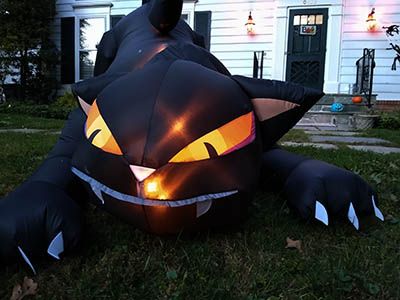
Dragontastica has whipped Cattastica the Demon Kitty into good behavior. To celebrate he's sharing a veritable Cauldron of Kung Fu Secrets with a super sweet tuition savings.
Keep Reading to See Your Treats
Here's what's inside
More than forms. More than techniques.
Each animal reveals a different way of generating power, applying force, and expressing martial principles.
The deeper lesson is learning to recognize the principles hidden beneath the movements.
Lesson 1: Tiger
Ahhhh, the itty-bitty kitty kitty... so cute and cuddly looking... wait... that's the Cat. Because if you try that "sweet kitty cat" thing on the Tiger they could very well shred your day with the legendary Tiger Claw. No wonder they are called the King of the Forest.
Lesson 2: Leopard
Fast. Explosive. Agile.
More than the Tiger's lesser-known cousin, the Leopard is dangerous beast in its own right. The Leopard is known for its unique rending attacks and its ability to generate impressive force from a smaller frame.
Lesson 3: Snake
Hello Sneaky Snake. Well... sneaky in a different way than the scurrying Rat... the Snake delivers excellent, subtle movements and non-telegraphic strikes. While Cats give Snakes a run for the money when it comes to quickness, the Snake specializes in straight line, lightning strikes.
Lesson 4: Crane
The crane is light, agile, and swift. Not as quick as the snake nor as powerful as the Tiger, but it uses circular, whipping motions to outperform both of them ounce for ounce. It's surprisingly powerful for such a seemingly effortless strike.
Lesson 5: Dragon
We arrive at the wonderful, glorious, noble, kingly, awesome DRAGON. And the Dragon animal is unique because it can do any of the other animals. Did I mention that Dragons are great? The Dragon's special method not only integrates the other animals but also adds its own unique turning and enveloping movements. Understanding Dragon helps reveal how the individual animals fit together as part of the larger principle-based training system.
Oh, did I mention that Dragons are awesome?
Bonus Lesson: Cat
Most practitioners have heard of Tiger.
Few have ever encountered the Kung Fu Cat.
As a special bonus, you'll receive an introductory lesson from one of the rarest and least-known animal methods preserved within traditional Southern Kung Fu.
Discover how the Cat expresses many of the same combat principles as the Tiger, yet adapts them through entirely different attributes and strategies.
The Cat Strikes are light and angular. Drake said to me after I taught him the Cat, "Dad, your cat strikes are surprisingly painful." Anyone that's ever been attacked by a pyscho house cat knows they aren't messing around.
Which may be why traditional Grandmasters considered it worthy of study.
The Cat expresses many of the same principles as its larger cousin, the Tiger, while adapting them to a smaller, lighter, and more agile frame.
On the surface, they appear very different.
Beneath the movements, however, many of the same principles appear again and again.
This is one reason traditional Grandmasters transmitted systems rather than collections of techniques.
The deeper lesson is not simply learning how the Cat moves.
It is learning to recognize how principles can be adapted to different bodies, different situations, and different challenges.
Special Bonuses
Bonus #1: Wudang Sword Fundamentals
Enjoy an introductory lesson exploring foundational concepts from the legendary Wudang Sword tradition. If you like blades to go with your beasts, we've got you covered.
Bonus #2: Internal Power Development
I convinced Dr. Yinong Chong to share one of her lectures on the key principles used to develop coordinated whole-body power and internal force projection.
Bonus #3: Tuition Credit Toward the Complete Program
If you later choose to enroll in the complete Southern Shaolin Animals & Wudang Sword Lineage Training Program, your Five Fearsome Animals tuition may be applied toward your enrollment.
Your training today can become the first step in a much larger journey.
Who Is This For?
This program is ideal for:
- Beginning martial artists curious about traditional Kung Fu
- Tai Chi and Qigong practitioners seeking deeper martial understanding
- Experienced martial artists interested in Southern Shaolin methods
- Students fascinated by the traditional Five Animals
- Anyone who wants a practical introduction to authentic lineage-based training
No previous experience is required.
Halloween Special Tuition
Regular Tuition: $101
Today, use code:
AWESOMEDRAGON
for a spookily delicious tuition scaredown.
Here's everything you get...
Five + 1 Kung Fu Animals
- Five Ferocious Beasts Training Program
- Rare Cat Animal Bonus Lesson
Three Valuable Bonuses
- Wudang Sword Fundamentals Lesson
- Internal Power Development Lesson
- Tuition Credit Toward the Complete Program
All you have to do is tap the button below…
It will take you to a registration page…
Where you
1) Enter your information…
2) Get started in less than 4 minutes...
Tap the button today and unlock the power of the Five Ferocious Beasts.
We'll see you on the inside.
Sincerely,
Shifu Shawn Cartwright and Drake Cartwright
Frequently Asked Questions
Answers to your questions about the Shaolin Animals & Wudang Sword Lineage Training Program.
What Does "Kung Fu" Mean?
The Chinese term Kung Fu (功夫) is one of the most recognized words in martial arts.
Ironically, it is also one of the most misunderstood.
Most people hear the words "Kung Fu" and immediately think of fighting systems, animal styles, Shaolin monks, martial arts movies, or legendary masters performing astonishing feats.
But that is not actually what the term means.
Strictly speaking, the Chinese term for martial arts is Wushu (武術), which literally means "martial methods" or "martial arts." Traditional systems such as Southern Shaolin, Fujian White Crane, Tongbei, Taijiquan, Xingyiquan, and countless others would all be considered forms of Wushu.
To make matters more confusing, many people today associate the term Wushu with the modern Chinese performance sport featuring acrobatics, jumps, spins, and highly choreographed routines. While modern sport Wushu certainly requires athletic skill, it is only one modern sport branch of a much older martial tradition. Traditional Wushu includes fighting methods, self-cultivation practices, weapons training, internal development, and the transmission of complete martial systems. It was not designed for simple entertainment.
Another common traditional term is Quan (拳), usually translated as "fist" or "boxing."
Consider these famous arts...
- Taijiquan
- Tongbeiquan
- Fujian Beihequan
- Xingyiquan
- Nan Huaquan
The word Quan simply indicates a boxing method or martial system.
So where does Kung Fu fit into all this?
Surprisingly, Kung Fu doesn't actually mean "martial art."
A person can spend twenty years studying martial arts and still not understand that distinction.
The word is much closer to what we might call cultivated skill, earned ability, or even mastery developed through effort over time.
Think about someone who has spent decades playing the violin.
Or a master carpenter whose hands know exactly how much pressure to apply before a tool even touches the wood.
Or an experienced chef who can tell something is wrong by smell alone.
What you're seeing in those examples isn't talent.
You're seeing Kung Fu.
... Years of practice.
... Thousands of repetitions.
... Countless corrections.
Skill developed so thoroughly that the person can express it almost without thinking.
Traditional martial artists used the term in much the same way.
The forms help develop Kung Fu.
The weapons help develop Kung Fu.
The Neigong, conditioning methods, partner drills, applications, and sparring methods help develop Kung Fu.
But none of those things are Kung Fu any more than a piano lesson is music.
They are the training methods through which skill is cultivated.
This distinction helps explain why traditional teachers often cared more about how a student practiced than how many techniques they knew.
Look, there's no doubt that knowledge, techniques, and forms have value.
But wisdom, skill, and style emerge from the process of working with those things over time.
That's one reason complete traditional systems were built the way they were... like a castle on a foundation of bedrock.
Each training method in the art develops something different, but complementary to the rest.
For example, techniques teach the fundamental shapes while basic forms teach how to connect the shapes... movement.
The applications reveal function while the weapons sharpen timing and precision.
The specialized training methods develop the unique Jins or power expression of the art.
And the often-hidden internal methods develop deep connection, awareness, and Qi power.
Over time, those pieces begin reinforcing one another until the practitioner gradually develops genuine ability rather than simply accumulating information.
In that sense, Kung Fu is not something you can purchase.
Kung Fu is not something you memorize.
And it is certainly not something you acquire over a weekend seminar.
It is something you build like a castle.
Brick by brick...
One quality practice session at a time.
How is this Southern Shaolin & Wudang System Different?
Southern China produced an incredible variety of martial arts traditions.
Animal Boxing.
White Crane.
Hakka Arts.
Village Systems.
Family Systems.
Temple Traditions.
Secret Society Traditions.
Many of these systems share common influences and underlying principles while still preserving their own unique methods and traditions.
For that reason, the question is not:
"Which style is best?"
The more useful question is:
"What aspects of the tradition were preserved?"
Some systems emphasize forms.
Others emphasize applications.
Others focus heavily on conditioning, competition, self-defense, health, or cultural preservation.
Our lineage places special emphasis on preserving the complete relationship between the Animal Systems, the Fujian Hand, internal development, martial applications, partner training, weapons methods, and the principles that connect them together.
The Animal Forms are Only the Beginning
Most people encounter Southern Kung Fu through the visible layer of the art.
For example, many have heard of the famous Five Animals of Southern Shaolin...
Tiger, Leopard, Snake, Crane, and Dragon.
These methods are valuable in their own right and contain unique body mechanics, tactical concepts, force-generation methods, and training strategies.
However, the most advanced traditional teachers generally viewed the Animals as expressions of deeper principles rather than mere animal imitation styles.
So while the movements are important, it is the underlying Jin development that powers them, the internal methods that bring them to life, and the principles that integrate the entire system.
The Fujian Hand Provides the Deeper Foundation
One of the distinguishing characteristics of this transmission is the preservation of the Fujian Hand (Fujian Boxing) traditions found "under the hood" of many of these diverse and interesting arts. The most visible influence of Fujian Hand is the iconic Three Battles (sometimes called Three Step Battles) power-development methods that support the broader system.
Over time, many practitioners inherited portions of the Southern systems.
A smaller number inherited the deeper body methods, power-development practices, internal principles, and training progressions that connected those methods together.
In other cases, the forms survived while portions of the underlying power-development methods were gradually lost during the political upheavals, social disruption, and cultural changes that plagued the last few centuries.
This is one reason the Fujian Hand occupies such an important place within our curriculum.
It helps students understand not merely how to perform a movement, but how to generate the structure, connection, power, and internal qualities that allow the movement to function as intended.
Internal and External Development
Many martial systems emphasize either external development or internal cultivation.
Traditional Southern systems often sought to develop both.
Strength and relaxation.
Power and refinement.
Conditioning and internal development.
Life-protecting skill and life-nourishing practice.
As students progress through the curriculum, they discover that Animal Boxing, Three Battles, martial applications, conditioning methods, sparring, and Wudang Sword relate to one another much like Yin and Yang.
They may appear different on the surface, but each helps define, balance, and complete the other.
Together they reveal a deeper set of principles running throughout the system.
A Complete Transmission Rather Than Isolated Fragments
Perhaps the greatest difference is not found in any individual form, technique, or training method.
It is found in the completeness of the transmission itself.
Many practitioners spend years collecting forms.
Others collect techniques.
Some accumulate seminars, certifications, and information from many different sources.
Traditional lineage systems were designed differently.
The objective was to preserve a coherent training progression through which forms, power development, internal methods, applications, weapons, strategy, and self-cultivation could support one another.
A beginner sees movements.
An intermediate student begins recognizing the methods behind those movements.
An advanced practitioner discovers how the same principles appear throughout the entire system.
This is one reason practitioners can spend decades studying traditional Southern arts without exhausting their depth.
The goal is not simply to learn more material.
The goal is to discover increasing depth within the same principles.
Is Southern Shaolin Kung Fu Internal Or External?
The short answer is:
Both.
This surprises many people because Southern Shaolin Kung Fu has long been associated with powerful strikes, strong stances, vigorous conditioning, and methods that are often described as "hard" training.
That reputation is well earned.
Many Southern systems emphasize conditioning, force development, impact training, and practical fighting methods. In fact, arts such as Karate trace portions of their heritage back to Southern Chinese boxing traditions, which helped reinforce the perception that Southern systems are primarily external arts.
Movies and demonstrations have contributed to this impression as well. Iron Palm, Iron Shirt, Golden Bell, board breaking, and other dramatic conditioning methods are visually impressive, so they often receive the most attention.
What is less obvious is that many of the Southern systems were profoundly influenced by the internal methods of the Fujian tradition.
The original Fujian Hand emphasized structure, relaxation, breath regulation, body integration, internal cultivation, and coordinated whole-body power. Proper practice often requires a degree of softness, sensitivity, and connection that surprises students who expect Southern Kung Fu to be based solely on muscular force.
In this sense, the traditional Southern systems sought to develop both:
- Hardness and softness
- Strength and relaxation
- External skill and internal development
- Life-protecting and life-nourishing methods
Consider Taiji (the principle, not the martial art named after it)...
The mutual interchange of Yin and Yang...
... Hard and Soft, Internal and External, Fast and Slow, Gentle and Violent, Qi and Li (internal energy and physical force).
All are needed to make the art function as intended.
As students progress through the curriculum, they discover that Animal Boxing, Three Battles, martial applications, conditioning methods, sparring, and Wudang Sword are not unrelated aspects of the art.
They're more like different sides of the same tower.
The methods might change, but each plays an important role.
The principles underlying them unify and reinforce them.
Or to put it another way...
The external methods train the body.
The internal methods give the body life.
Together they create complete Kung Fu.
Why Are Southern Shaolin Animals and Wudang Sword Taught Together?
The short answer is that they were probably never as separate as modern martial artists often imagine.
Traditional accounts credit the famous Five Animal methods of Southern Shaolin to a Daoist master associated with the ancient Tongbei traditions. Over time, those methods influenced countless later systems, including many forms of internal and external Kung Fu.
Fujian White Crane followed a similar path. It combined existing Southern martial methods with Daoist cultivation practices, internal development, and sophisticated power-generation methods that eventually became known throughout Fujian and beyond.
By that point, hundreds of years of cross-pollination had already occurred. Teachers exchanged methods. Students traveled. Systems borrowed, adapted, refined, and evolved.
Then we arrive at Wudang Sword.
Although most people think of it as a completely different art, the sword was historically prized for many of the same qualities valued in the Fujian traditions: structure, refinement, body integration, intention, timing, relaxation, and the ability to express power without relying on brute force.
In other words, while the Five Animals, Fujian Hand, and Wudang Sword may appear very different on the surface, their stories, principles, and methods often intersect in surprising ways.
Which is why traditional teachers frequently saw no contradiction in preserving them together.
The modern mind sees separate styles.
The old masters often saw different expressions of the same deeper principle-based methods.
Why is Fujian Three Battles so important?
One of the biggest misconceptions about Fujian Three Battles is that it is "just another form."
Or worse, that it somehow replaces the Animal Systems.
Neither is true.
The traditional Southern Animals already contain their own power-generation methods, body mechanics, tactics, and training principles. In fact, many of the famous Animals became complete martial systems in their own right.
Tiger develops power differently than Crane.
Crane develops balance differently than Dragon.
Dragon develops change differently than Leopard.
Leopard develops speed differently than Snake.
Each Animal teaches its own lessons.
This is where Three Battles becomes interesting.
The Fujian traditions viewed Three Battles as a deeper developmental method that could be applied across many different methods.
Think of the Animals as high-performance sports cars.
Each one has its own design, strengths, and style.
Think of the Fujian Three Battles as more like the supercharger, engine tuning, suspension upgrade, and guidance system that helps all of them perform at a higher level.
It develops the body, breath, and mind while harmonizing them with power, Qi, and spirit.
In short, it develops the ability to coordinate the entire body-mind-spirit as a single unit.
Over time, these qualities begin enhancing everything else the practitioner does.
This is one reason myriad versions of Three Battles spread so widely throughout Southern China and eventually found their way into derivative arts such as Karate.
Traditional teachers recognized that while the Animals taught specific methods, Three Battles helped develop the practitioner at a deeper level.
Which is the real goal.
A dedicated practitioner is not content with merely imitating the moves of an animal... and no matter what cool nickname your friends give you, you're not really a tiger.
They want true transformation.
For that reason, Fujian Three Battles is often described as one of the gateways into the deeper levels of the Southern arts.
Not because it replaces the Animals.
But because it helps bring the deeper potential of the student fully to life.
What is the Difference Between Southern Shaolin, Fujian White Crane, and Related Arts Like Karate?
One of the most confusing aspects of traditional martial arts is that many systems share common roots, movements, training methods, and principles, yet can look dramatically different from one another today.
The reason is simple.
Over time, different traditions preserved different aspects of the art.
Some preserved forms... others focused on applications or conditioning methods.
Many were focused on imitating the animals.
But a rare few preserved the complete transmission.
A good example is Fujian White Crane.
Many people hear the word "Crane" and assume it is simply another animal imitation style, similar to the Crane found in Southern Shaolin Animal Boxing.
In reality, the traditional Fujian system represented something much deeper.
While it certainly contains movements inspired by natural principles, the art became especially known for its methods of structure, body integration, force generation, breath regulation, internal development, and power cultivation. These methods profoundly influenced many Southern martial traditions.
Over time, portions of those teachings made their way into Southern Animal Boxing systems, village styles, family traditions, Hakka arts, and eventually even into Okinawan Karate.
This helps explain another common question:
Is Three Battles the Same as Sanchin?
Simply put, the question starts with the wrong premise.
The famous Three Battles (San Zhan also called San Bu Zhan) of the Fujian traditions was the ancestor of the Sanchin found in certain Karate systems.
Many aspects of the forms are similar...
Basic structure, breathing, conditioning, tension, and raw power.
However, the original Fujian Three Battles traditions emphasized the internal Qi development and refined power (Jin).
As a result, two practitioners may perform forms that appear similar while training very different aspects of the art.
There's a reason some experienced Karate Senseis (teachers) are seeking out Fujian White Crane practitioners to continue their training.
Likewise, the same points apply to many other Southern systems, which often absorbed just the superficial elements of Three Battles while gradually losing portions of the deeper internal and power-development methods.
What About Modern Sport Wushu?
Traditional Wushu refers broadly to Chinese martial arts.
Modern Sport Wushu provides another, even starker example of what happens when a tradition chooses to preserve one aspect of an art while setting aside others.
In this case, the emphasis shifted toward athletic performance, visual presentation, flexibility, speed, and competitive demonstration.
The result is undeniably impressive.
But at what cost?
Recall that traditional Southern martial arts were designed to preserve martial function, internal development, self-cultivation, conditioning, weapons training, strategic principles, and teacher-to-student transmission.
While you can certainly argue that neither approach is inherently better, they are clearly attempting to preserve very different things.
The real question is...
What do you want out of your training?
Are you in for balletic "Kung Fuey" movie-like moves?
Or do you want to immerse yourself in the methods that the old Tian Di Hui Grandmasters considered important enough to preserve through generations of turmoil, secrecy, and change?
As you probably already know, very few systems preserved the complete transmission.
And preserving that complete transmission is ultimately what this program is about.
Why Does Traditional Kung Fu Include Weapons Training?
The modern mind often assumes that weapons were added to martial arts.
Historically, it was usually the other way around.
No warrior, soldier, bodyguard, militia member, or village defender wanted to fight empty-handed if they could avoid it. In earlier times people reached for a sword, spear, staff, knife, or whatever tool happened to be available. Today they reach for pistols, rifles, tanks, drones, or other modern weapons.
Empty-hand training provided a relatively safe way to develop timing, structure, power generation, footwork, strategy, and martial skill while reducing the likelihood of seriously injuring your training partners.
Over time, teachers used weapons for something else...
Further refining the practitioner's skill.
A sword quickly exposes flaws in precision.
A spear exposes flaws in power generation.
A staff exposes flaws in alignment.
The weapon becomes a demanding teacher that refuses to lie.
This is why traditional teachers viewed weapons as much more than combat tools.
The goal was not merely to learn a sword form.
Nor was it simply to improve your empty hand.
The goal was to develop better Kung Fu.
The weapon sharpens the practitioner.
The practitioner sharpens the weapon.
Both improve together.
That is one reason Wudang Sword occupies such an important place within our lineage. It is not treated as a separate art added onto the system. It is one more vehicle for developing the same skill, refinement, and understanding that traditional teachers sought throughout the rest of the curriculum.
Are Traditional Martial Arts Still Relevant in the Modern World?
It's a fair question.
After all, most of us aren't carrying swords, defending villages, or preparing for duels at the local teahouse.
The world has changed.
Human nature hasn't.
People still struggle with stress, fear, distraction, poor health, and the challenge of becoming better than they were yesterday.
If traditional martial arts were only about fighting, they would have disappeared long ago.
Instead, they survived because they develop something deeper:
Strength.
Discipline.
Resilience.
Focus.
Character.
And while the weapons, clothing, and technology have changed, those qualities remain just as valuable today as they were centuries ago.
Many practitioners eventually discover that their greatest opponent isn't another person.
It's inconsistency.
Impatience.
Comfort.
In that sense, traditional martial arts remain remarkably relevant.
The old masters understood a simple truth:
A strong body matters.
A disciplined mind matters.
And Kung Fu... skill earned through years of effort... matters in any century.
How Long Does it Take to Learn Shaolin Animals and Wudang Sword?
That depends entirely on what you mean by "learn."
If your goal is simply to memorize the movements of the traditional Kung FU and weapons sets, most students can learn the general sequence within several months of consistent practice.
But true Kung Fu is not merely a sequence of movements.
The forms and drills were designed to teach principles, body mechanics, internal development, balance, coordination, efficient movement, martial understanding, and self-cultivation. Those deeper layers continue revealing themselves over time.
Many students initially believe that the goal is to learn the entire form.
Later, they discover that learning the movements was actually the easy part.
The real challenge is learning to express the principles hidden within those movements.
For example, a beginner may focus primarily on remembering the choreography.
An intermediate student begins refining relaxation, structure, balance, rooting, coordination, and whole-body connection.
An advanced practitioner explores the deeper layers of Neigong, conditioning drills, martial applications, weapons training, internal development, and the principles that unite the entire system.
Eventually, students discover that the form is not the destination.
It is the vehicle through which the principles are transmitted.
This is one reason practitioners can study the same Animals or Sword form for decades without exhausting its depth.
The goal is not simply to memorize more movements.
The goal is to continually refine the quality of the movement, the body mechanics behind it, and the understanding that brings the art to life.
So how long does it take to learn Kung Fu?
A few months to learn the movements.
A few years to develop meaningful skill.
A lifetime to explore the depth hidden within the art.
And for many practitioners, that is precisely what makes the arts so rewarding.
Can Kung Fu be learned online?
That is a fair question and one that more people should be asking in this online age.
In fact, I used to be skeptical myself.
Kung Fu has traditionally been taught through direct teacher-to-student instruction, hands-on correction, and years of careful practice. Like many martial artists, I originally assumed that serious training had to take place in person.
After all, "hands on, bruises and blood" was how I was trained for decades.
Then something happened.
The pandemic forced many instructors, including me, to teach online.
To my surprise, I discovered that some students actually progressed faster than I expected.
The reason wasn't that online training was better than direct instruction.
It was that online training has advantages that traditional group classes do not.
Students can review lessons repeatedly, study movements from multiple angles, practice at their own pace, and revisit corrections they would normally hear only once.
Which is huge... I can't tell you how many times I wished I had film of some of my training sessions so I could go back through all the stuff I was taught rather than wait until the next lesson to ask for a review. And given that so many of my teachers have transitioned to the next world, there is no "next lesson."
That realization became one of the motivations behind our generational preservation mission.
Many of the lessons within this curriculum originated from actual lineage instruction and private teaching footage recorded while I was teaching my son, Drake Cartwright, with the goal of preserving the complete system for future generations.
Anyway...
I've found that students can successfully learn standing practice, Shen Fa, forms, Neigong methods, martial applications, weapons training, and the theoretical foundations of the art through high-quality video instruction and consistent practice.
Of course, some aspects of the art benefit greatly from direct interaction.
Push Hands, partner drills, sensitivity training, and advanced application work are naturally enhanced when practiced with another person.
However, that does not mean students must wait until they find a training partner before beginning.
In many cases, students can build an exceptionally strong foundation before ever stepping into a training hall.
In fact, I have found that students who arrive for in-person instruction after studying the material online often have a deeper intellectual understanding of the movements, principles, and training methods than they would otherwise.
This allows the in-person training to focus less on explanation and more on refinement. The student ends up getting far more value from the lesson because they already understand the basics and we can focus on the deeper layers of the art.
Look, no video can completely replace direct "hands on" teacher correction in the martial arts.
But a well-structured online training program can provide an excellent foundation in the forms, principles, Shen Fa (Body Method), internal development methods, and training progression of the authentic art.
The goal is not to replace traditional instruction.
The goal is to help students build a stronger foundation so that when direct instruction becomes available, they are prepared to get the maximum benefit from it.
Why is it called Five Animals if there are really a dozen in Southern Shaolin?
A dozen animals?
Surely, you jest.
If there is one animal in Southern Shaolin, there's an untold number.
All invented by a wise master watching some critters do cool stuff and then thinking "How I could make something kickassery out of that?"
Or something like that.
Regardless of their actual original, there are many more than the five famous animals everyone knows...
Tiger, Leopard, Snake, Crane, and Dragon.
Think of those five as the headliners... the main band at the Rock and Roll concert.
In addition, there are a number of other animals in the system such as Mantis, Monkey, Panda (just joking, but there is a "Bear"), Phoenix, Hawk, Dog, Qilin (Unicorn), Butterfly, Elephant, and Ghost (I know, it's weird that Ghost is considered an animal, but that's a complex and esoteric discussion.)
Had enough animals yet?
No?
Okay how about Rat, Spider, Crab, Dove, Tai Bird (more mystical beasts!), Turtle, and Mo or Demon (Yikes!)
Want something less exotic? Try on Cat, Lion, Scorpion, Horse, Rooster, Ox, Sparrow...
Clearly those old monks had a lot of free time to observe nature.
And if there is one thing the old Grandmasters seem to love, it's turning animals into Kung Fu systems.
Which is one reason Southern Kung Fu remains so fascinating.
The deeper you study, the more you discover that the "Five Animals" were never really meant to be a complete list.
They were simply the most famous doorway into a much larger world.
Did People Really Learn Kung Fu Through Secret Societies?
Yes.
It's one thing the movies actually got right.
Of course, not everyone belonged to a secret society, and Kung Fu was certainly taught through village lineages, martial families, military traditions, and temple communities as well.
But many highly skilled practitioners did belong to organizations such as the Tian Di Hui (Heaven and Earth Society), also known as the Hong Men.
These groups helped preserve, refine, and transmit martial methods during periods of tremendous political and social upheaval. Many of their Grandmaster teachers passed their knowledge only to dedicated practitioners who demonstrated loyalty, discipline, perseverance, and good character.
The Tian Di Hui traditions placed tremendous value on brotherhood, honor, dedication, and transmission from one generation to the next.
Were the Legends True?
That depends on what you mean by "true."
Stories about the Southern Shaolin Temple, the Five Ancestors, Zhang Sanfeng, wandering Daoists, immortal sages, hidden manuals, and secret transmissions have been passed down for generations.
Some may contain historical facts.
Others likely preserve symbolism, folklore, cultural memory, or important lessons disguised as stories.
As historians often point out, the exact details may be debated.
But the stories themselves reveal what the tradition considered important enough to remember.
Why Are There So Many Different Stories?
First, many of these traditions operated behind a veil of secrecy.
That secrecy helped protect the arts and the people who carried them.
But it also created a problem.
When only a handful of trusted students received the complete transmission, valuable knowledge could easily be lost when a teacher passed away without fully transmitting the art.
Second, these traditions evolved through countless families, villages, temples, secret societies, military groups, and individual teachers over hundreds of years.
There was no central committee issuing official press releases.
Stories evolved.
Details changed.
Local traditions developed their own versions.
Sometimes metaphors were used to conceal deeper meanings from outsiders.
And different teachers naturally emphasized different aspects of the same events.
Ironically, that diversity may be one of the reasons the arts survived at all.
The real question is not...
"Which story is completely correct?"
The more useful question is...
"What did the story preserve?"
And ultimately, the most important question is...
"What will you do with the knowledge?"
Does this Course Include Internal or Esoteric Training?
Yes. Traditional Chinese Internal Kung Fu has always included internal training concepts that are part of the larger lineage system, including Neigong, Qi cultivation, Shen Fa (Body Method), whole-body power development, and traditional methods of self-cultivation.
These ideas are not presented as abstract philosophy. They are explored through posture, movement, breath, attention, body mechanics, and consistent practice.
Just as importantly, you are not required to hold any particular belief about every traditional explanation in order to benefit from the training.
Many students approach concepts such as Qi from different perspectives. Some view them through the lens of traditional Chinese culture. Others prefer to think in terms of body mechanics, physiology, breathing, coordination, and nervous-system development.
Both approaches are welcome.
What is not helpful is becoming distracted by the need to constantly debate, dismiss, or challenge ideas that are part of the traditional training culture.
You do not need to believe everything.
You do need to approach the material with respect.
If a concept makes sense to you, explore it.
If it doesn't, simply train the method and observe the results for yourself.
The goal is not to convince anyone of a particular worldview.
The goal is to provide an honest introduction to the traditional principles, methods, and language preserved within the lineage while allowing students to develop their own understanding through direct practice and experience.
Skepticism is welcome.
Disrespect is not.
This course is designed for students who are willing to keep an open mind, train sincerely, and allow the art to speak for itself.
Is this the Complete System?
That depends on what you mean by "complete."
If by complete you mean every Southern form, every branch, every variation, every family tradition, and every related art ever developed in Fujian or Southern China, then no such system exists.
Southern martial arts are incredibly diverse. Over the centuries, practitioners created hundreds, perhaps thousands, of forms, training methods, and specialized branches.
That is not what traditional teachers meant when they spoke about a complete transmission.
Traditionally, a system was considered complete when it contained all the essential elements necessary to develop, understand, preserve, and transmit the art. In our lineage, this concept is evaluated through the Liu He Ta (Six-Sided Tower) framework.
In other words, the question is not:
"Does the system contain everything?"
The more useful question is:
"Does the system contain everything necessary?"
Our Southern Shaolin and Wudang curriculum preserves a complete transmission of our family tradition, including the forms, principles, body methods, power-development practices, applications, weapons training, internal cultivation methods, training progressions, and teacher-to-student knowledge that allow the system to function as an integrated whole.
But that does not mean the journey ends there.
Just as Taijiquan, Xingyiquan, and Baguazhang are closely related members of the Northern Internal Arts family, Southern China produced many related traditions that share historical connections, training concepts, and developmental methods.
A practitioner may spend a lifetime studying only one complete system and never exhaust its depth.
Others eventually explore closely related arts to gain new perspectives and deepen their understanding.
Both approaches are valid.
What matters is understanding that a complete transmission is not measured by the number of forms it contains.
It is measured by whether the principles, methods, and relationships that bring the art to life have been preserved.
Our lineage was entrusted with several complete transmissions in the Southern Shaolin and Fujian related traditions.
The system presented in this program is one such complete transmission, preserved and passed forward through our lineage as a rare cultural treasure for future generations of sincere, dedicated practitioners.
How Much Material is Included in the Program?
We strive to be both concise and thorough in our teaching approach.
Our goal is not to inflate course hours with unnecessary repetition, filler content, or lengthy lectures designed to make a program appear larger than it really is.
If a concept can be explained clearly in ten minutes, there is little value in turning it into a one-hour presentation.
In our experience, students benefit far more from reviewing lessons, reflecting on the principles, and actually practicing the methods than they do consuming endless hours of video.
Traditional Chinese Kung Fu is ultimately a cultivation art.
The lessons provide the instruction.
The practice develops the skill.
The application of the principles produces the results.
For students who wish to understand the structure of the curriculum, the program currently includes approximately:
- 64+ training modules
- Hundreds of lessons
- Sequential curriculum progression
- Forms, Conditioning Drills, Martial Applications, Neigong, Weapons Training, and Internal Development Methods
- Structured progression from foundational through advanced study
However, the more important consideration is not the number of lessons.
It is the depth of the material.
Unlike many programs that focus primarily on teaching movements, the Lineage Training Program was designed to progressively guide students from learning the movements, to understanding the principles behind them, to developing the skill required to express those principles in practice.
The lessons are delivered over a period of months and years, depending on how far the student wishes to progress. This reflects both traditional training methods and modern educational best practices.
Most students complete the foundational curriculum within approximately one year, though individual progress varies based on practice frequency, prior experience, and personal goals.
The cultivation practices themselves, however, can continue providing value for decades.
Because the Lineage Training Program is a living and evolving preservation project, lessons, curriculum content, and program structure may occasionally be updated or expanded over time.
For students pursuing professional development, certification, continuing education, or training documentation requirements, TCCII can provide documentation of training completed, instructional hours, and instructional format upon request.
What if I Don't Have Much Time to Train?
Many people assume they need hours of free time each day to benefit from traditional Kung Fu.
Fortunately, that isn't true.
Most students make meaningful progress training 30-60 minutes per day, four or five days per week. Some choose to train longer. Some practice every day. But meaningful progress does not require marathon training sessions.
In fact, traditional Kung Fu was never meant only for mountain hermits with endless free time.
It was practiced by all segments of society... farmers, merchants, soldiers, caravan guards, tradesmen.
Ordinary people with jobs, families, and responsibilities who valued personal protection and self-cultivation.
The secret has never been finding huge amounts of time.
The secret is consistency.
A student who practices twenty or thirty minutes consistently for several years will often make far more progress than someone who trains obsessively for a few weeks and then disappears.
You also don't need to do everything at once.
A short lesson before work.
A few minutes of form practice later in the day.
A little review before bed.
Small training sessions have a way of adding up.
And if we're being honest, many of us already spend that amount of time scrolling social media, browsing the internet, or watching television.
Remember...
The goal is not perfection.
The goal is not heroic effort.
The goal is steady progress over time.
A little practice performed consistently is often worth far more than a great deal of practice performed rarely.
What if I Can't Follow the Program Perfectly?
Many students assume they must complete every lesson perfectly and maintain an ideal training schedule.
Traditional cultivation rarely works that way.
Life happens.
People get busy.
Work, family, travel, illness, and unexpected events all have a way of disrupting even the best intentions.
The goal is not perfection.
The goal is steady progress over time.
The program is self-paced specifically so students can adapt their training to real-world responsibilities while continuing to move forward.
Some students progress quickly.
Others take longer.
What matters most is not how fast you finish, but whether you continue cultivating and developing over time.
In fact, many experienced practitioners eventually discover that progress is rarely the result of perfect training schedules.
It is usually the result of returning to the practice again and again over months and years.
Miss a day?
Resume the next day.
Miss a week?
Resume the following week.
Get it?
Remember, traditional Kung Fu is not a race.
It is a lifelong practice.
The students who ultimately develop the most skill are rarely the ones who train perfectly.
More often, they are the ones who simply keep showing up.
Will this Program Complement other Taijiquan, Martial Arts, Qigong, Meditation, or Wellness Practices?
In many cases, yes.
The Lineage Training Program was designed to teach fundamental principles and methods that can deepen understanding of many related practices.
Students often find that body mechanics, structure, whole-body movement, conditioning, rooting, balance, coordination, and force-development principles enhance their understanding of other martial arts, movement disciplines, meditation practices, and health-oriented systems.
Because the program emphasizes principles rather than isolated techniques, many students discover that the lessons learned through Kung Fu practice naturally carry over into other aspects of their training and daily life.
We're not trying to create dependence on a single exercise, form, or training method.
What we want is to develop a deeper understanding of the principles that give those methods meaning and effectiveness.
At the same time, students should understand that every traditional system has its own methods, priorities, and training culture. Our objective is not to replace your existing practice, but to help you see it through a deeper understanding of the principles that unite many traditional arts.
What if I Can't Afford the Program Right Now?
Only you can decide whether this program is a worthwhile investment for your current situation.
Some students choose to enroll immediately because they view health, personal development, stress management, and self-cultivation as priorities that are worth investing in today.
Others decide to wait until their financial situation improves.
Both decisions are perfectly reasonable.
For those who prefer to spread the investment over time, tuition is accepted through most major credit cards. Some students choose to arrange payment terms directly through their card issuer.
However, the more important question is not:
"Can I finance it?"
The more important question is:
"Will I actually use it?"
A program collecting digital dust helps nobody.
On the other hand, even modest, consistent practice can create benefits that continue for years.
If now is not the right time financially, that's okay.
The program should support your life, not create stress within it.
What if I've Bought Training Programs Before but Never Finished Them?
You might be surprised how common that is.
Many people have books on their shelves, videos on their hard drives, courses in the cloud, and training programs they purchased with the very best intentions.
However, in my experience, the problem is rarely a lack of motivation.
More often, the problem is that students never found a complete system they truly believed in.
Many programs teach exercises but not principles...
... others teach fragments without showing how the pieces fit together.
... some are, sadly, incomplete.
And others are poorly translated, stripped of context, or disconnected from the traditional training methods that gave the practices their original meaning.
As a result, students often sense that something is missing, even if they can't quite put their finger on it.
The good news is that you've already overcome the hardest obstacle.
You've discovered an authentic lineage system that has been organized, preserved, translated, and taught as a complete, principle-based curriculum.
In many ways, that's the hardest part.
The next challenge is simply beginning.
And beginning does not require hours a day...
... It doesn't require perfect conditions.
... It doesn't require becoming a mountain hermit chanting sixteen hours a day.
None of that nonsense.
Look, some of the most sincere practitioners started with just five minutes.
Before they know it, five becomes ten.
They just looked at one lesson and did...
...one practice session.
When students begin experiencing the methods for themselves, something a little bit wild often happens.
Their practice stops feeling like another item on a checklist (Lord knows we don't need more of those!)
Instead, it starts becoming part of their daily routine.
Much like brushing your teeth... the thing we hated to do as kids, but now we do out of habit. Habit is something developed by simple, regular repetition and not ridiculous, heroic effort.
Remember...
... Traditional cultivation is not a race.
... The goal is not perfection.
... The goal is not to finish as quickly as possible.
What the highest performing students want is steady progress, deeper understanding, and consistent practice over time.
The lessons provide the instruction.
The practice develops the skill.
The application of the principles produces the results.
And when you're ready, simply begin...
Who are you?
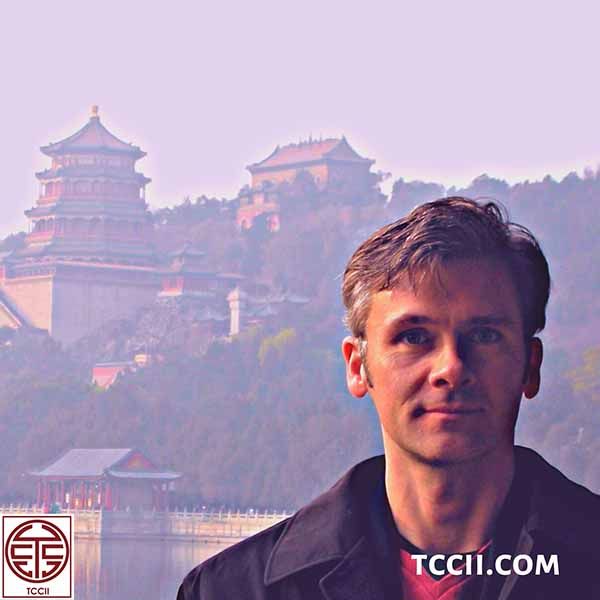
I’m Shifu Shawn Cartwright.
I began my formal martial arts training in 1985, after first being exposed to military combative methods through a former Marine. Since then, I have spent decades studying traditional internal Kung Fu, Southern Shaolin, Fujian Boxing, and other Chinese martial arts with a specific purpose: to find, preserve, and pass on authentic lineage-based training.
Shifu Shawn Cartwright
Over the years, that search has taken me through Taiwan, China, and the United States to study with highly respected teachers and Grandmasters, including Grandmaster Chen, Grandmaster Bai, Grandmaster Li, Grandmaster He, Shifu Lo, Shifu Alsup, and others.
But I was not simply looking for impressive demonstrations or famous names.
I was looking for complete traditional systems with real depth, clear method, and the ability to transmit skill from teacher to student.
In the old training model, a complete art was evaluated through the Liu He Ta, or Six-Sided Tower. This refers to the six essential components that make a traditional system whole. Without those pieces, a method may still be useful, but it is not the complete art.
I also learned that three things matter when choosing a teacher:
1. They must have the real lineage method.
Not just movements, but the principles, body method, applications, and internal training behind them.
2. They must be able to teach.
High-level skill is not enough. A teacher must be able to pass the art into the student’s body and understanding.
3. The transmission must be accurately understood.
When training crosses language and culture, interpretation matters. Important details can easily be lost if the interpreter does not understand the art, the language, and the training context.
That is why I have been careful about who I study with, how the material is preserved, and how it is taught.
Shifu Shawn Cartwright co-founded TCCII with Dr. Yinong Chong to help preserve rare Chinese martial and internal arts, and to make them understandable for serious Western students.
Dr. Chong uses her proprietary P5LIM, the PhD 5 Level Interpretation Method, to interpret classical Chinese martial and internal arts teachings into modern English while preserving their meaning, training context, and teacher-to-student details.
Her interpretation work has been sought out even by professional interpreters working at the highest levels, because this material requires more than language fluency. It requires deep cultural, historical, and training context.
We are dedicated to transmitting the complete, authentic systems to the next generation of practitioners.
The mission is simple: to build a clear bridge between the Ancient Arts of the East and the Modern Practitioners of the West.

Dr. Yinong Chong
The Kē Lóng (珂龍) Internal Arts Tradition
This program is part of the broader Kē Lóng (珂龍) Internal Arts Tradition.
Within Ke Long, principle-based internal arts are not viewed as isolated disciplines.
They exist alongside Meditation, Qigong, Neigong, Internal Alchemy, Taijiquan, Internal Kung Fu, Yi Jing, Bazi, healing methods, and other traditional cultivation practices that share common principles and developmental goals.
A student may enter through Taijiquan.
Another through Kung Fu.
Another through Qigong.
Someone else through meditation or internal cultivation.
Yet over time, many discover that the same principles continue appearing throughout seemingly different disciplines.
This is one reason traditional teachers often viewed the arts as interconnected at the deepest levels.
Within the Ke Long tradition, our objective is not to produce students who simply collect disconnected methods.
Our mission is to preserve, document, and transmit the complete principle-based systems of these rare arts to the next generation of practitioners, instructors, and lineage inheritors.
Some students choose to specialize in a single art.
Others explore several branches of the tradition.
In the end, what matters most is not how many methods you study, but how deeply you understand the principles that bring those methods to life.
What Is Your Southern Shaolin & Wudang Lineage?
Unlike many martial arts that trace through a single family or institution, our Southern Shaolin and Wudang transmission emerged through a network of martial families, village traditions, Tian Di Hui Grandmasters, Fujian White Crane teachers, Nan Hua Quan instructors, and Wudang practitioners who preserved these arts through periods of tremendous social and political upheaval.
The transmission includes influences from Southern Animal Boxing, Fujian White Crane, Tongbei, Nan Hua Quan, Wudang Sword, and related family traditions that survived through highly selective teacher-to-student instruction.
Our primary lineage comes directly from the Grandmaster instructors of the Tian Di Hui organization and closely related martial families. They were some of the last remaining "old school" Shifus trained in an era where these arts were directly used in the conflicts and fighting of the early 20th Century.
These include Grandmaster Hsieh and Grandmaster Chen. They preserved some of the oldest and most complete Fujian systems. Grandmaster Chen was regarded as one of the Five Tigers of Taiwan and Grandmaster Hsieh was a bodyguard for Chang Kai Shek.
Shifu Casey had the unprecedented opportunity, particularly for a Westerner of his generation, to become a full member of the Heaven and Earth Society (Tian Di Hui, Hong Men), granting him access to teachings rarely available outside those circles. This organization was responsible for preserving the actual combative methods of many traditional Chinese Boxing arts through the 20th Century.
Shifu Casey studied many traditional internal arts in Taiwan through the elite access the Hongmen Hui provided. These include Taijiquan, Xingyiquan, Baguazhang, Wing Chun, Nan Shaolin, Qinna, Baoding Shuaijiao, San Da, Weapons, Martial Neidan, and several versions of Fukien White Crane.
Shifu Alsup was fortunate to be one of the few indoor students of Shifu Casey which enabled him to learn Shifu Casey's personal method of Internal Kung Fu derived from his Hong Men Hui teachers and other traditions which includes Iron Shirt, Qigong, Mind Training and esoteric methods. He passed these teachings to Shifu Shawn Cartwright.
Another influential teacher of Shifu Cartwright is Grandmaster Bai Wenxiang (白文祥大师).
Many students know Grandmaster Bai through his accomplishments as a professional martial artist, national coach, and senior Wushu educator. What attracted me was something different.
He preserved complete systems.
Grandmaster Bai studied a remarkable range of traditional arts, including Tongbei, Xingyi, Bagua, Six Harmony Boxing, Praying Mantis, Yang Taijiquan, Chen Taijiquan, Zhaobao Taijiquan, Sun Taijiquan, and Wudang-related traditions. His teachers included some of the most respected martial artists of the twentieth century, including Grandmaster Ma Xianda, one of China's most influential martial arts theorists and a renowned master of Tongbei.
This broad foundation gave Grandmaster Bai a unique perspective on the relationships between internal development, body mechanics, power generation, weapons training, and martial skill.
His influence helped deepen and validate many of the principles already present within our Southern transmission.
However, Grandmaster Bai represents only part of the story.
The Southern system itself was passed through teachers associated with the Tian Di Hui traditions, Nan Hua Quan instructors, Fujian White Crane practitioners, village martial families, and related lineages that preserved these methods through generations of selective transmission.
Like many traditional arts, some teachers are widely known.
Others are known only within their own martial families and communities.
Ironically, it was often these lesser-known village teachers and family traditions that carried the arts through the most difficult periods of history.
My own training brought these influences together through years of study with Grandmaster Bai Wenxiang, Shifu Casey, Shifu Alsup, Dr. Tao Pingxiang, and other respected teachers.
Over time, I came to recognize the same challenge faced by every generation before me:
How do you preserve a complete transmission when so many of the old traditions have already been lost?
My answer was simple.
Teach my son the complete system.
Document the lessons on film to provide a visual record of the methods.
And thereby preserve and transmit the system for the next generation.
Many of the lessons within this program were filmed during actual instruction with my son, Drake Cartwright, as part of an ongoing generational preservation effort.
As a result, students are not simply learning forms, techniques, or drills.
They are participating in the same teacher-to-student transmission process through which these arts survived and reached the present day.
After all, traditional arts do not survive because books survive.
Or forms survive.
Or techniques survive.
They survive because each generation chooses to pass the complete system to the next.
What makes this program different?
Many Kung Fu programs teach movements. Fewer preserve the full method behind the movements.
What makes TCCII different is the way we protect three things at the same time:
- The completeness of the art
- The accuracy of the interpretation
- The ability to teach the material clearly to Western students
1. The art must be complete
In traditional Chinese martial arts, a complete system is not just a form. It includes structure, body method, applications, internal training, weapons, partner work, teaching progression, and the principles that connect them.
We evaluate the completeness of a system through the Liu He Ta, or Six-Sided Tower. This framework helps preserve the essential parts of a traditional art so students are not left with only choreography or isolated techniques.
This matters because many students only receive part of a system. Sometimes the teacher did not have the full curriculum. Sometimes the teacher had it but did not pass it on. Sometimes the material was hidden behind the old Veil of Secrecy, where important details were reserved, withheld, or never clearly explained.
We respect the old ways, but we do not believe serious students should be left guessing.
2. The teaching must cross the East-West communication gap
Even when a teacher has the complete art, the material can still be difficult to transmit across language and culture.
Traditional Chinese martial arts contain ideas that do not translate cleanly into modern English. Terms related to Qi, Jin, Fajin, Neigong, body method, intention, and internal training often carry layers of meaning. If those layers are not interpreted properly, students may receive the words but miss the method.
This is why Dr. Yinong Chong uses P5LIM, the PhD 5 Level Interpretation Method, to help carry the meaning from classical Chinese martial culture into clear modern English.
The purpose is not just translation. It is preservation of meaning, training context, and teacher-to-student detail.
3. The material must be teachable
High-level skill does not automatically make someone a clear teacher.
A teacher must know how to organize the material, explain the progression, correct common errors, and help students understand what to practice next. That is why TCCII places so much attention on teaching method, lesson structure, and progressive training.
The result is a program that gives students more than movements to copy. It gives them a structured way to approach the art with lineage, interpretation, and method working together.
That is what we mean when we say this program is different.
What is the Liu He Ta and why is it important?
Liu He Ta, often translated as the Six-Sided Tower, refers to six key components of a complete traditional art.
It gives us a way to understand whether a system contains more than movements and techniques. A complete art should also include the philosophy, principles, methods, tools, and teacher-to-student details that make the training work.
The six parts are:
-
Dao, the Way
The larger philosophy and direction of the art. Dao helps you understand why the system exists, what it is trying to develop, and how the parts fit together. -
Li, the Principles
The rules and truths that guide the art. Li helps you understand what to do when things are uncertain, especially under pressure. -
Fa, the Methods
The training methods that develop the art over time. Fa shows you how to practice, how to progress, and how the skill is built. -
Shu, the Techniques
The specific movements and applications of the art. Shu helps you understand what to use, when to use it, and how the method becomes practical. -
Bing, the Tools
The training devices and support methods used to develop skill. Bing may include special exercises, equipment, drills, or training aids that help the body understand the method. -
Mi Jue, the Oral Secrets
The teacher-to-student details that are rarely written down and often reserved for serious students or lineage inheritors. Mi Jue helps preserve the subtle instructions, corrections, and training cues that make the art come alive.
This matters because a traditional system can become incomplete when one or more of these parts is missing. Students may receive movements without principles, techniques without method, or exercises without the deeper teaching that connects them.
That is why TCCII places so much emphasis on preserving the complete lineage method and documenting the teaching carefully for future generations.
What does P5LIM mean?
P5LIM stands for PhD 5 Level Interpretation Method.
It is Dr. Yinong Chong’s proprietary method for interpreting classical Chinese martial and internal arts teachings into modern English while preserving the original meaning, training context, and teacher-to-student details behind the words.
This matters because traditional arts like Taijiquan, Kung Fu, Qigong, and Neidan are not easy to translate word-for-word. Many important terms carry rich layers of cultural, historical, philosophical, esoteric, and practical meaning.
Dr. Chong speaks English like a native and has rare fluency in Classical Chinese, which allows her to work directly with older source material and verify meaning at a level most ordinary translation cannot reach.
Her interpretation work has been sought out even by professional interpreters working at the highest levels, because this material requires more than language fluency. It requires deep cultural, historical, and lineage training context.
The purpose of P5LIM is to keep the teaching from being flattened into a generic translation. It helps preserve the internal principles, training methods, and traditional lineage secrets so Western students can understand what is actually being taught.
How does the program work?
Once you complete your registration, you receive immediate access to the online TCCII training portal.
Inside the portal, you’ll find your course organized into clear lessons, structured in a logical progression to optimize your training. Select a lesson, press play, and follow the course at your own pace.
Some lessons and bonuses are intentionally locked until the right point in the course. As you progress, more material unlocks so you can follow the training in the intended order.
You can return to earlier lessons for review according to the access included with your purchase. This is especially useful for revisiting posture, movements, forms, and the deeper principles introduced in the course.
Because the program is online, you can study wherever you have internet access and train at the times that work for your life. You do not have to travel across town, rearrange your schedule around a local class, or depend on whether a qualified instructor in this method happens to live nearby.
The course gives you a structured way to begin this method with clear guidance, lineage context, and practice support inside one training portal.
Can I really learn from an online program?
That’s a fair question. Let me ask you this... have you ever learned anything meaningful online?
Most people have. Martial arts are different, of course, but the real question is not whether online learning can work. The real question is what can be taught well online, what needs hands-on correction, and how is the training structured?
Every training format has strengths and limitations: books, live classes, private lessons, demonstrations, and online study all teach in different ways.
I used to doubt whether serious internal martial arts could be taught online. Then the pandemic forced us to teach remotely, and I saw something surprising... some students actually improved faster.
There were two main reasons.
First, video made it possible to present private teaching material with clear structure, multiple angles, and careful explanation. In a live group class, students often miss details because of where they are standing, who is in front of them, or how quickly the class moves.
Second, students could rewatch the lessons. That matters. In a private lesson, you may receive a correction once and then have to remember it. In an online course, you can return to the same teaching again and again, compare angles, slow down your study, and review the details between practice sessions.
That changed the way I thought about online training.
This program is designed to give you many of the benefits of private instruction while using the strengths of modern video learning:
-
Structured progression
Lessons are organized so you know what to study next and what to review. -
Multiple viewing angles
Forms, applications, and demonstrations can be studied from more than one perspective. -
Repeatable instruction
You can rewatch lessons as often as your access allows, which helps you catch details you missed the first time. -
Lineage training without travel
Study from home without airfare, hotels, meals, lost work time, commuting, or navigating the uncertainty and expense of international travel. -
A clearer foundation before private correction
If you later choose private lessons or partner training, you arrive with a stronger base. That makes hands-on correction more focused and useful.
For advanced martial application, push hands, and partner work, nothing replaces direct contact with another person. But online training can prepare you extremely well by teaching the forms, principles, body method, applications, and training sequence before you enter that hands-on stage.
Can I go back and rewatch my lessons?
Yes. In fact, you are encouraged to return to the lessons and review them according to the access included with your purchase.
That is one of the real benefits of our online training model. You can revisit the teaching, compare details, and notice things you may have missed the first time.
I often think about how valuable it would have been to have films of my private lessons from the early days of my training. That is one reason I filmed these lessons for my son, Drake Cartwright.
These class films are an important part of the legacy I am passing on to him. I am grateful that today’s technology allows us to make this training available to sincere students, even if you live in another city or country.
Can I start anytime?
Quite frankly, I don't know.
We plan to maintain the Lineage Training Programs for the foreseeable future for students who are already registered.
However, I cannot guarantee that REGISTRATION will be open next month or next year.
The reason why is not to create some sort of "artificial scarcity."
The art doesn't need that any of that BS... it's scarce enough as it is.
The reality is that is sometimes necessary to close program registration for long periods of time. This is because I like to be available for new students to ask questions to help them get started.
But remember that lineage trained Shifus are quite busy. In addition to taking care of my family, I have several other projects in the works that demand attention.
The Lineage Training Programs are living and evolving. It takes a lot of time and hard work to create the lessons and craft them into a proper program. (BTW, skill obtained by hard work over time is the real meaning of Kung Fu.)
And it's not the type of thing that can be easily outsourced to someone who is not lineage trained, so there's no "easy button." I wish there were but there's no way an outsider can possibly understand how to craft a Lineage Training Program like this.
That means we sometimes have to close registration to update the program or because of other events and demands in our life.
We have some programs that have been closed to new registrants for more than a year. One was closed for three.
Anyway, that's enough about us...
If registration is currently open, then you may proceed to start the program.
Which sheds light on the real question...
And the question is not whether the opportunity exists?
The question is whether you are ready to start today or do you want to put it off until tomorrow or next month, next year, or someday?
Is what you're doing today bringing you closer to where you want to be?
Many people assume that doing nothing leaves them exactly where they are.
It doesn't.
The body changes.
Flexibility declines.
Balance becomes more difficult to maintain.
Old injuries become less forgiving.
The habits that weaken the body become more deeply ingrained.
Time marches on whether we train or not.
I have yet to meet a serious practitioner who wished they had waited longer to begin their training.
I have met many who wished they'd started sooner.
When I began training, I could ask questions to Grandmaster Chen, Shifu Alsup, Grandmaster Li, and my other teachers directly.
Today, sadly, that is no longer possible.
The transmission remains.
My teacher does not.
That reality taught me something important:
Traditional arts survive only because each generation chooses to continue the journey.
My son, Drake, came to the same realization.
One day, Shifu-Dad won't be here either.
That's one reason this Lineage Training Program exists.
Not merely to preserve forms.
Not merely to preserve techniques.
But to preserve the complete system so the next generation doesn't have to reconstruct it from scattered fragments and missing pieces.
Look, many people spend years collecting books, videos, seminars, certifications, and information.
Far fewer spend those same years developing genuine skill.
And that's the real danger.
Not choosing the wrong path.
But spending another five years exactly where you are now.
Or worse.
Less mobile.
Less capable.
Less healthy.
Still saying:
"One day I'll start."
The hard truth is that nobody is ever completely ready.
You become ready by beginning.
Not the other way around.
So if registration is currently open, and if this is a path you genuinely want to explore, then perhaps the real question isn't whether the opportunity exists.
Perhaps the real question is whether you're willing to take the first step.
Five years from now, you'll wish you had started five years ago.
The best time to begin was twenty years ago.
The second-best time is today.
Sincerely,
Shifu Shawn Cartwright
Preserving the Southern Shaolin and Wudang Lineage Traditions
Begin your lineage training program today...
DISCLAIMER
THE INFORMATION PRESENTED HEREIN IS FOR INFORMATION PURPOSES ONLY. YOU ASSUME ALL RISKS. THE COMPANY IS NOT RESPONSIBLE FOR ANY INJURY WHICH MAY OCCUR THROUGH YOUR USE OF THIS INFORMATION. YOU ASSUME ALL RISK ASSOCIATED WITH USING ANY OF THIS INFORMATION. CONSULT A MEDICAL PROFESSIONAL BEFORE BEGINNING ANY ACTIVITY.
UNDERSTAND THAT OUR RESULTS ARE NOT TYPICAL. MOST PEOPLE SIMPLY WON’T INVEST THE TIME, EFFORT, OR COMMON SENSE INTO THEIR OWN TRAINING. YOUR RESULTS WILL BE DIRECTLY PROPORTIONAL TO YOUR WISE INVESTMENT IN YOURSELF.
NOTHING CONTAINED HEREIN SHOULD BE CONSTRUED NOR IS INTENDED TO BE USED FOR MEDICAL DIAGNOSIS OR TREATMENT. NEITHER SHOULD IT BE USED AS A REPLACEMENT FOR THE ADVICE OF YOUR PHYSICIAN OR OTHER QUALIFIED HEALTH CARE PROVIDER. SHOULD YOU HAVE ANY HEALTH-CARE RELATED QUESTIONS, PLEASE CONSULT YOUR HEALTH CARE PROVIDER IN A TIMELY FASHION. THE COMPANY WILL NOT BE LIABLE FOR ANY DIRECT, INDIRECT, CONSEQUENTIAL, SPECIAL, EXEMPLARY, OR OTHER DAMAGES ARISING THEREFROM.