Chuántǒng Nèi Jiā Qìgōng
Traditional Internal Family Qigong
Discover the complete, traditional internal cultivation curriculum integrating Dao Yin, Yang Sheng, Qigong, Neigong, Internal Alchemy, Meditation, and Qi Healing Arts.
Progress through a structured curriculum designed to develop the Three Treasures of Jing, Qi, and Shen from the Foundations of Traditional Qigong Practice to Internal Cultivation and Advanced Neigong.
For serious Qigong students, yoga practitioners, martial artists, and instructors seeking a complete traditional system rather than isolated exercises.
What Is Chuántǒng Nèi Jiā Qìgōng?
Chuántǒng Nèi Jiā Qìgōng (傳統內家氣功) may be translated as Traditional Internal Family Qigong.
At first glance, that sounds simple, but it raises an important question...
What exactly is Qigong?
Qigong literally means "Qi work" or internal energy cultivation. It is an old term, but modern usage tends to emphasize the individual physical movements and not the deeper, integrated internal aspects. This is why many modern students think of Qigong as a collection of breathing exercises, standing practices, mindfulness meditations, or gentle calisthenics designed to improve health and well-being.
While those individual practices may certainly be part of Qigong, they were not traditionally taught as isolated exercises or simple calisthenics.
Rather, they were traditionally taught as parts of a larger system of integrated internal cultivation.
That larger system frequently included:
- Dao Yin (Guiding and Stretching Methods)
- Yang Sheng (Life Nourishing Practices)
- Qigong (Qi Cultivation)
- Neigong (Internal Development)
- Meditation
- Internal Alchemy
- Healing Methods
- Traditional Self-Cultivation Practices
These methods were not separate arts competing with one another. In traditional Qigong they are aspects of the same path, with each method deepening and reinforcing the others.
In contrast, many modern students accumulate techniques.
... A breathing exercise here.
... A meditation there.
... An energy practice from one teacher.
... A healing method from another.
Over time, they may collect many dozens of techniques yet remain uncertain about how the pieces fit together.
In some cases, students unknowingly combine methods that were never intended to be practiced together and may have different goals, assumptions, or developmental requirements. Improperly mixing methods without understanding the underlying principles and concepts can create unintended problems or conflicts in their training.
Traditional Qigong systems were designed differently.
They provided a clear, integrated progression that helped students understand:
- What to practice
- Why they were practicing it
- How the methods related to one another
- What came next
In other words, students were not simply learning exercises.
They were learning an integrated system.
Traditional systems did not merely answer "How?"
They also answered "When?", "Why?", and "What comes next?"
I've met students who spent ten years collecting techniques from workshops and seminars and still couldn't explain how the pieces fit together.
Traditional internal cultivation systems were designed to provide that map.
This is one reason traditional teachers often distinguished between information and cultivation. Information can be collected but true cultivation requires practice, progression, and transformation over time.
One way to think about Traditional Internal Family Qigong is as a process of developing the Three Treasures:
Jing (Essence)
The foundation of vitality, health, resilience, and physical development. Although not synonymous with the body, it is closely associated with it.
Qi (Energy)
The cultivation, regulation, movement, and refinement of internal energy. There are many sub-types of Qi, but traditional Qigong methods enable you to cultivate each in a systematic, progressive way.
Shen (Spirit)
The development of awareness, clarity, intention, presence, and deeper aspects of internal cultivation. Shen is a complex topic that includes both Yi Gong and Shen Gong methods of training. It ultimately builds the foundation for the advanced Neidan or internal alchemy practices.
This is one reason traditional practitioners often spent years studying the same methods.
The goal was never simply to accumulate more techniques.
The goal was to discover deeper levels of understanding within the same principles.
A beginner sees exercises.
An intermediate student begins to experience the complex relationships between body, breath, mind, and energy.
An advanced practitioner discovers that the same principles appear throughout every aspect of the system. With each repetition, those principles reveal deeper levels of understanding, both of the practice and of oneself.
The Traditional Internal Family Qigong Lineage Training Program was created to preserve and organize these traditional Qigong methods into a clear, progressive curriculum for modern students.
Rather than teaching isolated practices, it presents traditional Qigong as an integrated, principled based path progressing through three core levels...
- Level 1: Foundations of Traditional Qigong Practice
- Level 2: Internal Cultivation and Development
- Level 3: Advanced Neigong
The objective is not merely to learn more exercises but to understand how the entire system works together as a principle-based path of internal cultivation.
For many students, Traditional Qigong is not merely an exercise art.
It is a complete system for developing the body, the mind, intention, spirit, and energy when the principles and practices are properly integrated together.
For centuries, Traditional Qigong methods were primarily preserved within hidden family lineages, closed training circles, and transmission to a limited number of trusted students, thus helping retain many of the traditional training methods that later became less common in some modern derivative styles.
The purpose of this program is to preserve those traditional Qigong methods while making them understandable, accessible, and practical for modern students.
Why Practice Traditional Internal Family Qigong?
People come to Traditional Internal Family Qigong for many different reasons.
Some are looking for better health, vitality, mobility, relaxation, and stress reduction.
Others are interested in meditation, personal development, longevity practices, or cultivating greater awareness and balance in their lives.
Some are martial artists seeking to understand the internal methods that complement the Internal Martial Arts such as Taijiquan, Xingyiquan, Baguazhang, Fujian White Crane, and other traditional systems.
Still others are yoga teachers, wellness practitioners, healers, and instructors looking to deepen their understanding of internal cultivation and traditional energy development.
All of these are valid reasons to begin.
But many serious students eventually discover a deeper question...
What did the original system actually look like before it was separated into individual practices?
Today it is common to encounter:
- Breathing methods taught separately from meditation
- Meditation taught separately from Qigong
- Healing methods taught separately from Neigong
- Movement practices taught separately from internal development
- Visualization without proper grounding in movement
- Alchemical concepts taught without the foundational training that supports them
As a result, many students spend years collecting methods without ever seeing the larger picture.
Traditional systems were designed differently.
Their purpose was not simply to provide a collection of cool techniques. It was to guide the practitioner's development through a progressive, integrated, and principle-based process of cultivation.
Traditional Qigong did not treat the body, breath, mind, intention, energy, and spirit as separate subjects. It took an integrated approach to understanding how mutually complementary practices influence and support one another.
Students often find that the benefits unfold in stages...
Beginning Students
Many beginning students notice:
- Improved posture and body awareness
- Better mobility, flexibility, and balance
- Increased relaxation and stress management
- Greater awareness of breathing patterns
- Improved focus and concentration
- Enhanced vitality and overall well-being
At this stage, the emphasis is often on learning the core practices and establishing a consistent foundation.
One indicator that the student's internal cultivation is progressing is they often become less interested in new techniques and more interested in understanding principles so they can go deeper into the material and their own being.
Intermediate Students
As training deepens, students frequently begin experiencing:
- Greater body-mind integration
- Improved sensitivity and awareness
- More refined breathing and energy regulation
- Increased understanding of the relationship between Jing, Qi, and Shen
- A clearer understanding of how the various practices support one another
At this stage, students often begin realizing that the real value of the art lies not in the individual exercises, but in the relationships between them.
Advanced Practitioners
Advanced students begin exploring deeper aspects of internal cultivation, including:
- Advanced Neigong development
- Internal refinement practices
- Foundations of Internal Alchemy
- Foundations of Qi Healing Arts
- Advanced meditation methods
- The deeper principles underlying traditional cultivation systems
What often surprises students is that the advanced methods typically rely on the very same principles introduced at the beginning.
In fact, the very same methods they learned in the beginning often take on new and more profound meaning as they progress.
One is reminded of the famous ancient Chan (Zen) saying, paraphrased here...
- Before I studied, a mountain was just a mountain.
- After I studied a little while, a mountain was more than a mountain.
- Now, a mountain is just a mountain again.
This saying has many layers of meaning, but the one most relevant here is that the principles themselves do not change.
The foundation principles are introduced in the beginning.
When you return to them years later, it is not the principles that have changed.
It is you.
The methods remain the same while your understanding deepens.
In other words, in traditional training approaches, the same principles continue appearing in different forms, at different levels, and in different contexts.
This is one reason traditional practitioners often spend decades studying the same system.
The art continues revealing deeper layers of understanding over time.
Perhaps most importantly, Traditional Internal Family Qigong offers something that has become increasingly rare in the modern world:
A complete path.
Not merely a collection of exercises, information or theory.
Traditional Qigong has a structured process of cultivation designed to help students understand how the many aspects of traditional internal practice fit together as one integrated system.
Whether your goals include health, meditation, internal development, self-cultivation, martial arts, teaching, or simply a deeper understanding of traditional Qigong, the practices were originally designed to support one another as parts of a larger whole.
In a world of increasingly short attention spans, technological distraction, fragmented learning, and overly simplified exercise programs, many traditional teachers recognized a growing risk... the original systems were in danger of being fragmented and lost.
That is one reason our Grandmaster teachers asked us to preserve and transmit these Traditional Qigong methods for future generations.
What Makes This Program Different?
Most students don't begin their Qigong journey looking for a complete system.
They usually begin with a simple goal... maybe it's more energy, better health, less stress, relief from an old injury, to try meditation...
So they learned...
... A breathing practice from one teacher.
... A meditation from another.
... A movement set from a workshop.
... A healing method from a book.
... An energy exercise from a video.
None of those methods are necessarily wrong. In fact, some may be quite good by themselves.
At first, this learning approach seems perfectly reasonable because, after all, every traditional art contains exercises, movements, and techniques.
But the reality is that randomly piecing disparate practice together is a risky "hodgepodge" approach.
Much like trying to build a car by getting a Ford body, a Chevrolet engine, and a Ferrari dashboard.
The real problem with this mashing random Qigong stuff together isn't as obvious as it is with the car example simply because the problems don't appear immediately.
That's when the student realizes they have gathered a room full of tools but never received the principles and structure for how they fit together.
Traditional teachers approached the problem differently.
They did not simply hand students techniques.
They provided a structured, principle-based path of learning and cultivation.
A student might begin with one method and learn the key principles behind it. Then they would practice it until learning the next, deeper practice.
Each method prepared the ground for the next. Each exercise revealed part of a larger picture so that progression through the curriculum was intentional.
The student learned not only the "what" but also the "why" behind the methods.
This may seem like a small distinction.
It isn't.
The difference between a random collection of techniques and a traditional system is much like the difference between a pile of stones and a cathedral.
The stones matter and each one has a purpose.
But the purpose only becomes clear when you see how the pieces fit together... the blueprint if you will.
The same is true of internal cultivation.
The breathing, meditations, movements, and Qi healing methods all matter.
But their deeper meaning emerges when they are understood as parts of the complete system.
So much like a cathedral you need not only the stones and blueprint, but you also need the time and skill to assemble them.
That's the true practice.
Regrettably, over time, many traditional systems became fragmented.
The techniques survived, but the principles, relationships, and framework of the complete system did not.
And perhaps the greatest challenge facing modern practitioners is they are drowning in a sea of information, but lacking in the essential principle-based wisdom of a complete Traditional Qigong system.
Which is why this program is organized as an integrated, progressive curriculum rather than a collection of techniques and forms.
Yes, there are techniques and forms in the program.
But the goal is to help them understand the underlying principles that connect seemingly different practices together, not to overwhelm students with more content to memorize.
As training progresses, students discover something surprising.
The higher levels are not built upon completely new ideas, but upon the same principles encountered in the beginning.
Principles and exercises remain the same. Practitioners change.
This is one reason traditional practitioners can spend decades studying a single Qigong set.
Stage 1: The beginner learns an exercise.
Stage 2: The experienced student understands the method.
Stage 3: The advanced student begins to perceive the principle behind the method. And eventually comes to realize that the principle was present from the very beginning.. hidden in plain sight.
The Traditional Internal Family Qigong Program uses an organized, principle-based approach to support the student's personal cultivation journey.
The destination is the student's personal cultivation. The techniques and methods are simply the vehicle. The principles are the guide, and program teaches them in an integrated and authentic way.
Perhaps that is the true difference of the Traditional Qigong Program and why our Grandmaster teachers asked us to organize and preserve this rare wisdom for future generations.
Our Qigong Lineage
Our Traditional Internal Family Qigong curriculum comes through the teachings of Grandmaster Li Jiinbao, Grandmaster He Binhui, and other respected teachers who dedicated their lives to preserving traditional systems of internal cultivation.
Shifu Shawn Cartwright spent decades studying, documenting, organizing, and preserving these methods, while Dr. Yinong Chong helped interpret, translate, validate, and preserve their deeper meanings for modern students.
The result is not simply a collection of Qigong exercises.
It is a structured curriculum preserving traditional methods of Dao Yin, Yang Sheng, Qigong, Neigong, Meditation, Internal Alchemy foundations, Qi Healing foundations, and traditional self-cultivation practices.
The goal is not simply to learn exercises.
The goal is to understand the system behind them.
The Challenge of Preserving Traditional Qigong
Finding authentic teachers was never easy.
In fact, the secretiveness surrounding many traditional internal arts nearly caused some of them to disappear.
The end of the nineteenth century and much of the twentieth century brought war, political upheaval, social disruption, and cultural repression. Many of the old masters passed away without transmitting everything they knew. Others were forced to teach quietly, often limiting instruction to a small number of trusted students.
Even after conditions improved, another problem emerged.
The genuine traditional teachers were increasingly crowded out by committee-trained coaches, commercial instructors, modernized programs, and the occasional charlatan.
Traditional methods survived.
But often only in fragments.
And even when authentic material could be found, there remained another challenge.
Understanding what was actually being taught.
Traditional internal arts are filled with concepts that do not translate neatly into modern English. Cultural references, training methods, Daoist terminology, Buddhist influences, medical concepts, oral teachings, and lineage-specific language often carry multiple layers of meaning.
Finding the material was difficult.
Understanding the material could be even more difficult.
And teaching it properly is a separate skill altogether.
Many traditional masters possessed extraordinary knowledge, but very few received any formal training in teaching methodology.
Building a Bridge Between East and West
That realization led us to ask an important question...
What if we took all the years we invested in training, the travel, the effort, and the resources necessary to learn these arts properly...
... and organized them into a format that modern students could actually understand?
Dr. Yinong Chong played a critical role in that effort.
Fluent in Classical Chinese, Modern Chinese, Western philosophy, and modern academic research, she helped ensure that the traditional teachings were not merely translated, but accurately interpreted.
Using her PhD-level P5LIM (5 Level Interpretation Method), she worked to preserve not only the words, but also the training context, cultural understanding, and teacher-to-student meaning behind the teachings.
Because a literal translation often preserves the words while losing the art.
The Legacy of Grandmaster Li and Grandmaster He
Sadly, many of the teachers who contributed to this preservation effort are no longer with us.
Grandmaster Li and Grandmaster He and many others who dedicated their lives to these arts have transitioned to the other side.
Before they left for the next world, they repeatedly encouraged us to continue teaching.
They had lived through the upheavals.
They had seen traditional methods nearly disappear.
They understood the value of these arts and the benefit they could bring to future generations.
Most importantly, they did not want the knowledge to die with them.
We miss our teachers deeply.
Their teachings, guidance, and generosity helped shape everything contained within this curriculum.
One of the ways we honor their legacy is by preserving the material, organizing it responsibly, and making it available to sincere students who truly wish to study it.
Why This Program Exists
The Traditional Internal Family Qigong Program was not created because the world needed another collection of exercises, forms or cool moves.
There's enough of that dross floating around the interwebs.
We created the Traditional Qigong program because we observed the authentic systems were becoming increasingly fragmented, watered down, and simplified for mass consumption.
There's an interesting parallel in modern industrial food processing... mega-corps took real, nourishing wholegrain bread and turned it into chemically processed, unhealthy "wonderjunk."
Our Grandmaster teachers rejected that approach to Traditional Qigong.
They wanted to provide a real alternative to the mass consumption pablum forced on unsuspecting students by politically correct committees.
And it's exactly because of our Grandmaster teachers that we preserve the authentic, traditional, complete, principle-based practice for us and for you.
The student's progression is clearly laid out and designed to help you begin with structure, proceed with confidence, and internalize the profound principles of authentic internal cultivation.
The Origins of Qigong
Ancient China: 5000 BCE
Unlike many modern exercise systems, Qigong was not created by a single person at a single point in history.
Its roots extend back thousands of years into the earliest Chinese traditions of health preservation, meditation, medicine, self-cultivation, and Daoist practice.
While Qigong is actually an old term, the modern usage of Qigong as an umbrella term for a cluster of health exercises is actually quite recent. Earlier generations described these practices using terms such as Dao Yin (Guiding and Stretching), Yang Sheng (Nourishing Life), Xing Qi (Circulating Qi), Tuna (Breath Cultivation), Neigong (Internal Development), and Neidan (Internal Alchemy). Many of the methods now grouped under the label "Qigong" were originally parts of larger, integrated systems of internal cultivation.
One of the oldest surviving visual records of these practices was discovered in 1973 at the famous Mawangdui Han Dynasty tomb complex, often called the "King Ma's Tomb." Archaeologists uncovered the Daoyin Tu or "Guiding and Stretching Chart," a silk manuscript dating to approximately 168 BC that depicts dozens of health, stretching, breathing, and therapeutic exercises. Many scholars regard it as one of the earliest surviving visual records of practices that later evolved into Qigong.
The significance of this discovery is difficult to overstate.
More than two thousand years ago the Chinese had already developed a sophisticated understanding of movement, breathing, posture, health preservation, and internal cultivation. What many people think of as "modern" mind-body training was already being systematically explored in ancient China.
As impressive as the Daoyin Tu discovery was, the earliest foundations of Traditional Qigong were not exercises at all.
They were principles.
Long before students were practicing breathing methods, Five Animal Forms, Eight Brocades, or Neidan meditation, Chinese philosophers, physicians, Daoists, and cultivators were exploring fundamental questions about human nature, health, vitality, consciousness, and the relationship between humanity and the natural world.
One of the earliest and most influential examples is the Dao De Jing, attributed to Laozi. While it is not a Qigong manual, generations of cultivators drew inspiration from its teachings on stillness, balance, emptiness, fullness, and alignment with the Dao. Chapter Three contains the famous instruction to "empty the mind and fill the belly," a phrase that later internal cultivation traditions interpreted as reflecting the balance between intellectual activity and the cultivation of deeper internal qualities as well as coded instructions for advanced Neidan practice. More on that later.
As these philosophical traditions matured, they increasingly intersected with medicine and health preservation. This relationship is reflected in the Huangdi Neijing (Yellow Emperor's Internal Medicine Classic), one of the foundational texts of Chinese medicine. Beyond discussions of disease and treatment, the text describes breath cultivation, regulation of the body and mind, preservation of vitality, and the movement of Qi within the body. Many of the energetic pathways and Qi movement patterns that later appeared in Qigong and Neigong traditions can trace their conceptual roots to these early medical and cultivation theories.
Centuries later, these ideas began appearing in increasingly practical forms.
As mentioned previously, the famous Mawangdui Daoyin Tu provides one of the earliest visual snapshots of health-preserving and cultivation methods that resemble practices still taught today. The figures depicted on the silk chart show that cultivation was never merely a matter of philosophy. The principles were already being translated into movement, breathing, stretching, and therapeutic exercises.
As physicians, Daoists, martial artists, and cultivators refined these methods, practical systems continued to emerge.
One famous example is the Five Animal Frolics attributed to Hua Tuo. Inspired by the Yellow Emperor's Internal Medicine Classic, observations of nature and drawing upon earlier Dao Yin traditions, Hua Tuo developed methods based on the Tiger, Deer, Bear, Monkey, and Crane. These practices were not merely exercises. They represented an attempt to cultivate specific qualities through movement, intention, breathing, and energetic development. Their influence can still be found in many traditional Qigong and Kung Fu systems today.
Another example is the traditional Eight Pieces of Silk Brocade (Ba Duan Jin). While several historical versions exist, some traditional lineages associate important versions of the practice with the cultivation teachings surrounding the legendary immortal Lü Dongbin and later Daoist development traditions. Over time, these methods became valued not simply as exercises, but as practical vehicles for regulating the body, refining Qi, and developing the internal qualities described by the earlier philosophical and medical teachings.
One of the most influential texts to emerge from this ongoing process of development was the Zhouyi Cantongqi (The Seal of the Unity of the Three), traditionally attributed to Wei Boyang.
The Cantongqi occupies a unique place in Chinese cultivation history because it brought together three major streams of thought:
- The cosmology of the Yijing (Book of Changes)
- Daoist principles
- Neidan (Internal Alchemy) cultivation
For this reason, many scholars regard it as one of the foundational texts of Internal Alchemy. More importantly for modern practitioners, its influence extends far beyond Neidan itself. Many of the principles later expressed through Qigong, Neigong, meditation, and cultivation systems can ultimately be traced back to ideas articulated within the Cantongqi.
What makes texts such as the Dao De Jing, Huangdi Neijing, and Cantongqi so important is that they were never intended to teach specific exercises.
They do not show you how to perform a breathing method.
They do not teach a particular posture.
They rarely provide step-by-step routines.
Instead, they provide something far more important...
They provide principles.
The principles came first and the methods came later.
Exercises are simply expressions of those principles.
Among the most influential figures associated with the development and transmission of these Internal Alchemy traditions were Ge Hong, Lu Dongbin, and Chen Tuan.
Several centuries before the rise of the mature Internal Alchemy traditions, Ge Hong compiled and preserved a vast body of Daoist cultivation knowledge within the Baopuzi (Master who Embraces Simplicity.) His work brought together teachings on longevity, nourishing life (Yang Sheng), breath cultivation, meditation, and alchemical practice, helping preserve many of the concepts that later influenced the development of Neidan, Neigong, and traditional Qigong systems.
Likewise, Lu Dongbin was one of the most famous Daoist Immortals and a central figure in many Neidan lineages. He is traditionally regarded as one of the great transmitters of Internal Alchemy and is especially associated with the dual cultivation of Xing and Ming (Nature and Life), ideas that profoundly shaped later cultivation systems. Many traditional lineages also associate him with important cultivation methods that later influenced practices such as the Eight Pieces of Silk Brocade and other health-preserving systems.
Generations later, the legendary Daoist sage Chen Tuan (Chen Xiyi) became one of the most influential cultivation masters of the Song Dynasty. Associated with meditation, longevity practices, internal development, and alchemical cultivation, his teachings influenced numerous later Neidan and cultivation traditions. Many lineages trace important elements of their theory, training methods, and cultivation philosophy back to his transmission.
Over time, these philosophical, medical, alchemical, and cultivation traditions increasingly intertwined.
The Dao revealed the principles.
The principles informed the methods.
The methods gave rise to specific techniques, drills, and training apparatus.
And within the traditional lineages, the Mijue, the "oral secrets" or keys to practice, helped students unlock the full power of the system.
And those systems were ultimately preserved and transmitted through generations of lineage teachers.
The Qigong, Neigong, and Neidan methods preserved by Grandmaster Li and Grandmaster He are rooted directly in this traditional internal cultivation approach.
Which brings us back to perhaps the most important point.
The goal was never simply to learn exercises.
The exercises are the vehicles.
The methods are the process.
The principles are the heart.
And it is those principles, preserved through our teachers and organized into a structured curriculum, that form the basis of the Traditional Internal Family Qigong Program.
Who Is The Chuántǒng Nèi Jiā Qìgōng Program For?
Traditional Internal Family Qigong can be practiced by people from many different backgrounds and experience levels.
Some students arrive with decades of experience in meditation, martial arts, yoga, healing arts, or traditional Chinese medicine.
Others are completely new to internal cultivation.
You do not need previous Qigong experience to begin.
What matters is not where you start.
It is the type of student you wish to become.
This Program Is For You If...
-
You want to study a complete traditional system of internal cultivation rather than collecting isolated exercises.
-
You suspect there is something deeper behind Qigong than simple breathing exercises, relaxation techniques, or wellness routines.
-
You want to understand how Dao Yin, Yang Sheng, Qigong, Neigong, Meditation, Internal Alchemy, and Qi Healing Arts fit together.
-
You want to understand not only what to practice, but why the practices were developed and how they relate to one another.
-
You value principles as much as techniques.
-
You are interested in the cultivation of Jing, Qi, and Shen as a progressive process rather than a collection of disconnected methods.
-
You appreciate traditional training methods while also valuing clear explanations and modern instructional design.
-
You are willing to develop genuine skill through consistent practice rather than search endlessly for the next secret technique.
-
You believe there may be more to these arts than most modern presentations reveal.
-
You want a training system capable of revealing deeper levels of understanding over years or even decades of study.
This Program May Be Especially Valuable If...
-
You've studied Qigong but never clearly understood how the different methods fit together.
-
You've attended workshops, seminars, or certifications and walked away with more exercises but not necessarily more understanding.
-
You've practiced meditation and want to explore the traditional cultivation systems that often accompanied it.
-
You're a yoga practitioner interested in a complementary internal development tradition.
-
You're a martial artist seeking to understand the internal cultivation methods that historically supported many traditional systems.
-
You're a healer, healthcare professional, or instructor interested in the traditional theories and practices behind Qi development.
-
You've become frustrated with collecting information and are now looking for an actual path.
-
You've ever found yourself asking:
"How does all of this fit together?"
This Program May Not Be For You If...
-
You're looking for instant enlightenment, effortless mastery, or magical shortcuts.
-
You only want a few quick exercises without understanding the larger system behind them.
-
You are interested in collecting techniques but not cultivating skill.
-
You want entertainment more than training.
-
You are unwilling to practice consistently over time.
-
You are a "know it all" who is un-coachable.
-
You have no interest in the principles that give the methods meaning.
-
You prefer fragmented information over structured progression.
-
You believe the newest technique is always more valuable than deeper understanding of the fundamentals.
-
You are looking for a simplified version of Qigong divorced from its traditional roots.
Ultimately...
The ideal student is not necessarily the youngest.
Not necessarily the healthiest.
Not necessarily the most experienced.
The ideal student is the one who looks beyond the exercises and begins asking deeper questions.
Questions such as:
Why were these methods developed?
How do they relate to one another?
What principles connect them?
How does it all fit together?
If those questions resonate with you, then Traditional Internal Family Qigong may be exactly the journey you've been looking for.
What Will You Learn First?
Many students assume the first step in Traditional Qigong is learning numerous forms, advanced breathing methods, energy circulation exercises, or esoteric cultivation practices.
Traditionally, that is not how most authentic, principle-based internal cultivation systems were taught.
While those methods certainly exist, they were usually introduced only after the student established a proper foundation.
After all, it makes little sense to build the roof of a house before laying the foundation and framing the structure.
The same principle applies to internal cultivation.
Before studying advanced Neigong, Internal Alchemy, or Qi Healing methods, students traditionally learned how to regulate the body, breathing, movement, posture, awareness, and intention.
For that reason, your training typically begins with:
- Dao Yin (Guiding and Stretching Methods)
- Yang Sheng (Life-Nourishing Practices)
- Foundational Qigong Forms
- Post Standing Practice
- Integrated Meditation Practice
- Core principles explaining the "what" and "why" of Qigong.
At first glance, these may appear to be separate pieces, but they aren't.
Each develops qualities needed to understand the next layer of training.
In other words, each method informs, explains, and reinforces the others.
Dao Yin helps develop mobility, coordination, circulation, and body awareness.
Yang Sheng introduces the traditional principles of health preservation and life cultivation.
Foundational Qigong Forms begin integrating the relationship between movement, breath, intention, and energy.
Post Standing Practice develops posture, structure, balance, relaxation, awareness, and internal connection.
Integrated Meditation Practice cultivates attention, stillness, observation, and mental clarity.
The Core Principles provide the conceptual framework that helps students understand why the practices are being trained and where the path ultimately leads.
Unlike many modern systems where foundational exercises are treated as beginner material that is eventually abandoned, traditional cultivation methods remain relevant throughout the practitioner's entire journey.
The beginner learns them and the intermediate student understands them more deeply through their practice and reflection.
Advanced practitioner discovers new layers of meaning when they revisit the same practices with a deeper understanding of the underlying principles.
The methods remain the same but the practitioner changes.
For that reason, foundational practices are not something you "graduate" from.
They become the foundation for everything that follows.
- Internal Cultivation
- Advanced Qigong
- Qi Healing Arts
- Martial Neigong
And eventually the deeper principles associated with Internal Alchemy traditions.
As your skill develops, you do not simply accumulate more and more techniques.
Instead, you learn how to extract greater depth, precision, sensitivity, and understanding from the same core principles.
This means your training becomes deeper rather than merely broader.
Instead of collecting dozens of disconnected exercises, you gradually discover how the principles behind the practices connect together as a complete system of internal cultivation.
Curriculum and Training Path
Traditional Internal Family Qigong was never intended to be learned all at once.
A student would begin with foundational practices, spend time developing them, and only then move on to more advanced methods. Each stage prepared the practitioner for the next. The goal was not to accumulate techniques as quickly as possible, but to develop the qualities needed to understand and benefit from the practices that followed.
Much like a university curriculum, each level builds upon the previous one. Yet unlike many modern educational systems, the foundational material is never left behind.
In fact, the deeper a practitioner progresses, the more often they return to the fundamentals.
The same principles learned in the beginning continue to appear throughout the entire system.
For this reason, the curriculum is organized into three progressive levels which mutually reinforce one another. Rather than teaching disconnected exercises, each level builds upon the principles introduced in the one before it.
The purpose is to use the practices to understand the principles more deeply.
For that reason, the curriculum is released in stages rather than all at once.
It's designed to be completed in six to eight months. But completion of the curriculum is just the beginning. You now have an integrated art that you can enjoy and benefit from for a lifetime.
Level 1: Foundations of Traditional Qigong Practice (Months 1 to 2+)
Every traditional system begins by establishing a strong foundation.
At this stage, students learn the essential practices and principles that support all future development. The focus is on creating the conditions that make deeper cultivation possible.
Areas of study include:
- The foundational principles of Traditional Qigong
- Dao Yin (Guiding and Stretching Methods)
- Yang Sheng (Life-Nourishing Practices)
- Energy Cleansing and Gathering Methods
- Traditional Eight Pieces of Silk Brocade
- Breath Regulation and Integration
- Standing Practice and Structural Development
- Sound-Based Cultivation Methods
- Five Element Theory and Practice
- Foundational Meditation Methods
- The relationship between Jing, Qi, and Shen
Students often arrive expecting to learn techniques.
Instead, they also discover the principles that give those techniques meaning.
Level 2: Internal Cultivation and Development (Months 3 to 4+)
Once the foundation has been established, students begin exploring how the various practices support and reinforce one another.
The focus shifts from learning individual methods to understanding the internal processes they were designed to develop.
Areas of study include:
- Advanced Five Element Theory and Application
- Meridian Development Practices
- Qi Activation and Regulation
- Acupressure and Self-Cultivation Methods
- Advanced Yang Sheng Practices
- Traditional Five Animal Frolics
- Guided Internal Cultivation Practices
- Emotional and Energetic Transformation Methods
- Strength and Vitality Development
- Progressive Internal Awareness Training
Students experience the deepening relationship between body, breath, mind, intention, and energy through increasingly sophisticated internal development practices.
Level 3: Advanced Neigong (Months 4 to 8+)
Advanced Neigong focuses on the deeper internal principles that underlie traditional cultivation systems.
Students continue refining the foundational practices while exploring more advanced methods associated with internal development, energetic refinement, meditation, and the foundations of Internal Alchemy.
Areas of study include:
- Advanced Neigong Methods
- Yin-Yang Cultivation Practices
- Foundations of Internal Alchemy
- Advanced Meditation Training
- Six Major Qi Movement Patterns
- Three Treasures Cultivation
- Advanced Internal Development Methods
- Energy Refinement Practices
- Qi Healing Foundations
- Preparation for Future Specialized Study
Students further refine their cultivation and understanding of principles while developing the additional foundations necessary for future specialized study in areas such as Internal Alchemy, Qi Healing Arts, and other advanced lineage traditions.
How to Begin the Traditional Internal Family Qigong Program
By now you've probably noticed a recurring theme throughout Traditional Internal Family Qigong.
The exercises are not the destination.
The forms are not the destination.
The meditations are not the destination.
Even the energy practices are not the destination.
Each method exists to help explain and reinforce the others.
That is what makes traditional internal cultivation such a remarkable system.
And that is what this Lineage Training Program was designed to preserve.
This is much more than a collection of Qigong exercises.
It is a structured path of internal cultivation guided by principles that have been preserved and transmitted for generations.
The methods taught in this program come through the teachings of Grandmaster Li, Grandmaster He, and the broader traditions of Daoist cultivation that informed their training.
Over the years, we invested countless hours studying, practicing, documenting, translating, organizing, and preserving these methods so future generations would be able to experience them as an integrated system rather than as isolated fragments.
We didn't simply want to preserve the exercises.
We wanted to preserve the principles and wisdom that connected them.
The result is a progressive, integrated curriculum that brings together...
- Dao Yin
- Yang Sheng
- Foundational Qigong
- Meditation
- Standing Practice
- Five Elements Training
- Five Animal Frolics
- Eight Pieces of Silk Brocade
- Neigong
- Qi Healing Foundations
- Internal Alchemy Foundations
... into one coherent path of study.
Each practice supports the others.
Each level builds the foundation for the next.
And the frame that supports them all are the ancient principles of the internal arts. You'll discover them again and again in different ways, in ever deepening understanding until it gradually becomes part of your innate wisdom.
As you progress through the curriculum, you will discover that Traditional Internal Family Qigong is not simply a collection of exercises designed to improve health.
It is a method for cultivating vitality, refining awareness, strengthening the body, regulating the emotions, developing internal energy, and exploring deeper dimensions of personal growth and self-cultivation.
In the beginning, students see techniques.
Over time, they begin to recognize methods.
Eventually, they begin to perceive the principles that unite the entire system.
That is when the art truly begins to reveal itself.
Why This Opportunity Is Unique
-
Traditional Internal Family Qigong lineage preserved through Grandmaster Li Jiinbao and Grandmaster He Binhui
-
Integrated training in Dao Yin, Yang Sheng, Qigong, Neigong, Meditation, Qi Healing, and Internal Alchemy foundations
-
Preservation of traditional cultivation principles rather than isolated exercises
-
P5LIM interpretation framework helping preserve the deeper meaning behind traditional teachings
-
Structured progression through three levels of development
-
A principle-based curriculum designed around system, progression, and cultivation
-
Traditional teachings organized using modern instructional design principles
-
Clear pathways into future studies such as Advanced Neigong, Qi Healing Arts, Internal Alchemy, and Instructor Development
Ultimately, the decision comes down to a simple question...
Do you want to collect more exercises... or do you want to explore a traditional internal cultivation path?
If you're looking for quick tricks, entertainment, or the latest fad, there are plenty of places to find them.
But if you're seeking a deeper understanding of traditional internal cultivation, and you're willing to practice patiently, consistently, and with an open mind, I believe you will find this journey worthwhile.
Sincerely,
Shifu Shawn Cartwright and Dr. Yinong Chong
Preserving the Traditional Internal Cultivation Lineages
Frequently Asked Questions
Answers to your questions about the Chuantong Nei Jia Qigong Training Program.
What Does Qigong Mean?
Qigong (氣功) is commonly translated as "Qi Work," "Energy Work," or "Energy Cultivation."
The word is composed of two Chinese characters:
Qi (氣)
Often translated as "energy," "vital energy," or "life force." In traditional Chinese thought, Qi refers to the dynamic processes that animate and sustain life. Depending upon the context, it may refer to breath, vitality, function, movement, or various forms of internal energy.
Gong (功)
Means skill, work, achievement, or cultivated ability gained through consistent practice.
Put together, Qigong can be understood as:
"The cultivation of vitality through disciplined practice."
Or more simply:
"Developing skill in working with Qi."
One thing many people do not realize is that while the term Qigong is ancient, in modern time it's become a sort of "catch-all" term. Historically, many of the practices now grouped under the label "Qigong" were known by other names, including...
- Dao Yin (Guiding and Stretching)
- Yang Sheng (Nourishing Life)
- Tuna (Breath Cultivation)
- Xing Qi (Circulating Qi)
- Neigong (Internal Development)
- Neidan (Internal Alchemy)
For this reason, Qigong is best understood not as a single exercise system, but as an umbrella term encompassing many traditional methods of internal cultivation.
In modern times, Qigong is often associated with:
- Health and wellness
- Stress reduction
- Relaxation
- Breathing exercises
- Gentle movement
While those applications are certainly valuable, traditional systems often viewed Qigong as part of a much larger process of cultivation involving the development of the Three Treasures of Jing (Essence), Qi (Energy), and Shen (Spirit).
In other words...
Qigong is not merely a collection of exercises.
Traditionally, it was part of a complete system of internal cultivation designed to improve health, vitality, awareness, and personal development.
That broader view of Qigong is the approach preserved within the Traditional Internal Family Qigong Program.
How Is Chuántǒng Nèi Jiā Qìgōng Different From Other Qigong Forms?
Many people assume all Qigong is essentially the same.
In reality, Qigong is a broad umbrella term encompassing many different traditions, exercises, meditation methods, healing practices, and cultivation systems. Some focus primarily on health. Others emphasize meditation, martial development, healing arts, or Internal Alchemy.
What makes Chuántǒng Nèi Jiā Qìgōng (Traditional Internal Family Qigong) different is its emphasis on an integrated, principle-based system over individual techniques or forms.
Rather than teaching isolated exercises, the program presents Dao Yin, Yang Sheng, Qigong, Meditation, Neigong, Qi Healing Foundations, and Internal Alchemy Foundations as they were originally intended... interconnected parts of a larger cultivation process.
We want our students to understand...
- What to practice
- Why you are practicing it
- How the methods relate to one another
- What comes next
In other words, students are not merely collecting exercises.
They are following a traditional way of practice. A Dao of practice if you will.
Perhaps the simplest way to understand the difference between our approach and the common fragmented systems is this...
Many modern programs teach exercises.
Traditional Internal Family Qigong teaches an integrated, principle-based system.
The exercises are important.
The methods are the process.
The principles are the heart.
The results are what you experience in your body, mind, and spirit.
What Is The Difference Between Qigong and Taijiquan?
This is a common question because Qigong and Taijiquan share many principles and are often practiced together.
The short answer is:
Qigong is primarily a system of internal cultivation.
Taijiquan is an internal martial art that uses many of the same cultivation principles.
Traditional Qigong focuses on developing and regulating the body, breath, mind, intention, and energy through specific cultivation methods.
Its goals may include...
- Health and vitality
- Meditation and self-cultivation
- Stress reduction and emotional balance
- Internal development
- Healing arts
- Neigong and Internal Alchemy
Taijiquan includes many of those same goals, but applies them within a complete martial art.
One way to think about it is this:
A musician practices scales.
Then practices songs.
Then performs music.
The scales are not the music.
But they help make the music possible.
Likewise, many traditional Qigong practices help develop qualities that later appear in Taijiquan.
Skills such as...
- Relaxation (Song)
- Rooting
- Breath regulation
- Whole-body connection
- Awareness
- Internal power development
- Coordination of mind, body, and intention
These qualities are cultivated through Qigong and then expressed through the movements, forms, applications, Push Hands, and martial methods of Taijiquan.
Historically, the relationship was often even closer.
Many traditional internal martial arts systems such as Taijiquan, Xingyiquan, and Baguazhang included...
- Dao Yin
- Yang Sheng
- Qigong
- Neigong
- Meditation
- Martial training
... as different parts of one larger curriculum.
Therefore, the student was not expected to choose between Qigong and Taijiquan because the two were often viewed as complementary methods serving different purposes within the same training process.
And similarly, the student was not expected to practice both Qigong and Taijiquan since they both contain essential internal cultivation principles. It is a matter of personal taste and preference for the student.
Within the Traditional Internal Family Qigong Program, students focus primarily on internal cultivation.
Within our Chen Taijiquan Lineage Training Program, students study a complete martial art that includes forms, Silk Reeling, Push Hands, applications, weapons, and internal development.
The principles are often similar.
The methods are different.
The goals overlap.
But the emphasis changes.
Perhaps the simplest way to understand the relationship is this:
Qigong develops the qualities.
Taijiquan is one method you may use to express those qualities.
And together, they form two important parts of the broader tradition of authentic internal cultivation.
Is Traditional Internal Family Qigong Good For Beginners?
Yes. Traditional Internal Family Qigong can be learned successfully by beginners when taught through a structured progression.
Students typically begin with foundational practices such as Dao Yin, Yang Sheng, foundational Qigong forms, standing practice, meditation, breath regulation, and the core principles that help explain how the various methods fit together.
While the program includes more advanced subjects such as Neigong, Qi Healing Arts, and the foundations of Internal Alchemy, beginners are not expected to learn everything at once. Traditional cultivation systems were designed to be learned layer by layer, with each stage building naturally upon the one before it.
In fact, many of the practices introduced during the first few weeks remain relevant throughout a practitioner's entire journey.
A beginner learns the exercises.
An intermediate student begins to understand the methods.
An advanced practitioner discovers the principles hidden within the methods.
The practices remain the same.
The practitioner changes.
For that reason, the foundational material is not "beginner content" that you eventually abandon.
It becomes the basis for everything that follows including Internal Cultivation, Advanced Qigong, Qi Healing Arts, Martial Neigong, Meditation, and the deeper study of traditional Internal Alchemy.
Whether you are completely new to Qigong or have years of experience with other health, meditation, yoga, martial arts, or healing systems, the program is designed to meet you where you are and provide a clear path forward.
The goal is not to rush through the material.
The goal is to build a foundation strong enough to support a lifetime of practice.
What Is the Difference Between Qigong and Neigong?
This is one of the most common sources of confusion in the internal arts because the two terms are often used interchangeably.
While they are closely related, they are not exactly the same thing.
The short answer is...
Qigong focuses on cultivating Qi... that's literally the meaning of the term.
Neigong focuses on developing the internal qualities and skills that make advanced cultivation possible and includes not just Qi cultivation, but also cultivation of the Yi and Shen... Yigong and Shengong.
One way to think about it is this:
All Neigong includes Qigong.
But not all Qigong is Neigong.
Rather than focusing primarily on the cultivation of Qi itself, Neigong emphasizes the development of the body, mind, intention, awareness, structure, and internal connections that make deeper cultivation possible.
In other words...
Qigong often asks, "How do we cultivate Qi?"
Neigong often asks, "What must the practitioner become in order to cultivate the Jing, Qi, Yi, and Shen effectively?"
A simple analogy might help.
Imagine two students learning to play the piano.
One learns songs.
The other learns scales, timing, hand position, finger control, musical theory, and how the instrument actually works.
Both are learning music.
But one is developing the deeper skills that make advanced performance possible.
Neigong serves a similar role within the internal arts.
It focuses on developing the underlying capacities that support higher levels of cultivation.
Historically, many traditional systems taught Qigong and Neigong together.
The student was not expected to choose between them.
Qigong provided foundational methods for cultivation.
Neigong provided the developmental framework that made those methods increasingly effective as the student progressed in their internal cultivation.
Within the Traditional Internal Family Qigong Program, students begin with foundational Qigong methods and gradually progress toward increasingly sophisticated internal development practices.
This is one reason the curriculum culminates in Level 3: Advanced Neigong.
By that stage, students have already established a foundation in posture, breathing, movement, meditation, awareness, and cultivation principles.
Only then are they prepared to explore the deeper internal development methods traditionally associated with Neigong.
Perhaps the simplest way to understand the relationship is this:
Qigong cultivates energy.
Neigong cultivates the practitioner.
And as traditional teachers often understood, the deeper the cultivation of the practitioner, the deeper the cultivation of whole body, mind, and spirit.
What Is Neidan (Internal Alchemy)?
Neidan (內丹) is often translated as Internal Alchemy.
While Qigong is primarily concerned with the cultivation of Qi, and Neigong focuses on developing the internal qualities that make advanced cultivation possible, Neidan is traditionally concerned with the transformation and refinement of the practitioner's entire being through the cultivation of Jing, Qi, Yi, Shen, and ultimately the return to the Dao itself.
For this reason, Neidan is often regarded as one of the highest expressions of traditional Daoist cultivation.
Is Neidan the Same as Qigong?
No.
Although the two are related, they are not the same thing.
Qigong literally means "Qi Cultivation" or "Qi Work."
Neidan means "Internal Alchemy."
Many Qigong methods are designed to improve health, vitality, breathing, relaxation, awareness, and the cultivation of Qi.
Neidan uses many of those same foundations, but its goals are traditionally much broader.
A traditional Neidan practitioner is not simply learning to cultivate Qi.
They are attempting to cultivate and transform the whole practitioner.
Does Qigong Include Neidan?
Not necessarily.
Many Qigong systems contain no Neidan training at all.
Others contain only introductory concepts.
Some traditional systems, however, were designed as progressive paths that eventually led students toward Internal Alchemy.
In those systems, Qigong provides the foundation upon which later Neidan practice is built.
One way to think about it is this...
Qigong helps prepare the soil.
Neigong helps plant the garden.
Neidan reaps the harvest.
Without a proper foundation, advanced alchemical practices make little sense.
How Is Neidan Different From Neigong?
Neidan and Neigong are closely related, but they are not identical.
Neigong may be understood as Internal Development or Internal Skill.
It includes the cultivation of the body, Qi, intention (Yi), awareness, structure, and other internal qualities.
Neidan may be viewed as a specialized branch of advanced Neigong that focuses on the deeper alchemical transformation traditions found within Daoist cultivation systems.
In other words...
All Neidan is Neigong.
Not all Neigong is Neidan.
The same relationship exists between Neigong and Qigong:
All Neigong includes Qigong.
Not all Qigong is Neigong.
In short, Neidan is the highest level of internal cultivation.
Does This Program Teach Neidan Foundations?
Yes. Traditional Internal Family Qigong includes Neidan Foundations.
In fact, it goes even further by granting students access to some higher level Neidan meditations.
However, it is important to note that it is not a full Neidan program because Neidan is such an advanced practice it merits its own unique training process.
However, because Neidan played such an important role within many traditional cultivation traditions, students are introduced to foundational concepts and practices that help them understand how Internal Alchemy relates to the larger cultivation process.
These foundations provide context.
They help students understand where the path ultimately leads and why earlier practices such as Dao Yin, Yang Sheng, Qigong, Neigong, meditation, and the cultivation of Jing, Qi, Yi, and Shen were developed in the first place.
Will There Be Advanced Neidan Training?
Yes.
The foundations presented within this curriculum are intended to prepare students for future advanced study.
Students who successfully complete the Traditional Internal Family Qigong Program and wish to continue their journey will eventually have opportunities to pursue more advanced Internal Alchemy studies through future lineage programs and specialized training.
For now, however, it is enough to remember three key ideas...
Qigong is the vehicle that cultivates your Qi or internal energy.
Neigong is the vehicle that cultivates your entire being.
Neidan is the vehicle that takes your cultivation to the highest possible level.
And like all traditional cultivation arts, each stage builds naturally upon the one before it.
What Are Jing, Qi, and Shen?
One of the most important concepts in Traditional Qigong, Neigong, and Internal Alchemy is the idea of the Three Treasures:
- Jing (Essence)
- Qi (Energy)
- Shen (Spirit)
While different traditions explain these concepts in different ways, they are often used as a framework for understanding human development and internal cultivation.
Think of them as three interconnected aspects of your being that influence and support one another.
Jing (Essence)
Jing is often associated with our fundamental vitality and physical foundation.
It is closely connected to growth, development, health, resilience, recovery, and longevity.
While Jing is not exactly the same thing as the physical body, it is often expressed through the quality and condition of the body.
One way to think of Jing is as the foundation upon which everything else is built.
Without a strong foundation, it becomes difficult to support deeper stages of cultivation.
Qi (Energy)
Qi is often translated as "energy," but the concept is much broader than most English translations suggest.
Traditional Chinese thought uses the term Qi to describe the dynamic processes that animate and sustain life.
In cultivation practice, Qi is often associated with...
- Vitality
- Breath
- Movement
- Function
- Circulation
- Internal development
Many Qigong practices focus on cultivating, regulating, harmonizing, and refining Qi.
This is one reason the art itself became known as Qigong, or "Qi Cultivation."
Shen (Spirit)
Shen is often translated as "spirit," but it can also refer to awareness, consciousness, attention, presence, and higher aspects of human development. This is the realm of advanced esoteric studies.
As cultivation deepens, practitioners often become increasingly interested in the development of...
- Awareness
- Clarity
- Presence
- Intention
- Wisdom
- Spiritual development
Traditional systems frequently viewed Shen as the most refined of the Three Treasures.
How Do They Work Together?
The Three Treasures are not separate compartments.
They influence one another continuously.
When the body is healthy and well-developed, it becomes easier to cultivate Qi.
When Qi is abundant and balanced, it becomes easier to calm and stabilize the mind.
When the mind becomes clear and settled, deeper aspects of Shen cultivation become possible.
For this reason, traditional cultivation systems often describe development as a progressive process moving from:
Jing → Qi → Shen
And in advanced Neidan traditions:
Shen → Return to the Dao
Why Are Jing, Qi, and Shen Important?
The Three Treasures provide a roadmap.
They help students understand:
- Why different practices exist
- What those practices are designed to develop
- How seemingly different methods relate to one another
- What comes next in the cultivation process
Without a framework, students often collect exercises.
With a framework, students begin to understand the purpose behind the exercises.
That is one reason Jing, Qi, and Shen appear throughout Traditional Internal Family Qigong.
They are not merely concepts to memorize.
They are principles that help explain the larger path of internal cultivation and help provide guideposts along the way.
How Long Does It Take To Learn Traditional Internal Family Qigong?
That depends entirely on what you mean by "learn."
If your goal is simply to memorize the exercises, forms, meditations, and practices contained within the Traditional Internal Family Qigong Program, most students can complete the curriculum in approximately six to eight months of consistent study and practice.
But Traditional Qigong is not merely a collection of exercises.
The exercises are designed to teach principles, cultivate awareness, develop the body, regulate the breath, refine the mind, and gradually deepen the practitioner's understanding of internal cultivation.
Many students initially believe the goal is to learn the practices.
Later, they discover that learning the movements was actually the easy part.
The real challenge is learning to embody the principles hidden within those practices.
For example, a beginner may focus on learning the exercises correctly.
An intermediate student begins understanding how posture, breathing, movement, relaxation, intention, and awareness influence one another.
An advanced practitioner discovers deeper relationships involving Jing, Qi, Yi, Shen, Neigong, meditation, Internal Alchemy, and the principles that unite the entire system.
In fact, one of the clearest signs the student is making progress in their own cultivation is they become less interested in learning new techniques and more interested in understanding the principles behind the techniques they already know.
This is one reason practitioners can spend years, or even decades, practicing the same Eight Pieces of Silk Brocade, Five Animal Frolics, Qi Projection techniques, standing practice, meditation, or Neigong methods without exhausting their depth.
The goal is not simply to accumulate more exercises.
The goal is to continually refine the quality of the practice, deepen the principles behind it, and cultivate greater levels of understanding and personal development.
So how long does it take to learn Traditional Internal Family Qigong?
A few months to learn the practices.
A few years to develop meaningful skill.
A lifetime to explore the depth hidden within the principles of internal cultivation.
And for many practitioners, that's precisely what makes the journey worthwhile.
Can Traditional Internal Family Qigong Be Learned Online?
That is a fair question and one that more people should be asking in this online age.
In fact, I used to be skeptical myself.
Qigong has traditionally been taught through direct teacher-to-student instruction, hands-on correction, and years of careful practice. Like many martial artists, I originally assumed that serious training had to take place in person.
After all, "hands on, bruises and blood" was how I was trained for decades.
Then something happened.
The pandemic forced many instructors, including me, to teach online.
To my surprise, I discovered that some students actually progressed faster than I expected.
The reason wasn't that online training was better than direct instruction.
It was that online training has advantages that traditional group classes do not.
Students can review lessons repeatedly, study movements from multiple angles, practice at their own pace, and revisit corrections they would normally hear only once.
Which is huge... I can't tell you how many times I wished I had film of some of my training sessions so I could go back through all the stuff I was taught rather than wait until the next lesson to ask for a review. And given that so many of my teachers have transitioned to the next world, there is no "next lesson."
That realization became one of the motivations behind our generational preservation mission.
Many of the lessons within this curriculum originated from actual lineage instruction and private teaching footage recorded while I was teaching my son, Drake Cartwright and other students with the goal of preserving the complete system for future generations.
Anyway...
I've found that students can successfully learn...
- Dao Yin
- Yang Sheng
- Foundational Qigong
- Meditation
- Standing Practice
- Five Animal Frolics
- Eight Pieces of Silk Brocade
- Five Elements Practices
- Neigong Foundations
- Qi Healing Foundations
- Traditional Cultivation Theory
... and the theoretical foundations of the art through high-quality video instruction and consistent practice.
Of course, some aspects of the art benefit greatly from direct interaction.
An experienced teacher can spot subtle problems, answer questions, tailor instruction, and help students avoid common mistakes.
Nothing completely replaces direct teacher guidance.
At the same time, that doesn't mean students should wait until they find the perfect teacher, school, training partner, schedule, and location before they begin.
In many cases, students can build an exceptionally strong foundation long before they ever attend a seminar, workshop, or private lesson.
In fact, I have found that students who arrive for in-person instruction after studying the material online often have a deeper intellectual understanding of the movements, principles, and training methods than they would otherwise.
This allows the in-person training to focus less on explanation and more on refinement. The student ends up getting far more value from the lesson because they already understand the basics and we can focus on the deeper layers of the art.
Look, no video can completely replace direct "hands on" teacher correction in the martial arts.
But a well-structured online training program can provide an excellent foundation in the forms, principles, Shen Fa (Body Method), internal development methods, and training progression of the authentic art.
The goal is not to replace traditional instruction.
The goal is to help students build a stronger foundation so that when direct instruction becomes available, they are prepared to get the maximum benefit from it.
How much material is included in the program?
We strive to be both concise and thorough in our teaching approach.
Our goal is not to inflate course hours with unnecessary repetition, filler content, or lengthy lectures designed to make a program appear larger than it really is.
If a concept can be explained clearly in ten minutes, there is little value in turning it into a one-hour presentation.
In our experience, students benefit more from spending time reviewing lessons, reflecting on the principles, and practicing the methods than they do consuming endless hours of video.
Traditional Internal Family Qigong is ultimately a cultivation art.
The lessons provide the instruction.
The practice develops the skill.
The application of the principles produces the results.
For those who wish to understand the structure of the curriculum, the program currently includes approximately:
- 12+ training modules
- 60+ lessons
- Sequential curriculum progression
The lessons are delivered over a period of several months to respect traditional training protocols and modern education best practices. Most students complete the instructional portion of the curriculum within a few months. The cultivation practices themselves, however, can continue to benefit practitioners for years.
Because the Lineage Training Programs are living and evolving, lessons, curriculum content, and program structure may occasionally be updated or expanded over time.
For students pursuing professional development, certification, continuing education, or training documentation requirements, TCCII can provide documentation of training completed, instructional hours, and instructional format upon request.
What If I Don't Have Much Time To Train?
Many people assume they need hours of free time each day to benefit from Traditional Internal Family Qigong.
Fortunately, that isn't the case.
Most students can make meaningful progress by investing approximately 30-60 minutes per day, four to five days per week.
More serious practitioners may choose to train longer or more frequently, sometimes practicing every day. However, meaningful progress does not require hours of daily training.
Also, you don't need to complete all of your practice at once.
For example, a student might:
- Watch 15-20 minutes of a lesson in the morning.
- Practice for 15-20 minutes later in the day.
- Spend another 10-20 minutes reviewing a meditation, standing practice, or cultivation method in the evening.
Traditional cultivation was designed to fit into daily life. Not everyone was supposed to be a mountain hermit chanting 16 hours a day.
Consistency is generally far more important than marathon training sessions.
In many cases, students discover they are already spending that amount of time scrolling social media, watching television, or drinking their morning coffee or tea.
In fact, many students discover that a series of shorter, focused practice periods is easier to maintain than trying to find one uninterrupted hour every day.
What If I Can't Follow The Program Perfectly?
Many students assume they must complete every lesson perfectly and maintain an ideal training schedule.
Traditional cultivation rarely works that way.
Life happens.
People get busy.
Work, family, travel, illness, and unexpected events all have a way of disrupting even the best intentions.
The goal is not perfection.
The goal is steady progress over time.
The program is self-paced specifically so students can adapt their training to real-world responsibilities while continuing to move forward.
Some students progress quickly.
Others take longer.
What matters most is not how fast you finish, but whether you continue cultivating and developing over time.
Will This Program Complement Other Qigong, Tai Chi, Meditation, or Wellness Practices?
In many cases, yes.
Traditional Internal Family Qigong was designed to teach fundamental principles and methods that can deepen understanding of many related practices.
Students often find that concepts such as posture, breath regulation, relaxation, intention, awareness, Qi cultivation, and self-cultivation help them better understand other forms of Qigong, Taijiquan, meditation, yoga, and wellness practices.
The goal is not to create dependence on a single exercise or method.
The goal is to develop a deeper understanding of the principles that give those methods meaning and effectiveness.
What If I Can't Afford The Program Right Now?
Only you can decide whether this program is a worthwhile investment for your current situation.
Some students choose to enroll immediately because they view health, personal development, stress management, and self-cultivation as priorities that are worth investing in today.
Others decide to wait until their financial situation improves.
Both decisions are perfectly reasonable.
For those who prefer to spread the investment over time, tuition is accepted through most major credit cards. Some students choose to arrange payment terms directly through their card issuer.
However, the more important question is not:
"Can I finance it?"
The more important question is:
"Will I actually use it?"
A program collecting digital dust helps nobody.
On the other hand, even modest, consistent practice can create benefits that continue for years.
If now is not the right time financially, that's okay.
The program should support your life, not create stress within it.
What If I've Bought Training Programs Before But Never Finished Them?
You might be surprised how common that is.
Many people have books on their shelves, videos on their hard drives, courses in the cloud, and training programs they purchased with the very best intentions.
However, in my experience, the problem is rarely a lack of motivation.
More often, the problem is that students never found a complete system they truly believed in.
Many programs teach exercises but not principles...
... others teach fragments without showing how the pieces fit together.
... some are, sadly, incomplete.
And others are poorly translated, stripped of context, or disconnected from the traditional training methods that gave the practices their original meaning.
As a result, students often sense that something is missing, even if they can't quite put their finger on it.
The good news is that you've already overcome the hardest obstacle.
You've discovered an authentic lineage system that has been organized, preserved, translated, and taught as a complete, principle-based curriculum.
In many ways, that's the hardest part.
The next challenge is simply beginning.
And beginning does not require hours a day...
... It doesn't require perfect conditions.
... It doesn't require becoming a mountain hermit chanting sixteen hours a day.
None of that nonsense.
Look, some of the most sincere practitioners started with just five minutes.
Before they know it, five becomes ten.
They just looked at one lesson and did...
...one practice session.
When students begin experiencing the methods for themselves, something a little bit wild often happens.
Their practice stops feeling like another item on a checklist (Lord knows we don't need more of those!)
Instead, it starts becoming part of their daily routine.
Much like brushing your teeth... the thing we hated to do as kids, but now we do out of habit. Habit is something developed by simple, regular repetition and not ridiculous, heroic effort.
Remember...
... Traditional cultivation is not a race.
... The goal is not perfection.
... The goal is not to finish as quickly as possible.
What the highest performing students want is steady progress, deeper understanding, and consistent practice over time.
The lessons provide the instruction.
The practice develops the skill.
The application of the principles produces the results.
And when you're ready, simply begin...
Does This Course Include Internal Or Esoteric Training?
Yes. Traditional Qigong, Neigong, and Neidan have always included internal training concepts that are part of the larger lineage tradition. These include Qi cultivation, Neigong, Shen Fa (Body Method), whole-body power development, meditation, and traditional methods of self-cultivation.
Some students would describe these subjects as "internal."
Others might describe certain aspects as "esoteric."
Both terms are used within the traditional arts, although they often mean different things.
Most of the training begins with practical cultivation methods that can be directly experienced through posture, movement, breath, attention, awareness, and consistent practice.
These ideas are not presented as abstract philosophy. They are explored through posture, movement, breath, attention, body mechanics, and consistent practice.
Just as importantly, you are not required to hold any particular belief about every traditional explanation in order to benefit from the training.
Many students approach concepts such as Qi from different perspectives. Some view them through the lens of traditional Chinese culture. Others prefer to think in terms of body mechanics, physiology, breathing, coordination, and nervous-system development.
Both approaches are welcome.
What is not helpful is becoming distracted by the need to constantly debate, dismiss, or challenge ideas that are part of the traditional training culture.
You do not need to believe everything.
You do need to approach the material with respect.
If a concept makes sense to you, explore it.
If it doesn't, simply train the method and observe the results for yourself.
The goal is not to convince anyone of a particular worldview.
The goal is to provide an honest introduction to the traditional principles, methods, and language preserved within the lineage while allowing students to develop their own understanding through direct practice and experience.
Skepticism is welcome.
Disrespect is not.
This course is designed for students who are willing to keep an open mind, train sincerely, and allow the art to speak for itself.
Is This Course The Full Lineage System?
Yes and no.
That may sound like a strange answer, but it's actually the most honest one.
Yes, It Is a Complete System
Traditional Internal Family Qigong is a complete and integrated system of internal cultivation.
The curriculum was deliberately organized to provide students with a structured path through:
- Dao Yin (Guiding and Stretching)
- Yang Sheng (Life Nourishing)
- Qigong
- Meditation
- Neigong
- Five Elements Training
- Five Animal Frolics (Private Lineage Method)
- Eight Pieces of Silk Brocade (Hidden Family Version)
- Qi Healing Foundations
- Internal Alchemy Foundations
In that sense, this is not a collection of isolated exercises.
It is a complete curriculum for the stage of training it was designed to teach.
A student who successfully completes the program will possess a solid foundation in the principles, methods, and practices of Traditional Internal Family Qigong.
No, The Lineage Does Not End Here
At the same time, traditional cultivation systems were rarely intended to stop at a single stage.
Historically, students first developed a strong foundation before progressing into increasingly specialized areas of study.
Within our lineage, those advanced pathways include areas such as:
- Internal Alchemy (Neidan)
- Qi Healing Arts
- Advanced Martial Neigong
- Advanced Meditation and Self-Cultivation
- Other specialized lineage practices
These subjects require additional preparation because they build upon the foundations established in the Traditional Internal Family Qigong Program.
Trying to teach them before the foundation exists would be like teaching advanced mathematics before a student has mastered arithmetic.
The information might be interesting, but the student would not yet have the framework needed to fully understand it.
Think of It Like a University Degree
One way to understand this is through the analogy of a university education.
Completing a bachelor's degree is a major accomplishment.
The bachelor's degree is a complete program of study and you don't need more to go have a long, productive life.
Yet it may also prepare a student for future master's or doctoral work and advanced life opportunities.
You could say the bachelor's degree is complete but it's not the end of the journey.
Traditional cultivation systems often function in much the same way.
Each stage is complete in itself.
Each stage also prepares the student for what comes next.
So What Happens After Completion?
For many students, the Traditional Internal Family Qigong Program provides more than enough material to explore for years or even decades.
Remember...
The goal is not simply to learn the exercises.
The goal is to understand the principles hidden within them.
And that process can continue for a lifetime.
However, students who wish to continue into more advanced areas of lineage training will eventually have opportunities to pursue specialized studies in Internal Alchemy, Qi Healing Arts, Martial Neigong, and other advanced cultivation traditions.
And that is exactly how traditional cultivation systems were designed to work.
What Happens When I Complete The Program?
The Traditional Internal Family Qigong Program is designed to be completed in approximately six to eight months, although many students choose to move more slowly and spend additional time developing the practices before progressing to the next level.
Remember, the goal is not to finish as quickly as possible.
The goal is to understand the principles hidden within the practices.
Some students complete the curriculum in less than a year.
Others happily spend several years exploring the material more deeply.
Both approaches are perfectly acceptable.
What Happens After Level 3?
Many students want to continue their training after completing Level 3 of the program.
Strictly speaking, this is not necessary... the curriculum provides enough material to support years, and often decades, of continued practice and study.
And that process can continue for a lifetime.
However, students who wish to continue beyond the core curriculum may eventually pursue advanced studies in areas such as...
- Internal Alchemy (Neidan)
- Qi Healing Arts
- Advanced Martial Neigong
- Advanced Meditation and Self-Cultivation
- Other specialized lineage traditions
In this way, the Traditional Internal Family Qigong Program functions very much like a university degree.
The program is complete in itself.
But for those who wish to continue, it also provides a foundation for more advanced study.
Is This An Instructor Certification Program?
No.
The Traditional Internal Family Qigong Program is first and foremost a training program.
Its purpose is to help students learn and practice Traditional Internal Family Qigong through a structured, progressive curriculum based on traditional lineage methods.
In fact, this is fundamentally the same curriculum we have taught to healthcare professionals, wellness practitioners, and students from many different backgrounds. The value of the program lies in the training itself.
The goal is cultivation.
Not certification.
Do I Receive A Certificate?
The online training by itself does not automatically grant certification.
Why?
Because certification should be based on demonstrated skill and understanding.
Not simply watching videos.
Traditional arts have always distinguished between learning material and demonstrating competence in the material.
For that reason, students who wish to pursue certification must complete additional coaching, evaluation, and performance requirements.
Certification is based on demonstrated ability.
Not payment.
What Certifications Are Available?
Students who successfully complete the required training, coaching, and evaluation process may be eligible for:
Level 1 Practitioner Certification
Recognition of foundational competency in Traditional Internal Family Qigong.
Level 2 Practitioner Certification
Recognition of intermediate-level understanding and development in Internal Cultivation and Development.
Level 3 Practitioner Certification
Recognition of advanced competency in the complete Traditional Internal Family Qigong curriculum.
These certifications acknowledge the student's demonstrated understanding and performance of the material appropriate to each level.
Does Practitioner Certification Qualify Me To Teach?
No.
Practicing and teaching are two different skill sets.
Someone may be an excellent practitioner and a poor teacher.
Likewise, someone may understand a method but lack the ability to effectively communicate it to others.
For that reason, practitioner certification and instructor certification are treated separately.
How Do I Become An Instructor?
Instructor development requires additional training beyond practitioner certification.
This may include:
- Teaching methodology
- Coaching skills
- Practicum teaching experience
- Student evaluation methods
- Curriculum delivery
- Communication skills
- Ethics and professional standards
In other words, students must learn not only how to perform the material, but how to teach it responsibly.
Future instructor certification pathways will build upon the practitioner certifications rather than replace them.
Why Separate Training, Practitioner Certification, and Instructor Certification?
Because each serves a different purpose.
The Traditional Qigong Training Program helps you cultivate your internal energy.
Practitioner Certification recognizes demonstrated skill.
Instructor Certification prepares qualified individuals to teach.
Traditional cultivation systems have always recognized these as separate stages of development.
And we believe students are best served when those distinctions remain clear.
Who are you?
I’m Shifu Shawn Cartwright.
I began my formal martial arts training in 1985, after first being exposed to military combative methods through a former Marine. Since then, I have spent decades studying traditional internal Kung Fu and Chinese martial arts with a specific purpose: to find, preserve, and pass on authentic lineage-based training.
Shifu Shawn Cartwright
Over the years, that search has taken me through Taiwan, China, and the United States to study with highly respected teachers and Grandmasters, including Grandmaster Chen, Grandmaster Bai, Grandmaster Li, Grandmaster He, Shifu Lo, Shifu Alsup, and others.
But I was not simply looking for impressive demonstrations or famous names.
I was looking for complete traditional systems with real depth, clear method, and the ability to transmit skill from teacher to student.
In the old training model, a complete art was evaluated through the Liu He Ta, or Six-Sided Tower. This refers to the six essential components that make a traditional system whole. Without those pieces, a method may still be useful, but it is not the complete art.
I also learned that three things matter when choosing a teacher:
1. They must have the real lineage method.
Not just movements, but the principles, body method, applications, and internal training behind them.
2. They must be able to teach.
High-level skill is not enough. A teacher must be able to pass the art into the student’s body and understanding.
3. The transmission must be accurately understood.
When training crosses language and culture, interpretation matters. Important details can easily be lost if the interpreter does not understand the art, the language, and the training context.
That is why I have been careful about who I study with, how the material is preserved, and how it is taught.
Shifu Shawn Cartwright co-founded TCCII with Dr. Yinong Chong to help preserve rare Chinese martial and internal arts, and to make them understandable for serious Western students.
Dr. Chong uses her proprietary P5LIM, the PhD 5 Level Interpretation Method, to interpret classical Chinese martial and internal arts teachings into modern English while preserving their meaning, training context, and teacher-to-student details.
Her interpretation work has been sought out even by professional interpreters working at the highest levels, because this material requires more than language fluency. It requires deep cultural, historical, and training context.
We are dedicated to transmitting the complete, authentic systems to the next generation of practitioners.
The mission is simple: to build a clear bridge between the Ancient Arts of the East and the Modern Practitioners of the West.
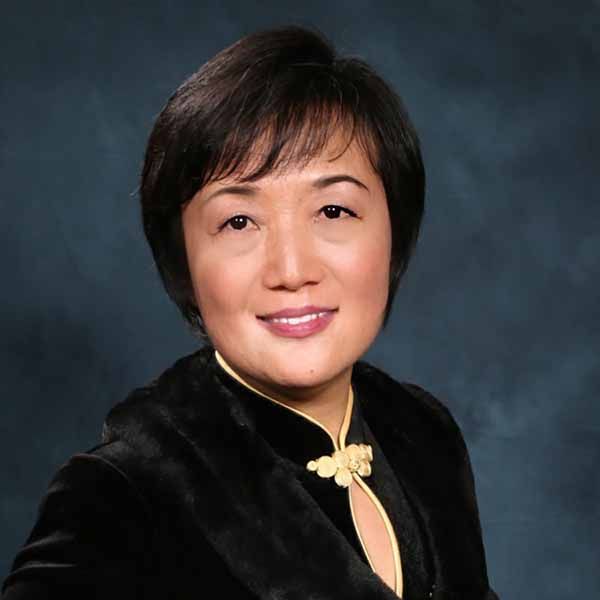
Dr. Yinong Chong
The Kē Lóng (珂龍) Internal Arts Tradition
This program is part of the broader Kē Lóng (珂龍) Internal Arts Tradition.
Within Ke Long, principle-based internal arts are not viewed as isolated disciplines.
They exist alongside Meditation, Qigong, Neigong, Internal Alchemy, Taijiquan, Internal Kung Fu, Yi Jing, Bazi, healing methods, and other traditional cultivation practices that share common principles and developmental goals.
A student may enter through Taijiquan.
Another through Kung Fu.
Another through Qigong.
Someone else through meditation or internal cultivation.
Yet over time, many discover that the same principles continue appearing throughout seemingly different disciplines.
This is one reason traditional teachers often viewed the arts as interconnected at the deepest levels.
Within the Ke Long tradition, our objective is not to produce students who simply collect disconnected methods.
Our mission is to preserve, document, and transmit the complete principle-based systems of these rare arts to the next generation of practitioners, instructors, and lineage inheritors.
Some students choose to specialize in a single art.
Others explore several branches of the tradition.
In the end, what matters most is not how many methods you study, but how deeply you understand the principles that bring those methods to life.
What Is Your Qigong Lineage?
Our Traditional Internal Family Qigong curriculum comes through the teachings of Grandmaster Li Jiinbao, Grandmaster He Binhui, and other respected teachers who dedicated their lives to preserving traditional systems of internal cultivation.
Unlike many modern Qigong programs that focus on a particular form or set of exercises, our lineage preserves a broader cultivation tradition that includes...
- Dao Yin (Guiding and Stretching)
- Yang Sheng (Life Nourishing)
- Qigong
- Meditation
- Neigong
- Qi Healing Foundations
- Internal Alchemy Foundations (Neidan)
- Traditional Self-Cultivation Practices
These methods were not originally taught as separate subjects. They were understood as interconnected parts of a larger cultivation system.
Grandmaster Li and Grandmaster He were among the last generation of teachers who lived through tremendous social upheaval and witnessed many traditional cultivation arts become fragmented, simplified, or lost entirely. Both men strongly believed these arts should be preserved and transmitted to future generations.
Shifu Shawn Cartwright spent decades studying, documenting, organizing, and preserving these methods. At the same time, Dr. Yinong Chong helped interpret, translate, validate, and preserve the deeper meaning behind many traditional teachings through her P5LIM (5-Level Interpretation Method).
This relationship matters because traditional lineage is not simply a certificate, title, or organizational membership.
A true lineage preserves...
- The principles behind the methods
- The progression of the training
- The teaching standards
- The oral teachings (Mijue)
- The relationships between the practices
In other words, it preserves the system rather than just a collection of cool exercises.
And this program was created to preserve the pure essence of the ancient and powerful teachings.
Rather than teaching isolated Qigong forms or disconnected techniques, we sought to preserve the larger principle-based framework that gave those practices meaning in the first place.
The result is a structured curriculum designed to help modern students access traditional cultivation methods while still understanding the principles, progression, and relationships that unite them into a complete system.
This gives students a rare opportunity to study material rooted in authentic lineage traditions, presented through a structured teacher-to-student transmission adapted for modern learning.
What makes this program different?
Many Tai Chi, Qigong, and Kung Fu programs teach movements. Fewer preserve the full method behind the movements.
What makes TCCII different is the way we protect three things at the same time:
- The completeness of the art
- The accuracy of the interpretation
- The ability to teach the material clearly to Western students
1. The art must be complete
In traditional Chinese martial arts, a complete system is not just a form. It includes structure, body method, applications, internal training, weapons, partner work, teaching progression, and the principles that connect them.
We evaluate the completeness of a system through the Liu He Ta, or Six-Sided Tower. This framework helps preserve the essential parts of a traditional art so students are not left with only choreography or isolated techniques.
This matters because many students only receive part of a system. Sometimes the teacher did not have the full curriculum. Sometimes the teacher had it but did not pass it on. Sometimes the material was hidden behind the old Veil of Secrecy, where important details were reserved, withheld, or never clearly explained.
We respect the old ways, but we do not believe serious students should be left guessing.
2. The teaching must cross the East-West communication gap
Even when a teacher has the complete art, the material can still be difficult to transmit across language and culture.
Traditional Chinese martial arts contain ideas that do not translate cleanly into modern English. Terms related to Qi, Jin, Fajin, Neigong, body method, intention, and internal training often carry layers of meaning. If those layers are not interpreted properly, students may receive the words but miss the method.
This is why Dr. Yinong Chong uses P5LIM, the PhD 5 Level Interpretation Method, to help carry the meaning from classical Chinese martial culture into clear modern English.
The purpose is not just translation. It is preservation of meaning, training context, and teacher-to-student detail.
3. The material must be teachable
High-level skill does not automatically make someone a clear teacher.
A teacher must know how to organize the material, explain the progression, correct common errors, and help students understand what to practice next. That is why TCCII places so much attention on teaching method, lesson structure, and progressive training.
The result is a program that gives students more than movements to copy. It gives them a structured way to approach the art with lineage, interpretation, and method working together.
That is what we mean when we say this program is different.
What is the Liu He Ta and why is it important?
Liu He Ta, often translated as the Six-Sided Tower, refers to six key components of a complete traditional art.
It gives us a way to understand whether a system contains more than movements and techniques. A complete art should also include the philosophy, principles, methods, tools, and teacher-to-student details that make the training work.
The six parts are:
-
Dao, the Way
The larger philosophy and direction of the art. Dao helps you understand why the system exists, what it is trying to develop, and how the parts fit together. -
Li, the Principles
The rules and truths that guide the art. Li helps you understand what to do when things are uncertain, especially under pressure. -
Fa, the Methods
The training methods that develop the art over time. Fa shows you how to practice, how to progress, and how the skill is built. -
Shu, the Techniques
The specific movements and applications of the art. Shu helps you understand what to use, when to use it, and how the method becomes practical. -
Bing, the Tools
The training devices and support methods used to develop skill. Bing may include special exercises, equipment, drills, or training aids that help the body understand the method. -
Mi Jue, the Oral Secrets
The teacher-to-student details that are rarely written down and often reserved for serious students or lineage inheritors. Mi Jue helps preserve the subtle instructions, corrections, and training cues that make the art come alive.
This matters because a traditional system can become incomplete when one or more of these parts is missing. Students may receive movements without principles, techniques without method, or exercises without the deeper teaching that connects them.
That is why TCCII places so much emphasis on preserving the complete lineage method and documenting the teaching carefully for future generations.
What does P5LIM mean?
P5LIM stands for PhD 5 Level Interpretation Method.
It is Dr. Yinong Chong’s proprietary method for interpreting classical Chinese martial and internal arts teachings into modern English while preserving the original meaning, training context, and teacher-to-student details behind the words.
This matters because traditional arts like Taijiquan, Kung Fu, Qigong, and Neidan are not easy to translate word-for-word. Many important terms carry rich layers of cultural, historical, philosophical, esoteric, and practical meaning.
Dr. Chong speaks English like a native and has rare fluency in Classical Chinese, which allows her to work directly with older source material and verify meaning at a level most ordinary translation cannot reach.
Her interpretation work has been sought out even by professional interpreters working at the highest levels, because this material requires more than language fluency. It requires deep cultural, historical, and lineage training context.
The purpose of P5LIM is to keep the teaching from being flattened into a generic translation. It helps preserve the internal principles, training methods, and traditional lineage secrets so Western students can understand what is actually being taught.
How does the program work?
Once you complete your registration, you receive immediate access to the online TCCII training portal.
Inside the portal, you’ll find your course organized into clear lessons, structured in a logical progression to optimize your training. Select a lesson, press play, and follow the course at your own pace.
Some lessons and bonuses are intentionally locked until the right point in the course. As you progress, more material unlocks so you can follow the training in the intended order.
You can return to earlier lessons for review according to the access included with your purchase. This is especially useful for revisiting posture, movements, forms, and the deeper principles introduced in the course.
Because the program is online, you can study wherever you have internet access and train at the times that work for your life. You do not have to travel across town, rearrange your schedule around a local class, or depend on whether a qualified instructor in this method happens to live nearby.
The course gives you a structured way to begin this method with clear guidance, lineage context, and practice support inside one training portal.
Can I really learn from an online program?
That’s a fair question. Let me ask you this... have you ever learned anything meaningful online?
Most people have. Martial arts are different, of course, but the real question is not whether online learning can work. The real question is what can be taught well online, what needs hands-on correction, and how is the training structured?
Every training format has strengths and limitations: books, live classes, private lessons, demonstrations, and online study all teach in different ways.
I used to doubt whether serious internal martial arts could be taught online. Then the pandemic forced us to teach remotely, and I saw something surprising... some students actually improved faster.
There were two main reasons.
First, video made it possible to present private teaching material with clear structure, multiple angles, and careful explanation. In a live group class, students often miss details because of where they are standing, who is in front of them, or how quickly the class moves.
Second, students could rewatch the lessons. That matters. In a private lesson, you may receive a correction once and then have to remember it. In an online course, you can return to the same teaching again and again, compare angles, slow down your study, and review the details between practice sessions.
That changed the way I thought about online training.
This program is designed to give you many of the benefits of private instruction while using the strengths of modern video learning:
-
Structured progression
Lessons are organized so you know what to study next and what to review. -
Multiple viewing angles
Forms, applications, and demonstrations can be studied from more than one perspective. -
Repeatable instruction
You can rewatch lessons as often as your access allows, which helps you catch details you missed the first time. -
Lineage training without travel
Study from home without airfare, hotels, meals, lost work time, commuting, or navigating the uncertainty and expense of international travel. -
A clearer foundation before private correction
If you later choose private lessons or partner training, you arrive with a stronger base. That makes hands-on correction more focused and useful.
For advanced martial application, push hands, and partner work, nothing replaces direct contact with another person. But online training can prepare you extremely well by teaching the forms, principles, body method, applications, and training sequence before you enter that hands-on stage.
Can I go back and rewatch my lessons?
Yes. In fact, you are encouraged to return to the lessons and review them according to the access included with your purchase.
That is one of the real benefits of our online training model. You can revisit the teaching, compare details, and notice things you may have missed the first time.
I often think about how valuable it would have been to have films of my private lessons from the early days of my training. That is one reason I filmed these lessons for my son, Drake Cartwright.
These class films are an important part of the legacy I am passing on to him. I am grateful that today’s technology allows us to make this training available to sincere students, even if you live in another city or country.
Can I start anytime?
Quite frankly, I don't know.
We plan to maintain the Lineage Training Programs for the foreseeable future for students who are already registered.
However, we cannot guarantee that REGISTRATION will be open next month or next year.
The reason why is not to create some sort of "artificial scarcity."
The art doesn't need that any of that BS... it's scarce enough as it is.
The reality is that is sometimes necessary to close program registration for long periods of time. This is because we like to be available for new students to ask questions to help them get started.
But remember that lineage trained Shifus are quite busy. In addition to taking care of my family, I have several other projects in the works that demand attention.
The Lineage Training Programs are living and evolving. It takes a lot of time and hard work to create the lessons and craft them into a proper program. (BTW, skill obtained by hard work over time is the real meaning of Kung Fu.)
And it's not the type of thing that can be easily outsourced to someone who is not lineage trained, so there's no "easy button." I wish there were but there's no way an outsider can possibly understand how to craft a Lineage Training Program like this.
That means we sometimes have to close registration to update the program or because of other events and demands in our life.
We have some programs that have been closed to new registrants for more than a year. One was closed for three.
Anyway, that's enough about us...
If registration is currently open, then you may proceed to start the program.
Which sheds light on the real question...
And the question is not whether the opportunity exists?
The question is whether you are ready to start today or do you want to put it off until tomorrow or next month or next year or never?
Is what you're doing today bringing you closer to where you want to be?
Many people assume that doing nothing leaves them exactly where they are.
It doesn't.
The body changes.
Flexibility declines.
Balance becomes more difficult to maintain.
Old injuries become less forgiving.
Energy fades.
The habits that weaken the body become more deeply ingrained.
Time marches on whether we train or not.
I have yet to meet a serious practitioner who wished they had waited longer to begin their training.
I have met many who wished they'd started sooner.
When I began training, I could ask questions to my Grandmaster Teachers directly.
Today, sadly, that is no longer possible.
Yes, the true transmission remains.
But my teacher does not, except in my memory.
That brutal reality taught me something important...
Traditional arts survive only because each generation chooses to continue the journey.
My son, Drake had that tough realization himself... one day Shifu-Dad won't be here.
Which is why this Lineage Training Program exists... to document the art for future generations.
So they wouldn't have to try and reconstruct from scattered fragments and missing pieces.
Look, many people spend years collecting books, videos, seminars, certifications, and information.
Far fewer spend those same years developing genuine skill.
The danger is rarely choosing the wrong path.
The danger is spending another five years exactly where you are now.
Or worse.
Less mobile.
Less capable.
Less healthy.
Still saying:
"One day I'll start."
You do not need to know everything before you begin.
In fact, most students who wait until they feel completely ready never begin at all.
The hard truth is that nobody is ever completely ready.
Only by doing the program do you become ready.
Not the other way around.
The authentic training has been preserved.
The hidden methods have been preserved.
The original lineage has been preserved.
The system is here.
The only question remaining is whether now is the time for you to begin.
Five years from now, you'll wish you had started five years ago.
The best time to begin was 20 years ago.
The second-best time is today.
Sincerely,
Shifu Shawn Cartwright and Dr. Yinong Chong
Preserving the Traditional Internal Cultivation Lineages
Begin your lineage training program today...
DISCLAIMER
THE INFORMATION PRESENTED HEREIN IS FOR INFORMATION PURPOSES ONLY. YOU ASSUME ALL RISKS. THE COMPANY IS NOT RESPONSIBLE FOR ANY INJURY WHICH MAY OCCUR THROUGH YOUR USE OF THIS INFORMATION. YOU ASSUME ALL RISK ASSOCIATED WITH USING ANY OF THIS INFORMATION. CONSULT A MEDICAL PROFESSIONAL BEFORE BEGINNING ANY ACTIVITY.
UNDERSTAND THAT OUR RESULTS ARE NOT TYPICAL. MOST PEOPLE SIMPLY WON’T INVEST THE TIME, EFFORT, OR COMMON SENSE INTO THEIR OWN TRAINING. YOUR RESULTS WILL BE DIRECTLY PROPORTIONAL TO YOUR WISE INVESTMENT IN YOURSELF.
NOTHING CONTAINED HEREIN SHOULD BE CONSTRUED NOR IS INTENDED TO BE USED FOR MEDICAL DIAGNOSIS OR TREATMENT. NEITHER SHOULD IT BE USED AS A REPLACEMENT FOR THE ADVICE OF YOUR PHYSICIAN OR OTHER QUALIFIED HEALTH CARE PROVIDER. SHOULD YOU HAVE ANY HEALTH-CARE RELATED QUESTIONS, PLEASE CONSULT YOUR HEALTH CARE PROVIDER IN A TIMELY FASHION. THE COMPANY WILL NOT BE LIABLE FOR ANY DIRECT, INDIRECT, CONSEQUENTIAL, SPECIAL, EXEMPLARY, OR OTHER DAMAGES ARISING THEREFROM.